Japanese Triangle Project
In the heart of an industrial town in Ahvaz, a multi-layered project has emerged—one aimed at creating a harmonious and ergonomic relationship between humans, nature, and space.
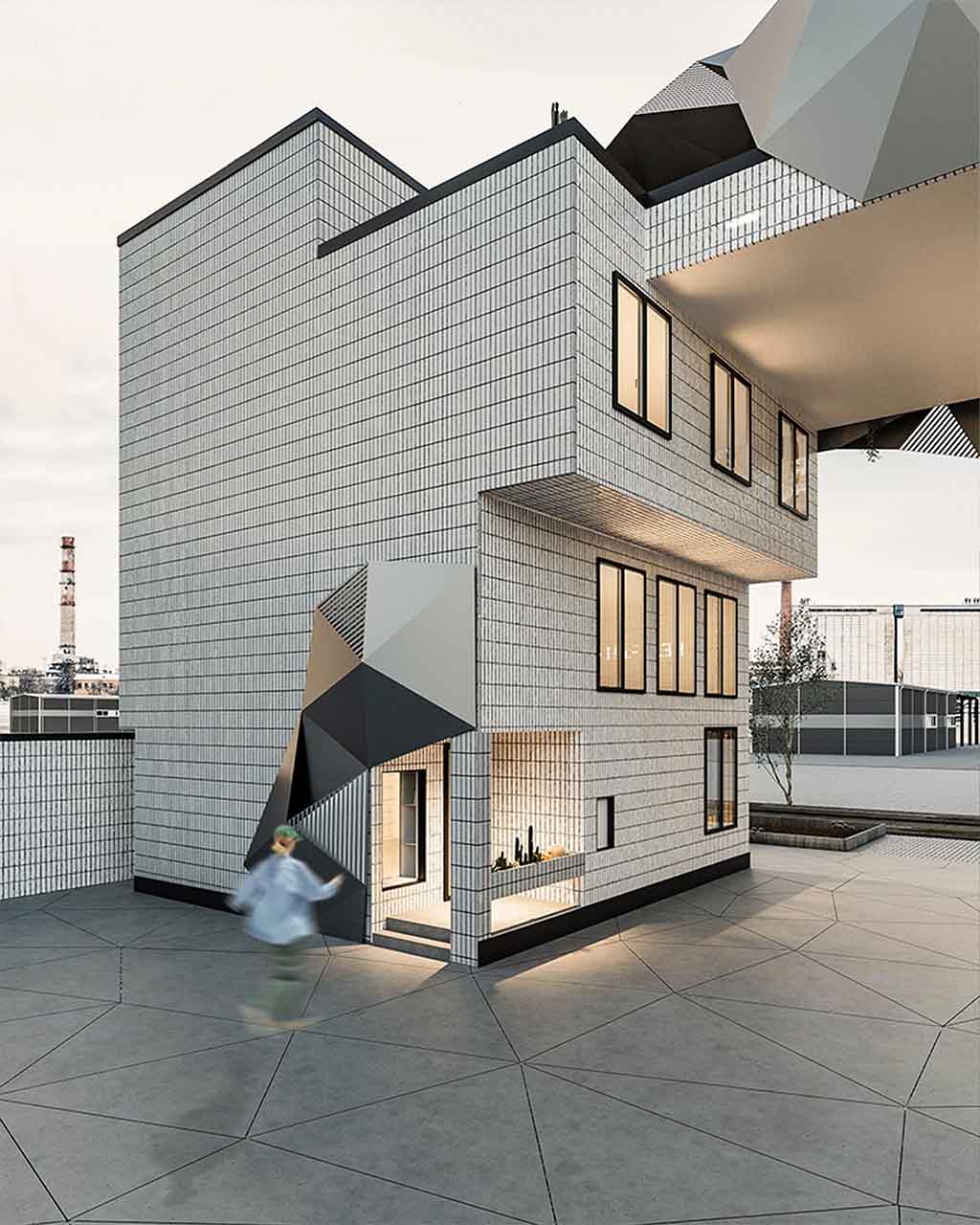
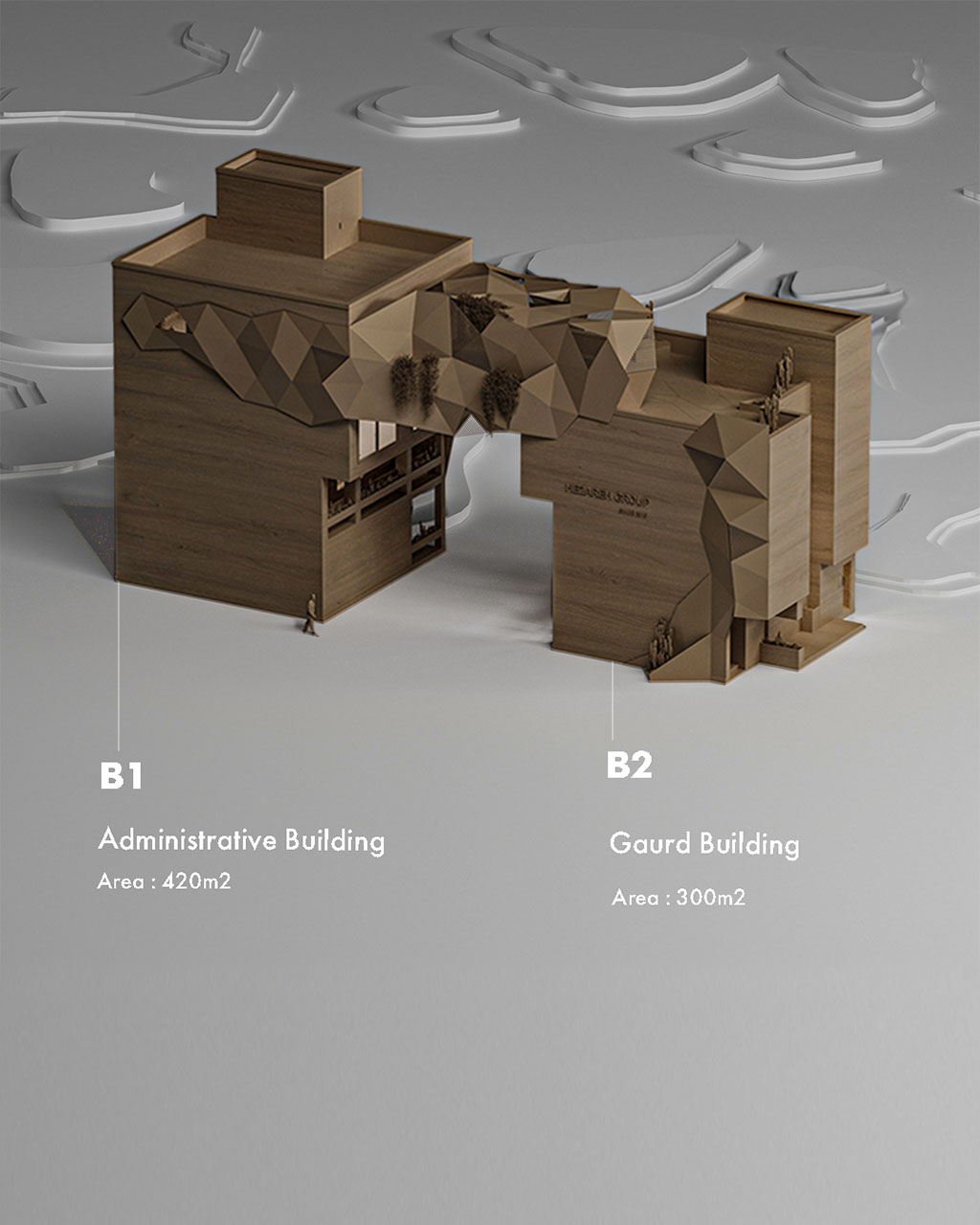
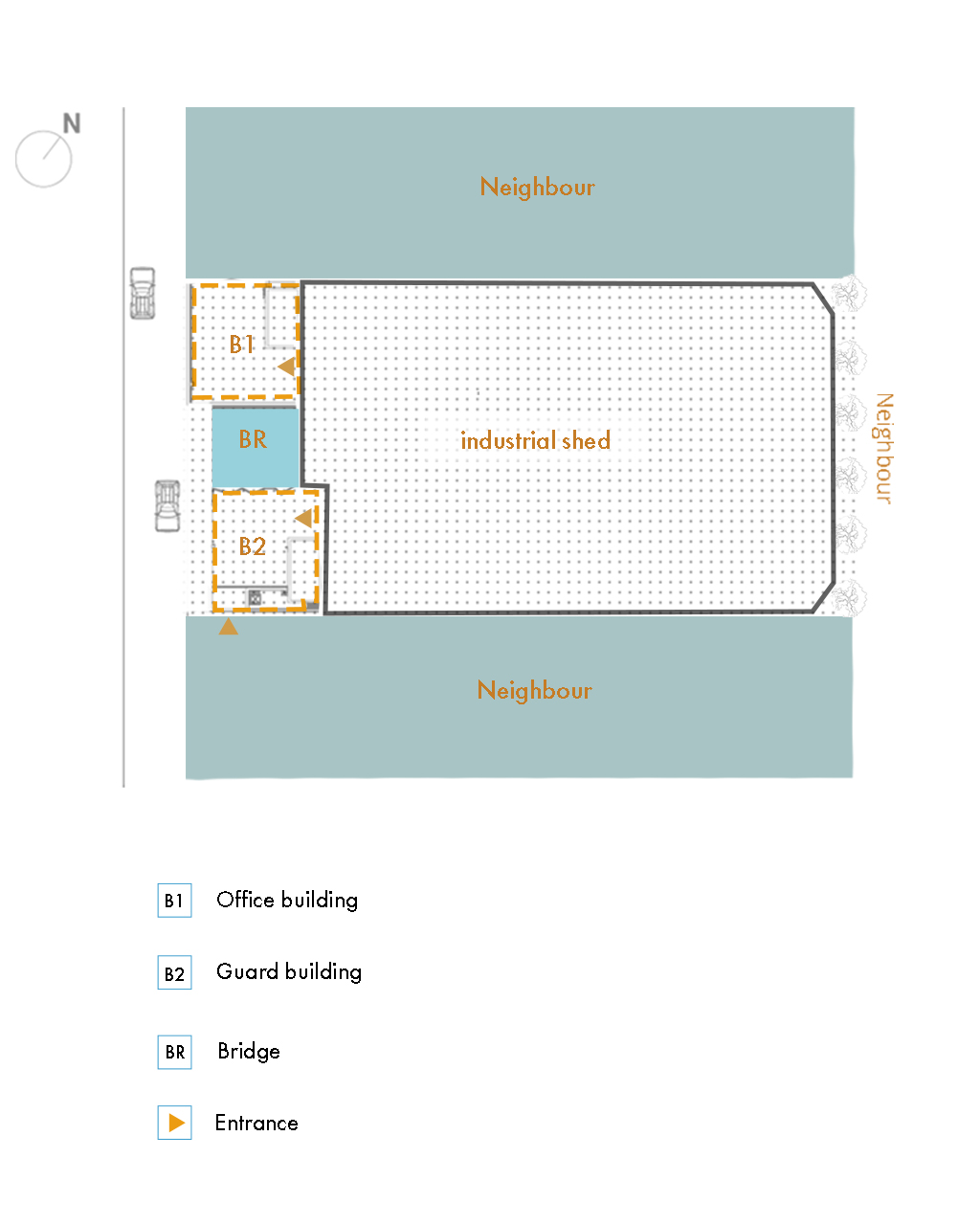
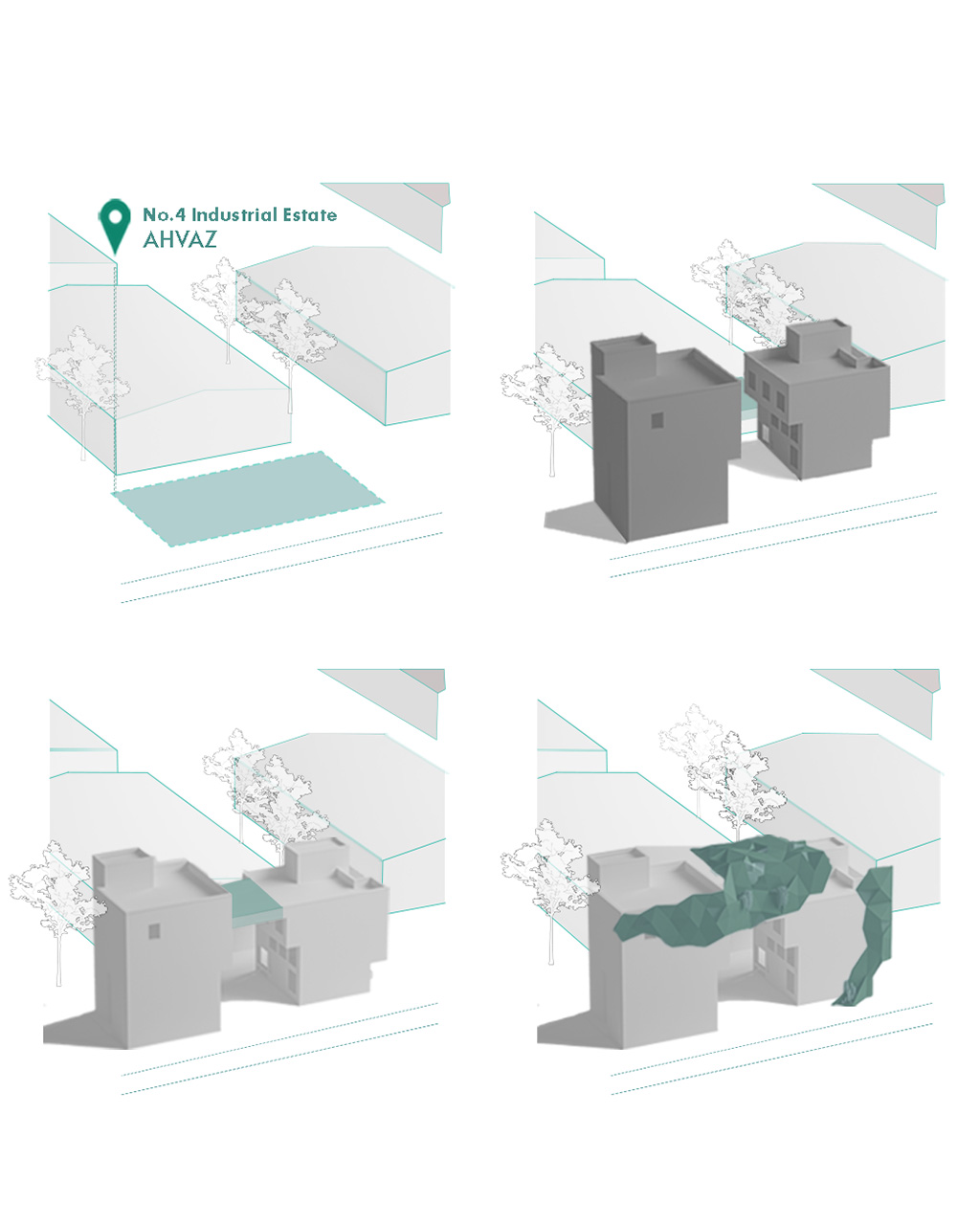
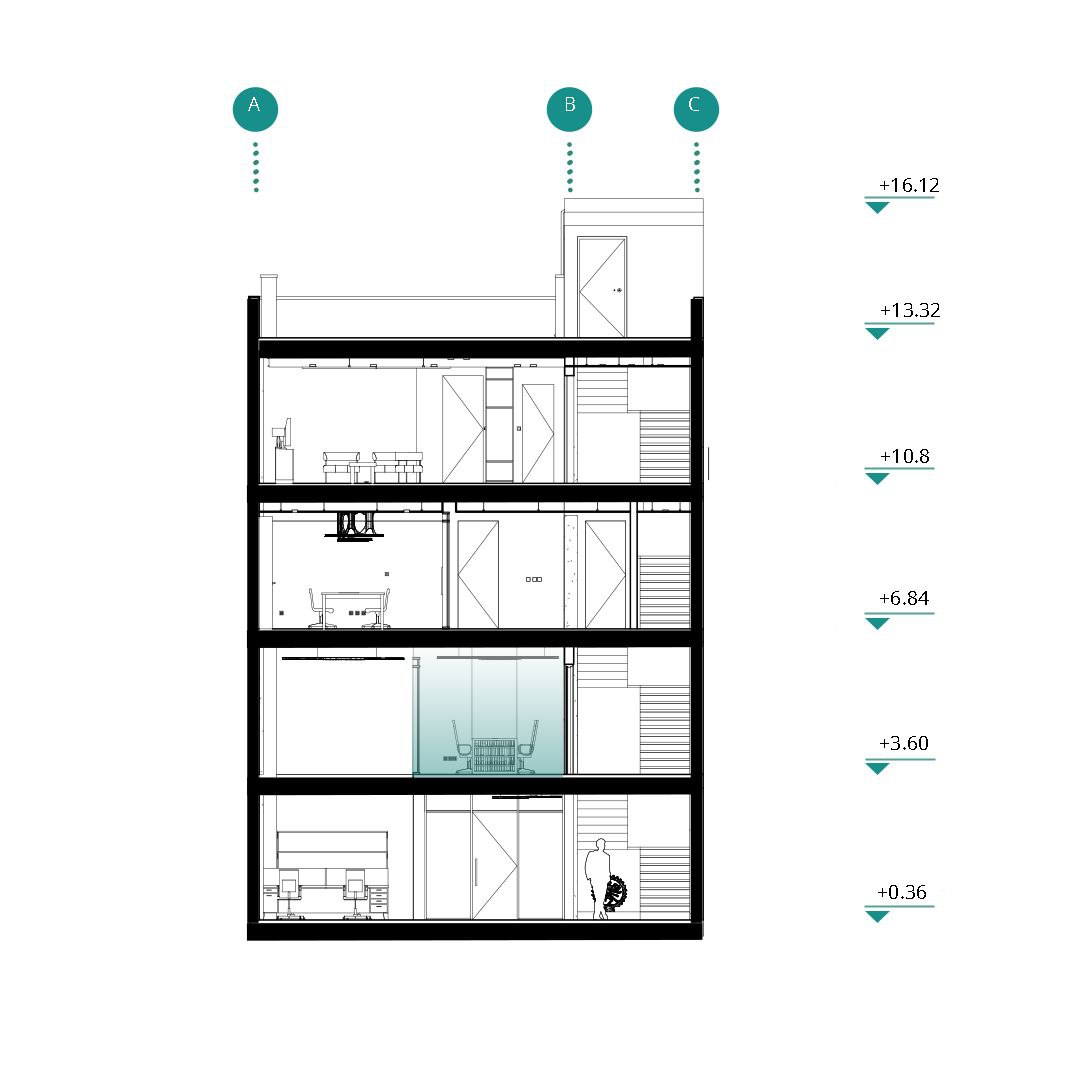
The 1,800-square-meter site, featuring an existing warehouse, hosts two key buildings:
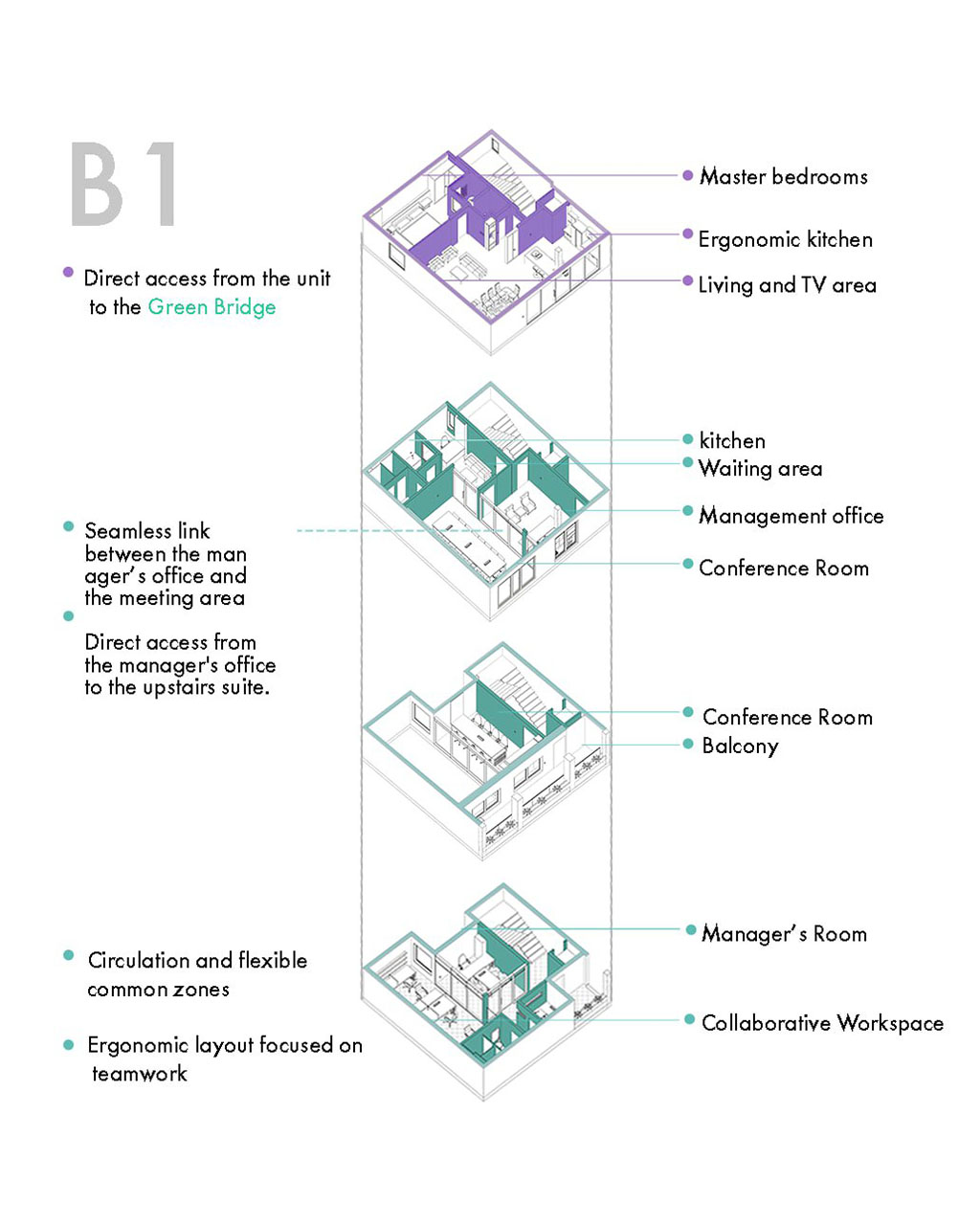
The Office Building, spanning four levels, housing administrative, managerial, and residential functions.
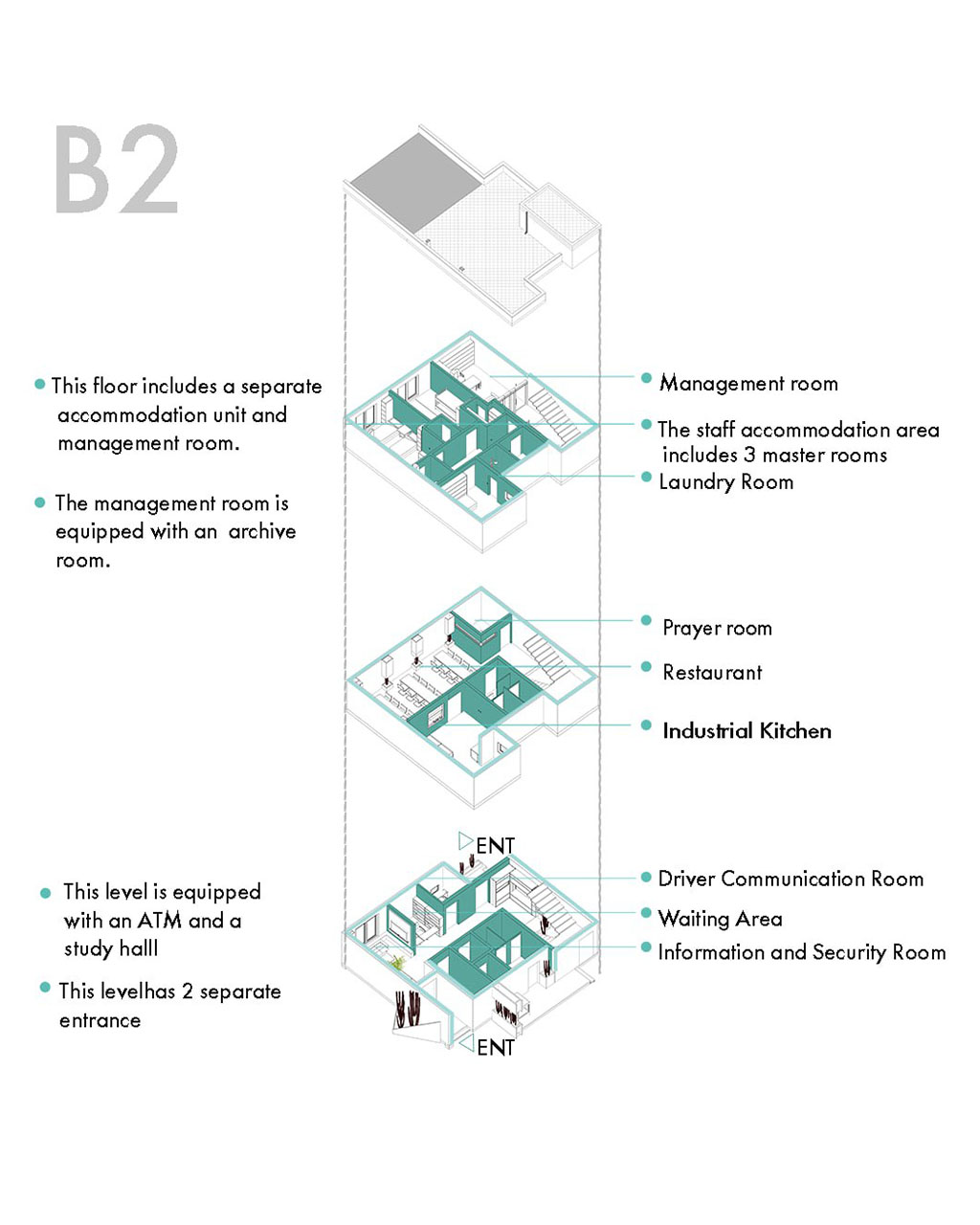
The Security Building, serving protective and welfare functions, with service and accommodation layers.
Location
Ahvaz
Area
420 m
Security Area
300 m
Status
Under the Production
Architects
Ardalan Ahmadi, Sara Kalhori, Arezoo Majidipour
Visualization and Simulation Team
Roomina Moazed, Nasim Ameli, Raha Fazli, Marjan Arab, Mohadeseh Tajik
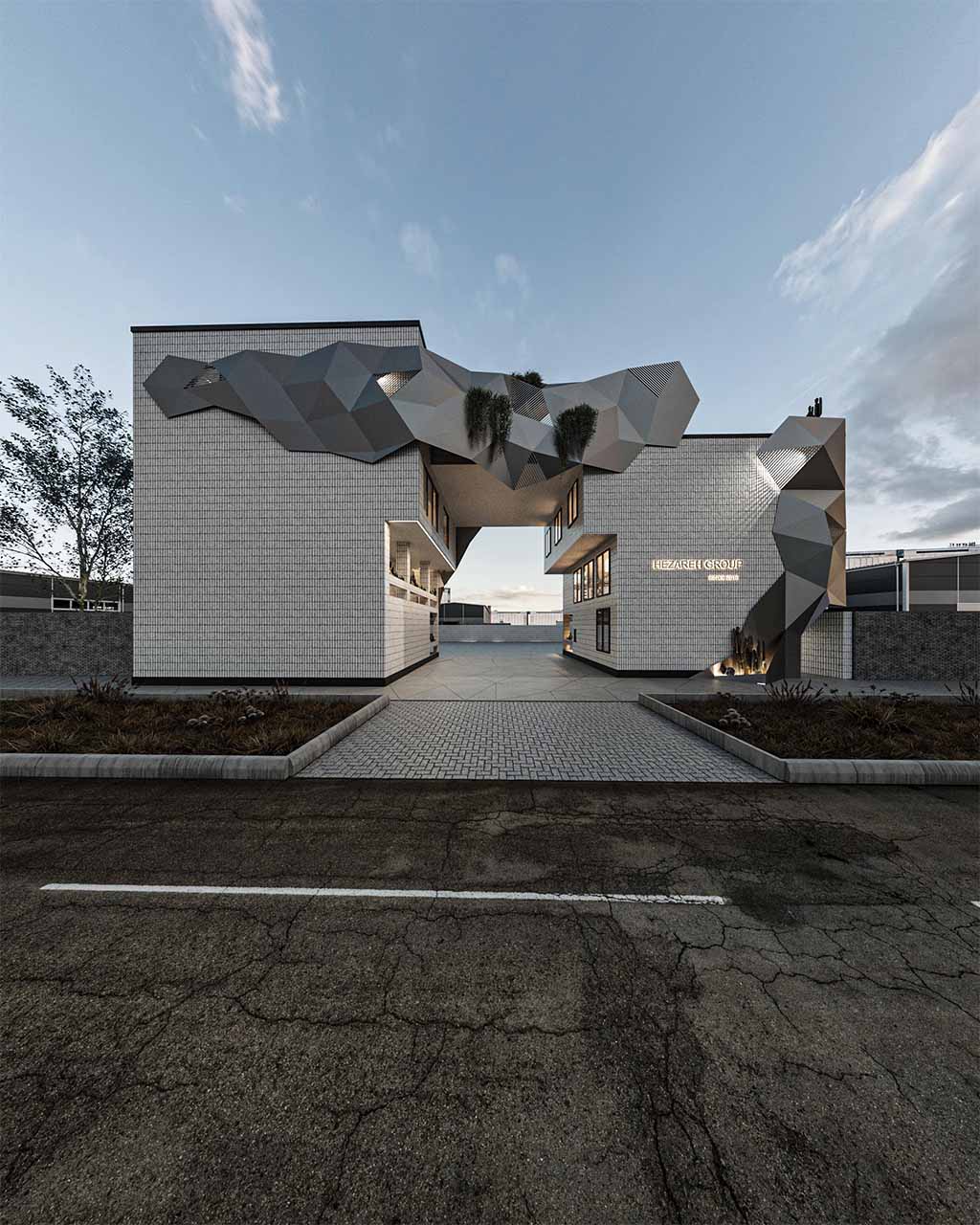
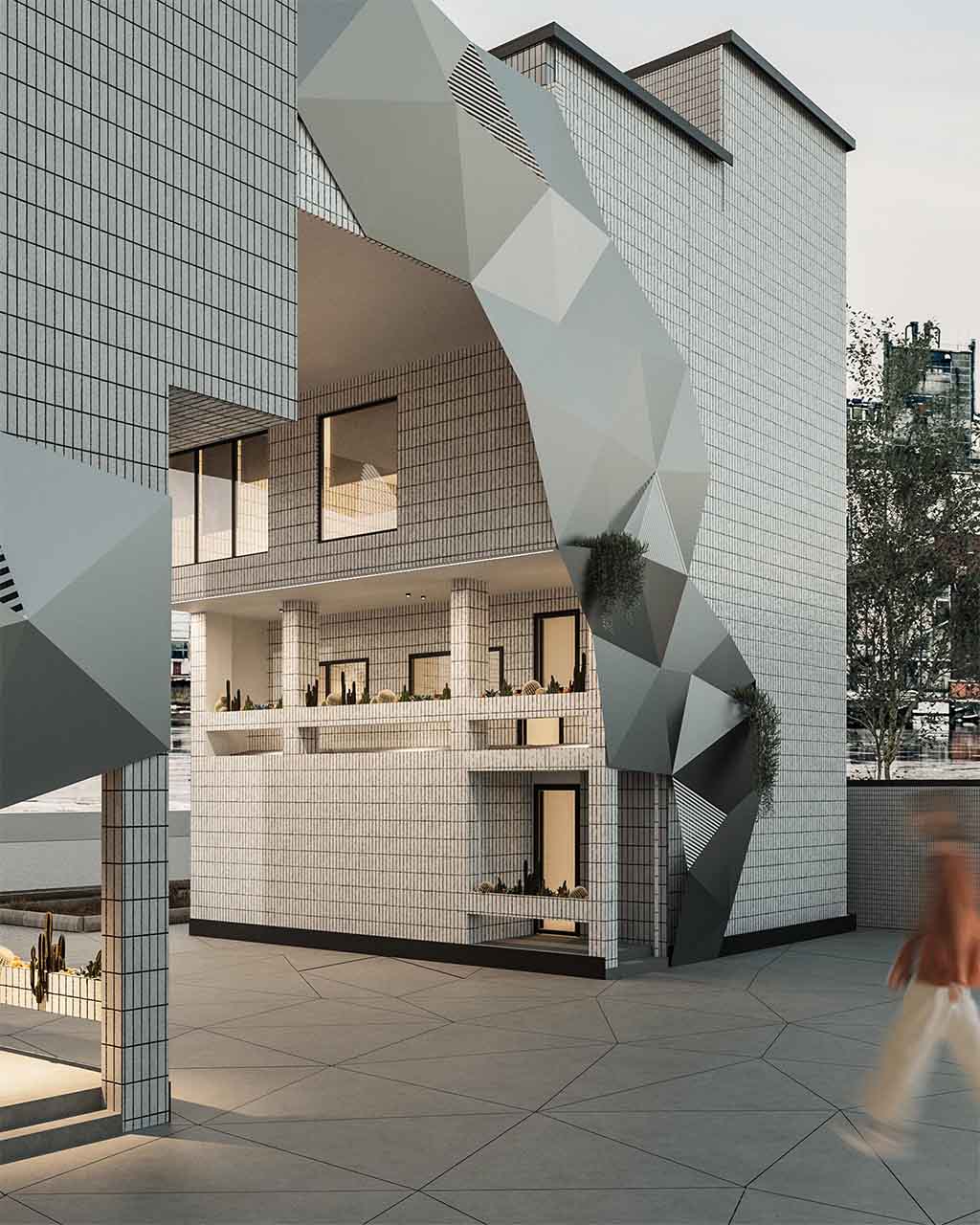
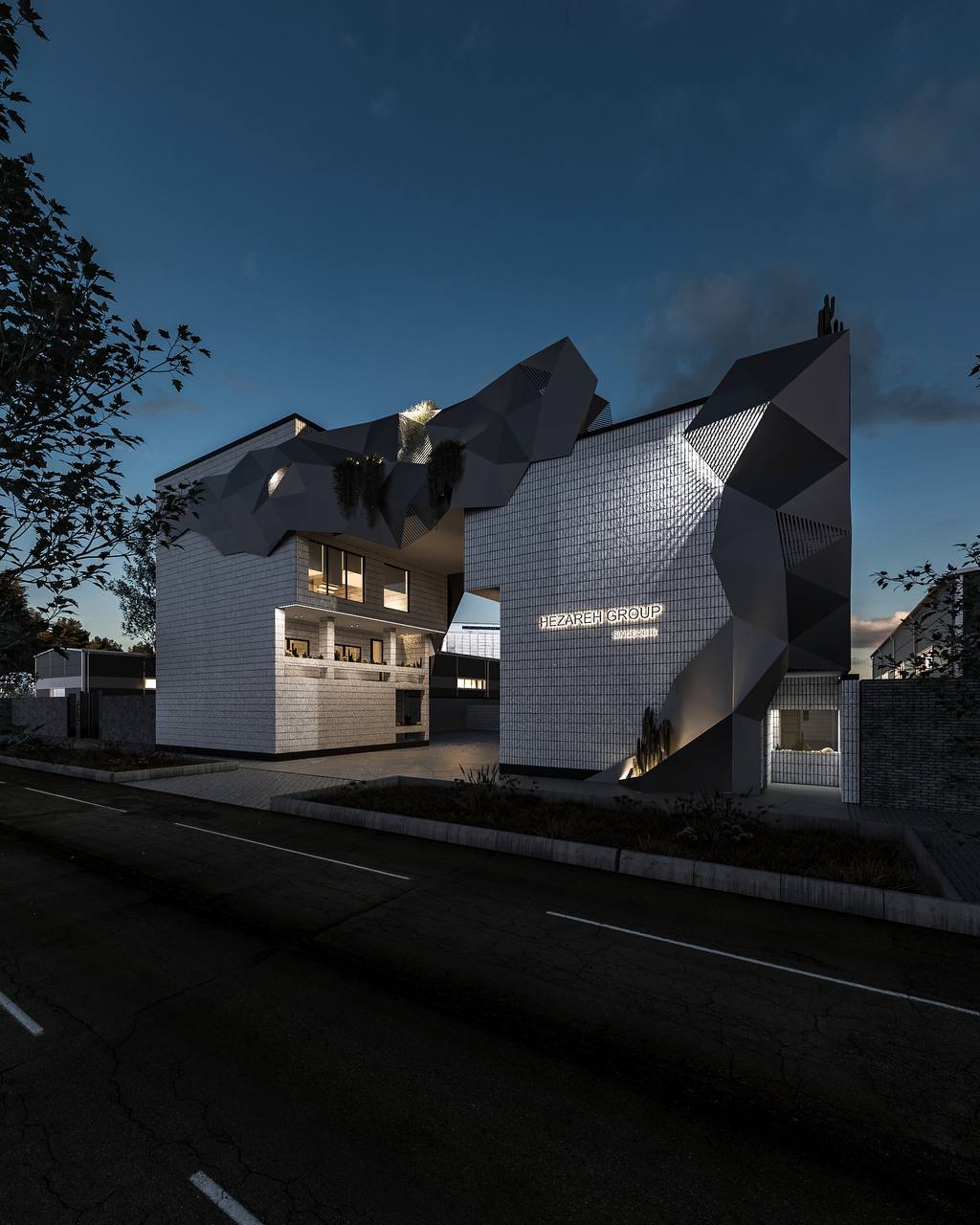
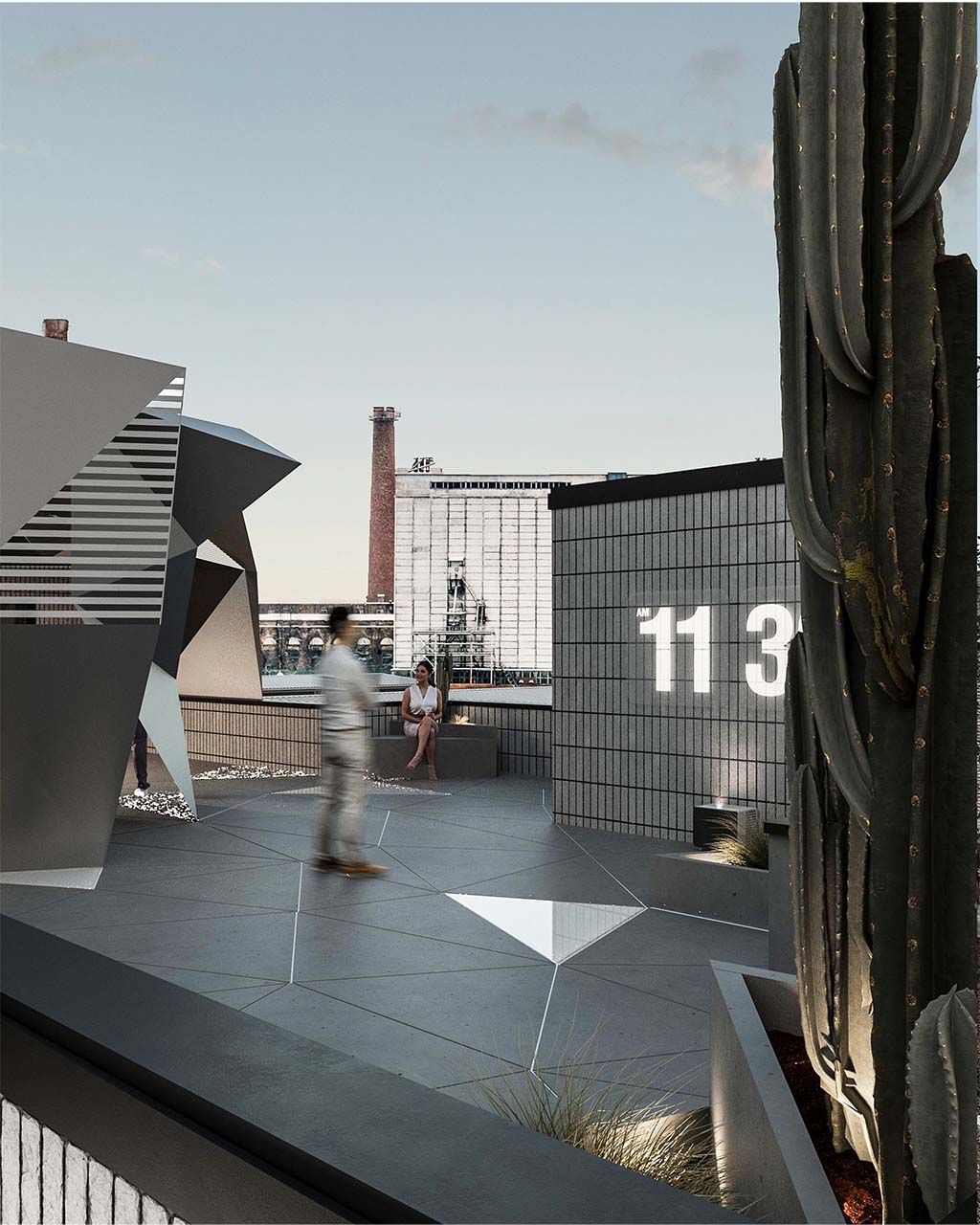
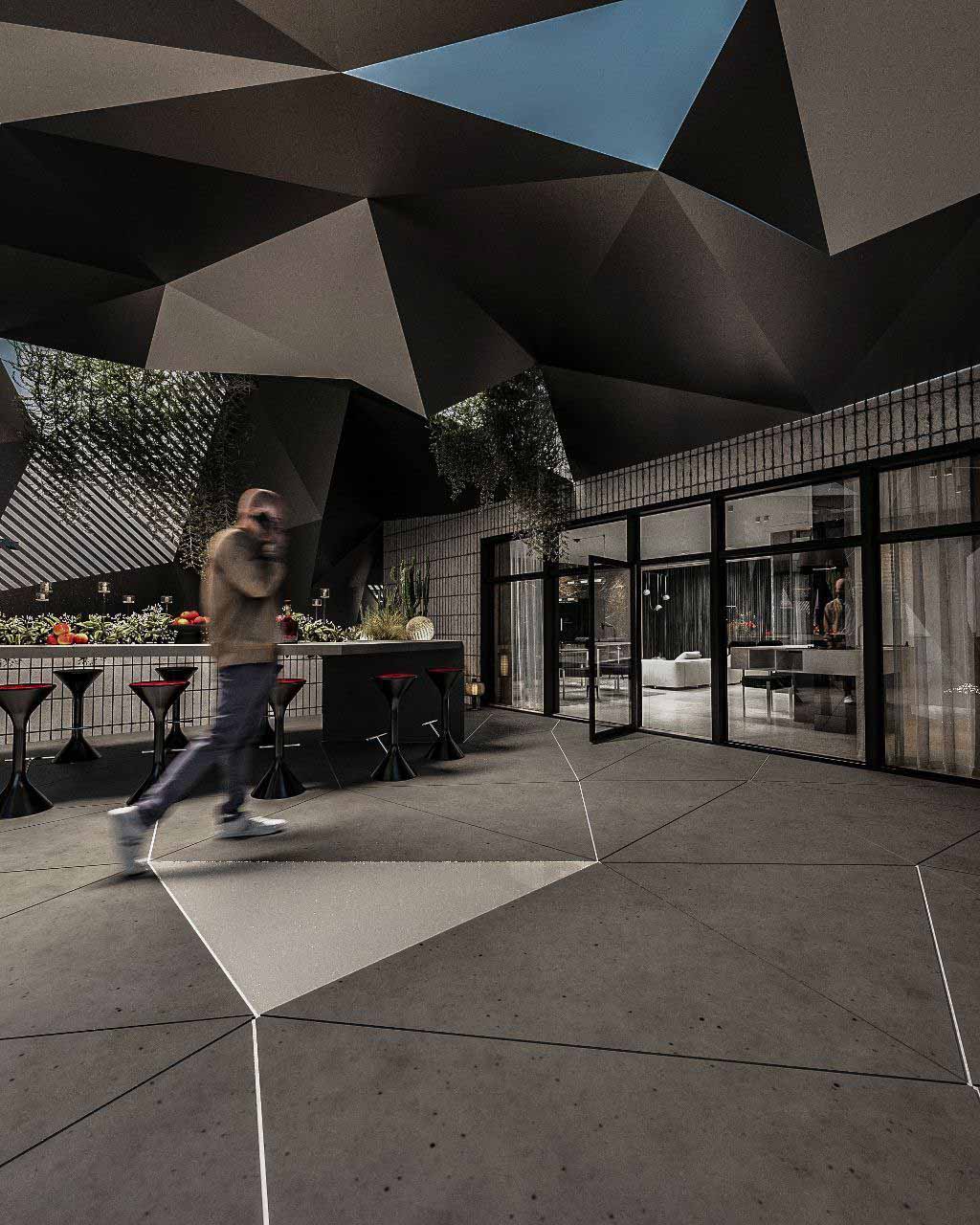
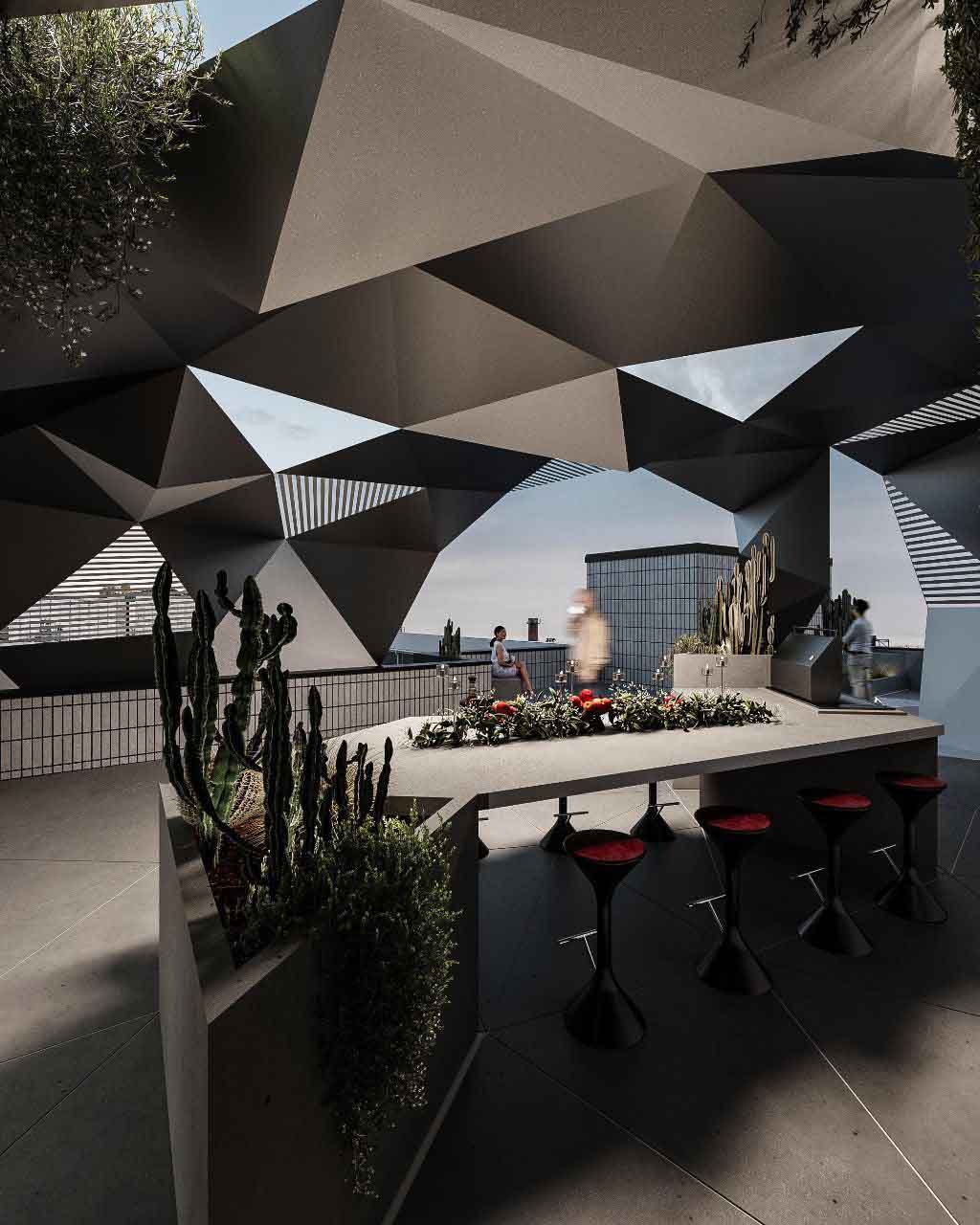
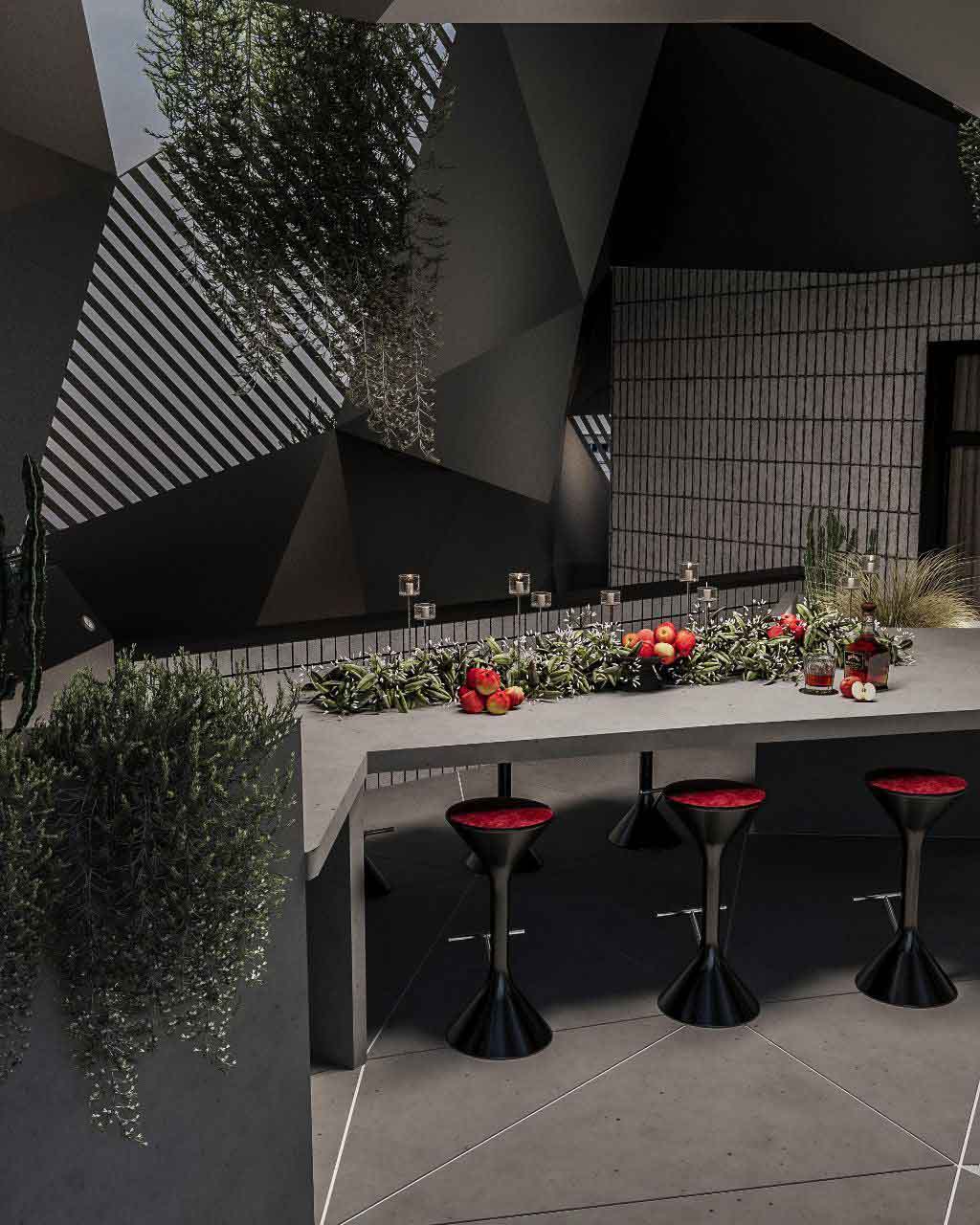
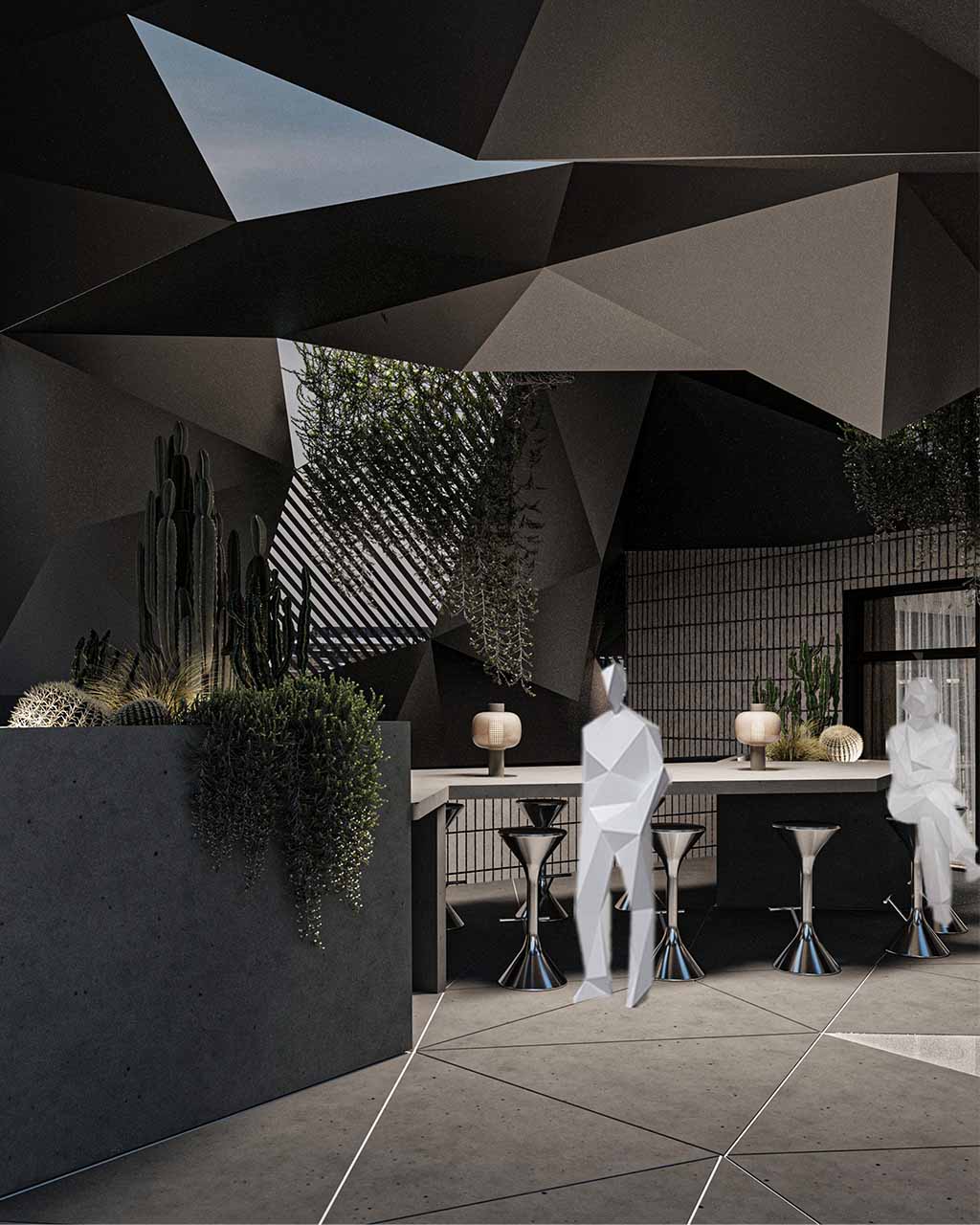
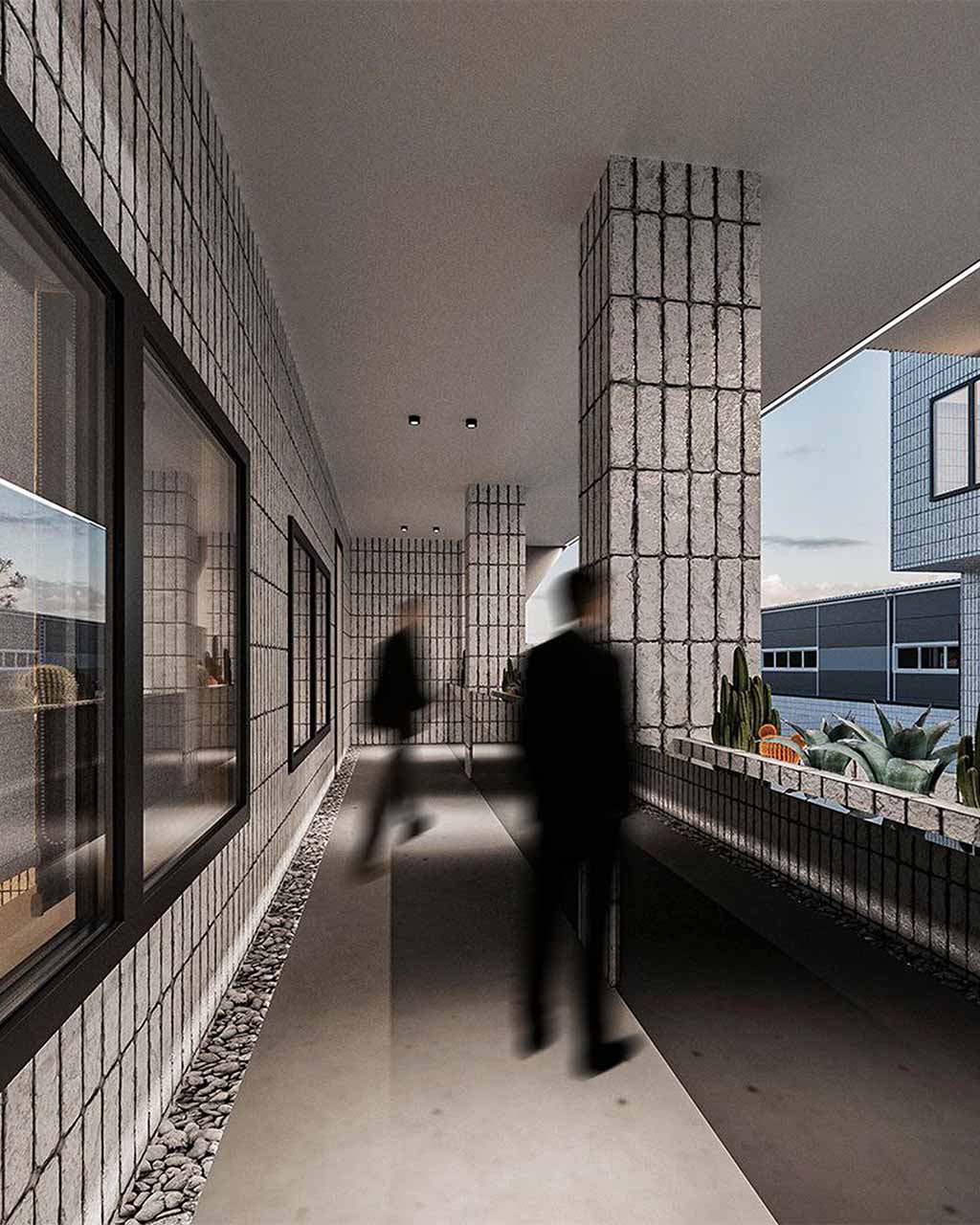
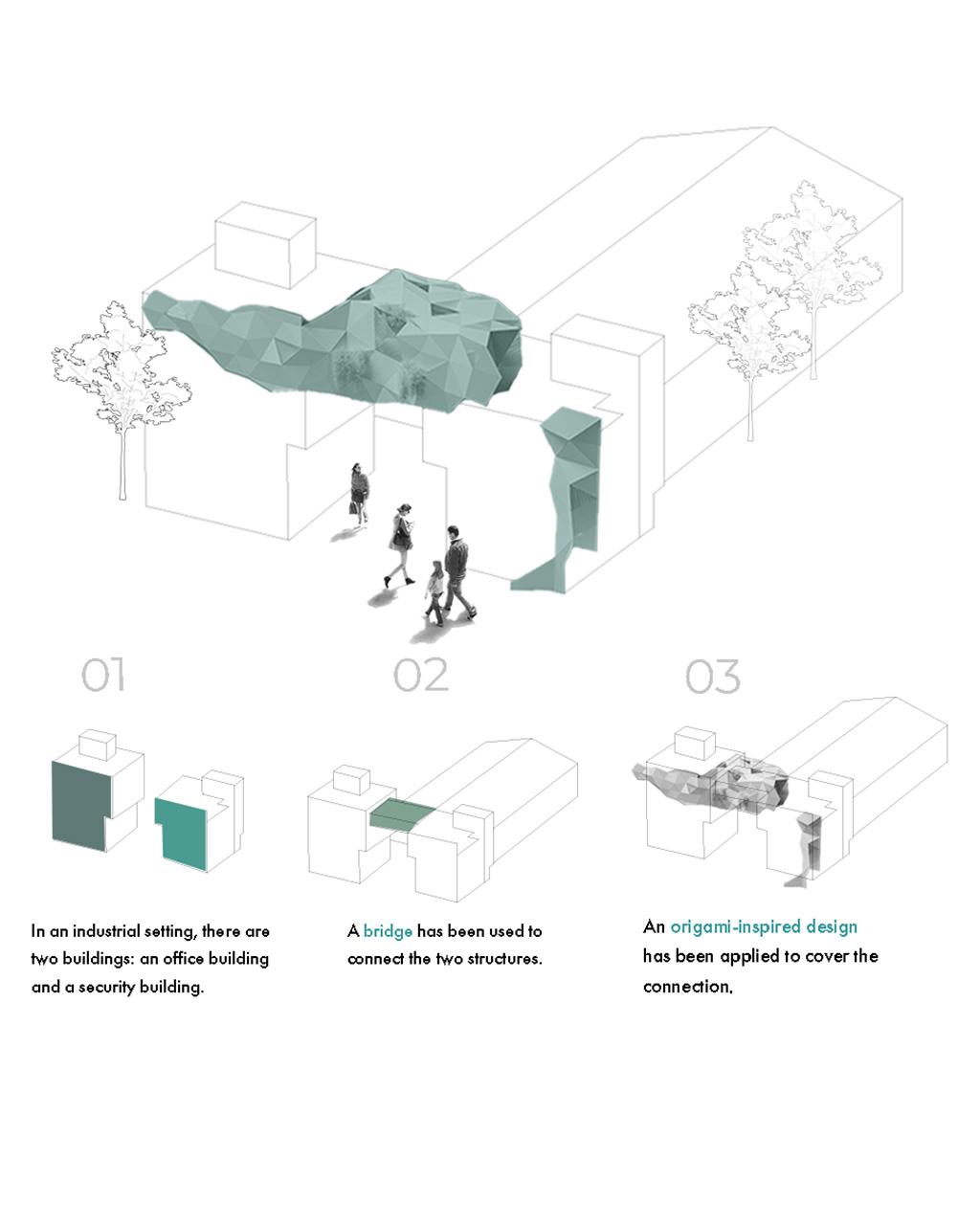
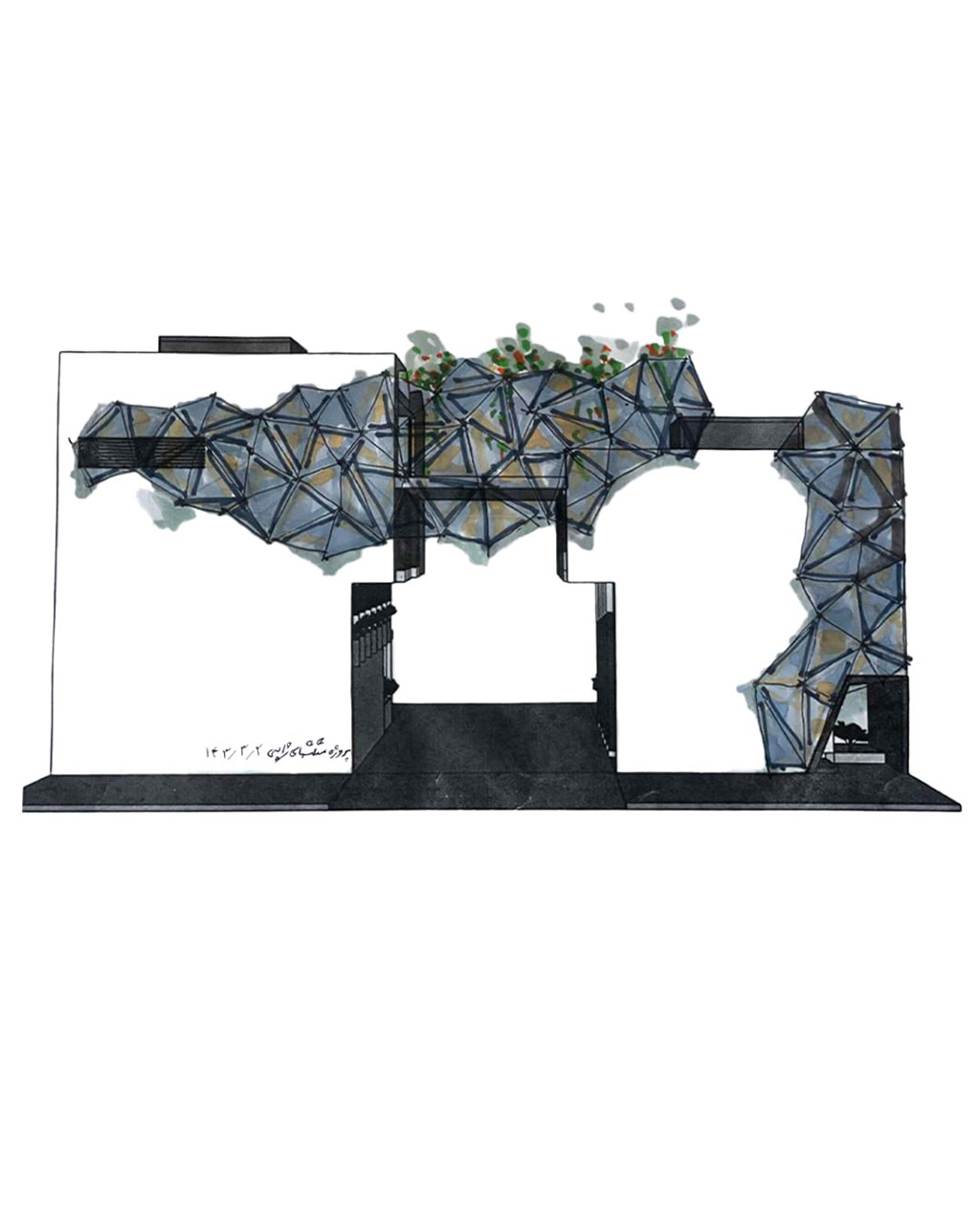
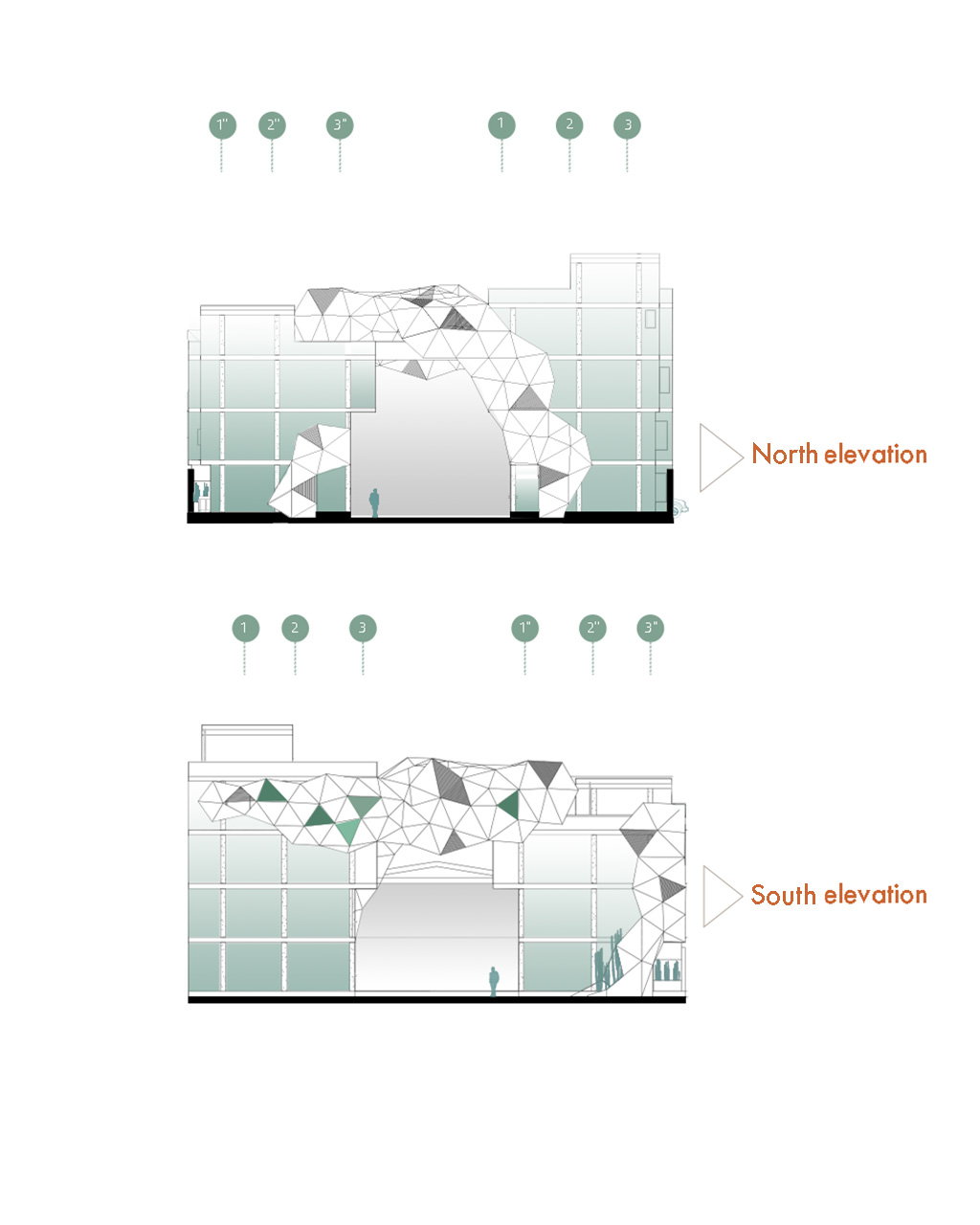
The design’s pivotal moment is the connection between these two structures, resulting in the creation of a green bridge. Beyond its functional role, the bridge introduces rhythm and vitality to the space through the embrace of Japanese triangles. Its exterior, inspired by origami, forms a sculptural structure that invites reflection and exploration—where geometry becomes a tool to transform visual experience into lasting memory
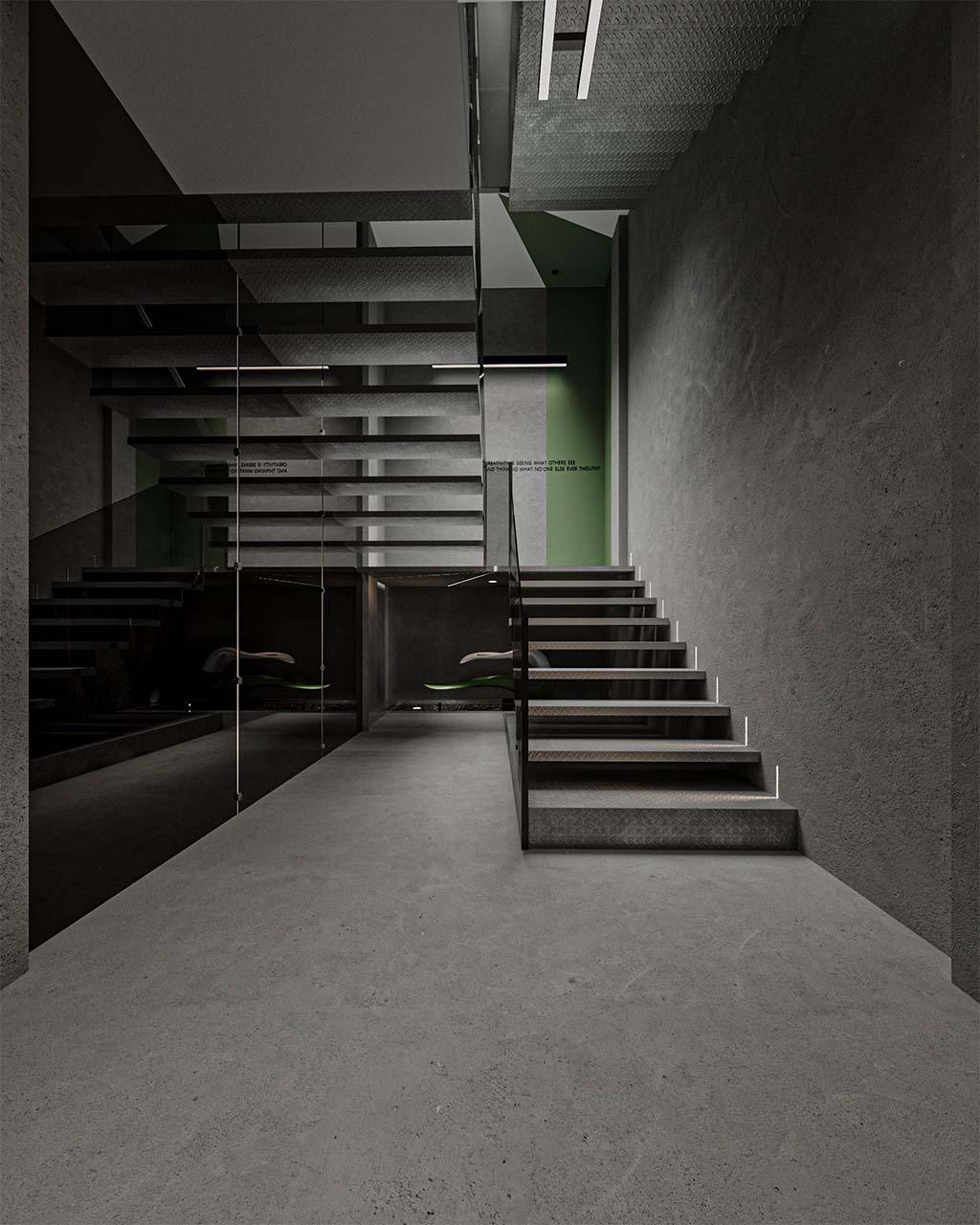
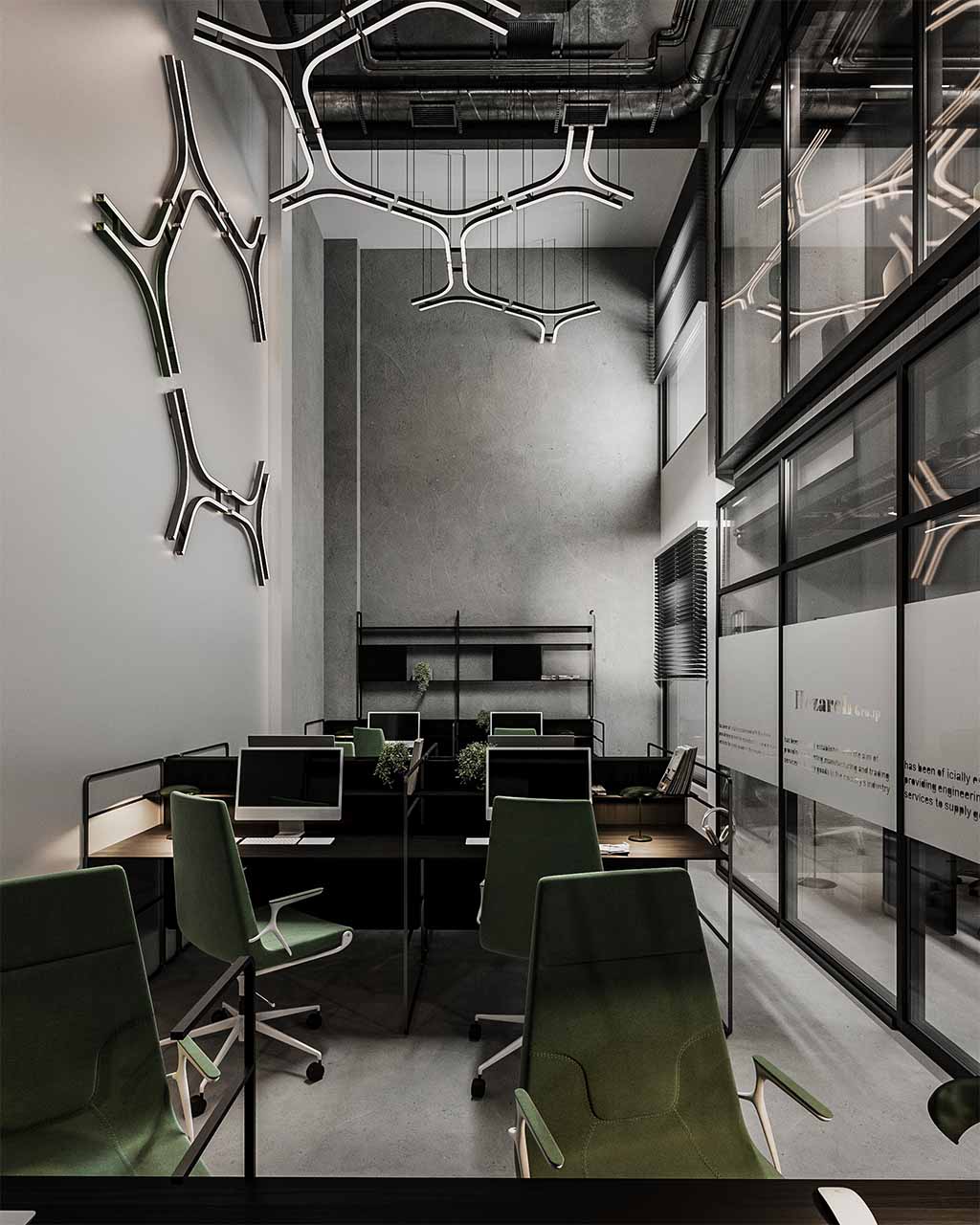
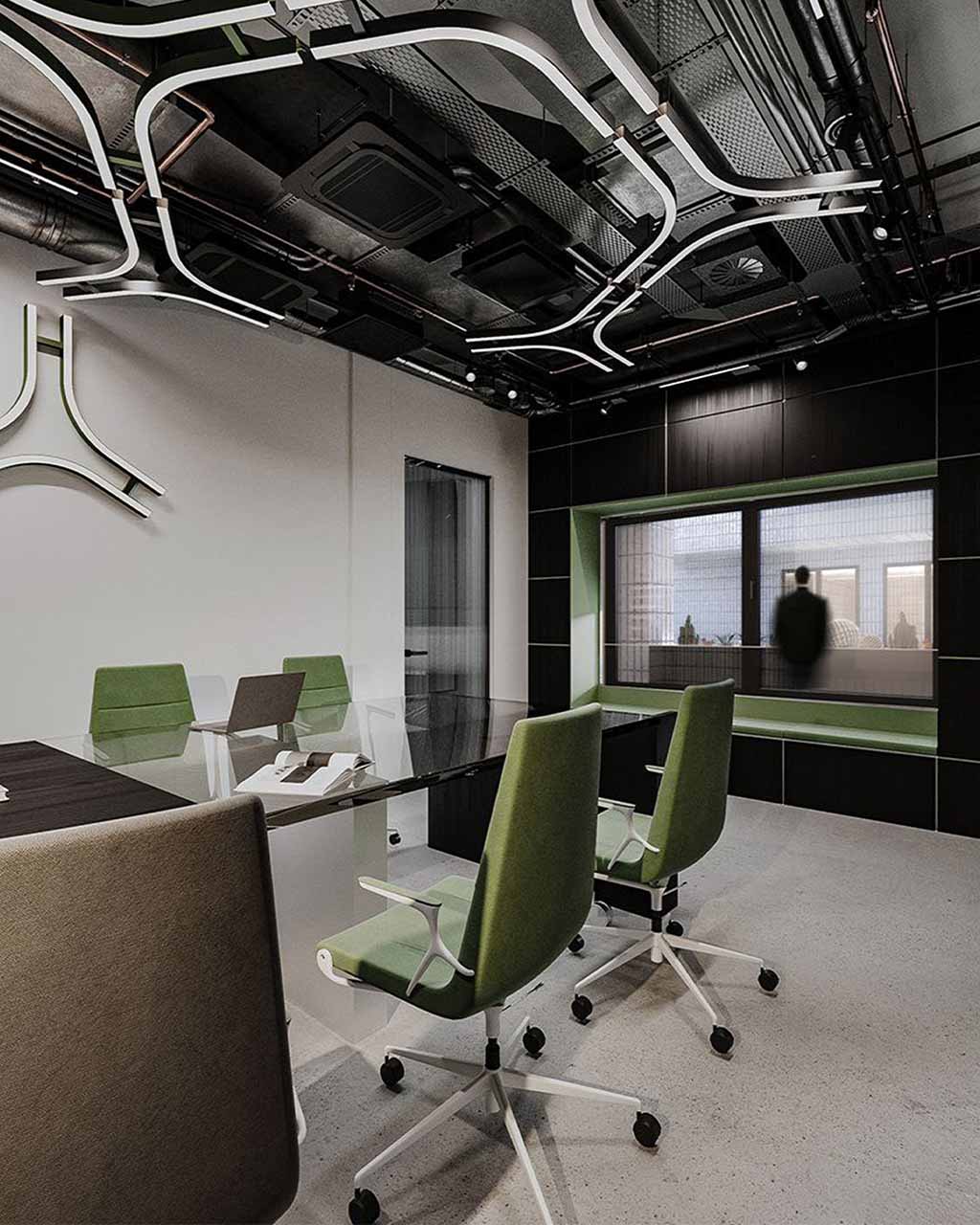
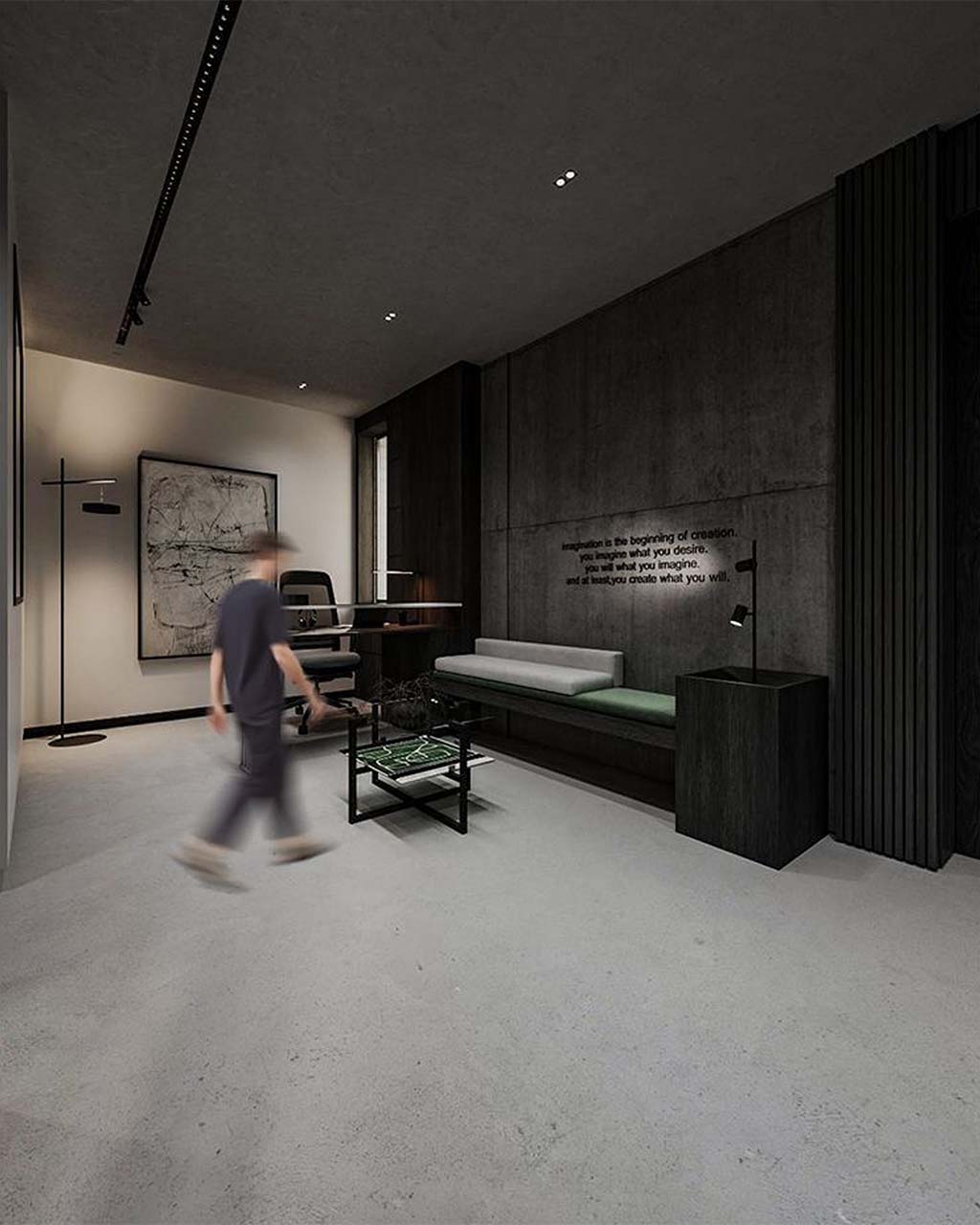
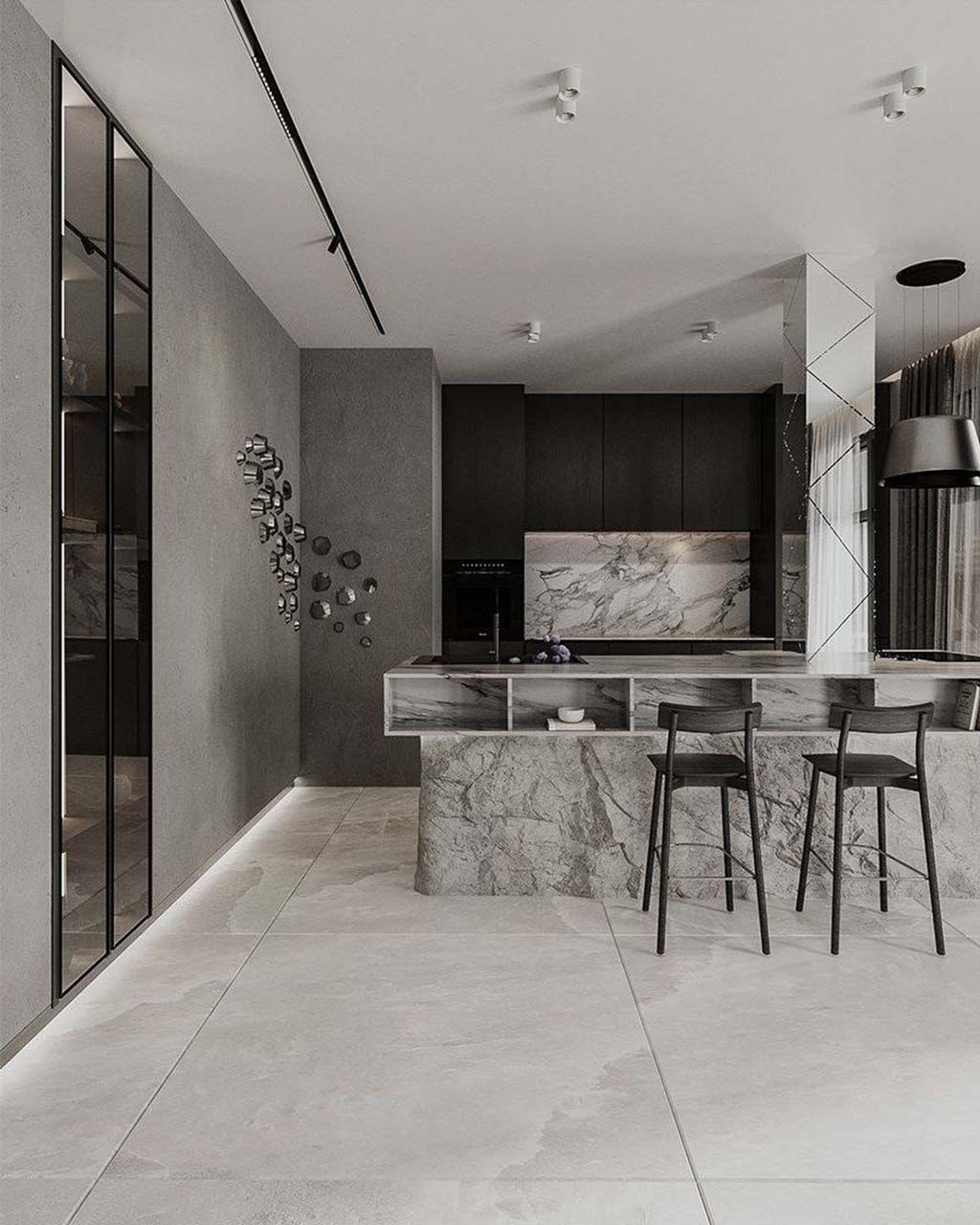
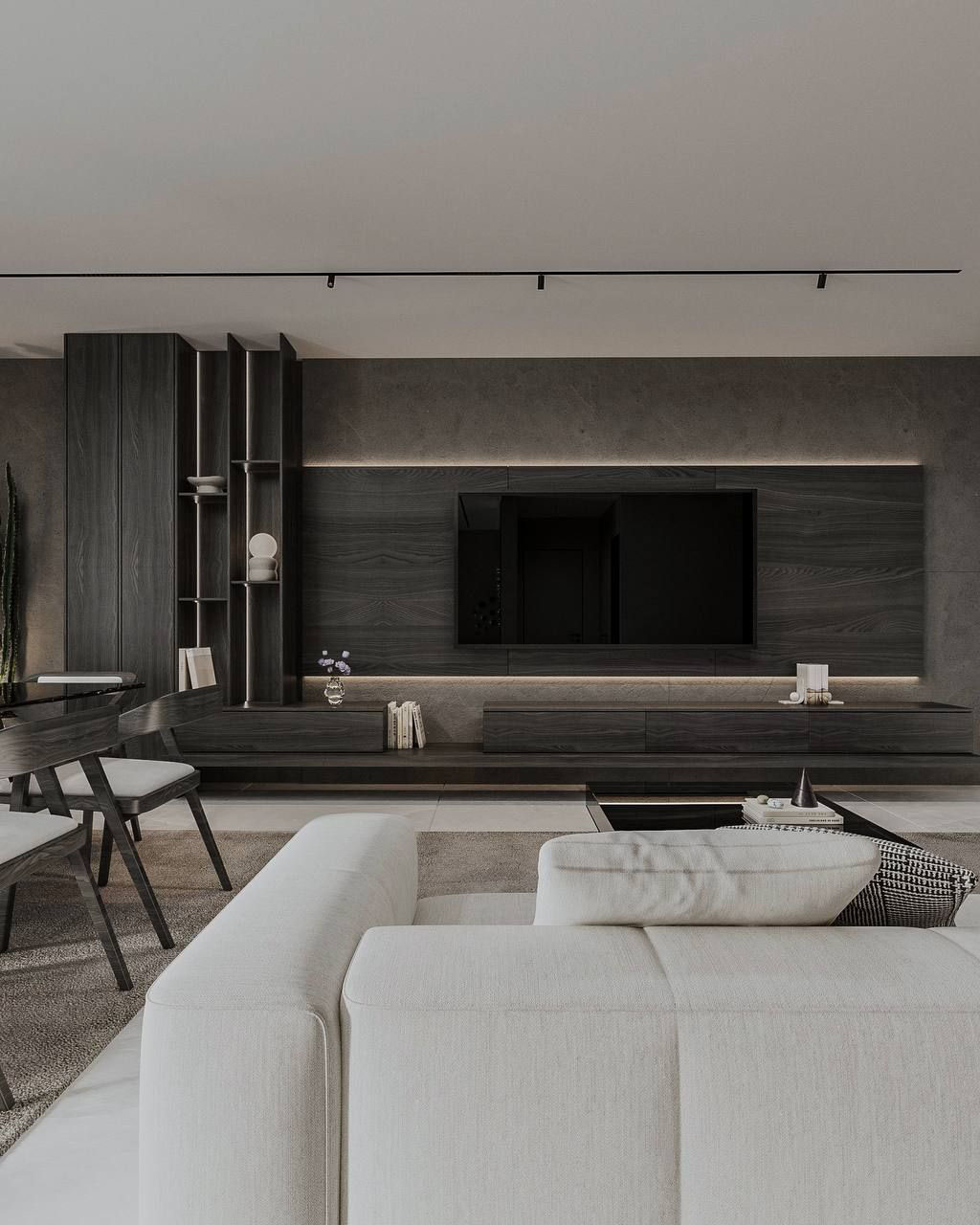
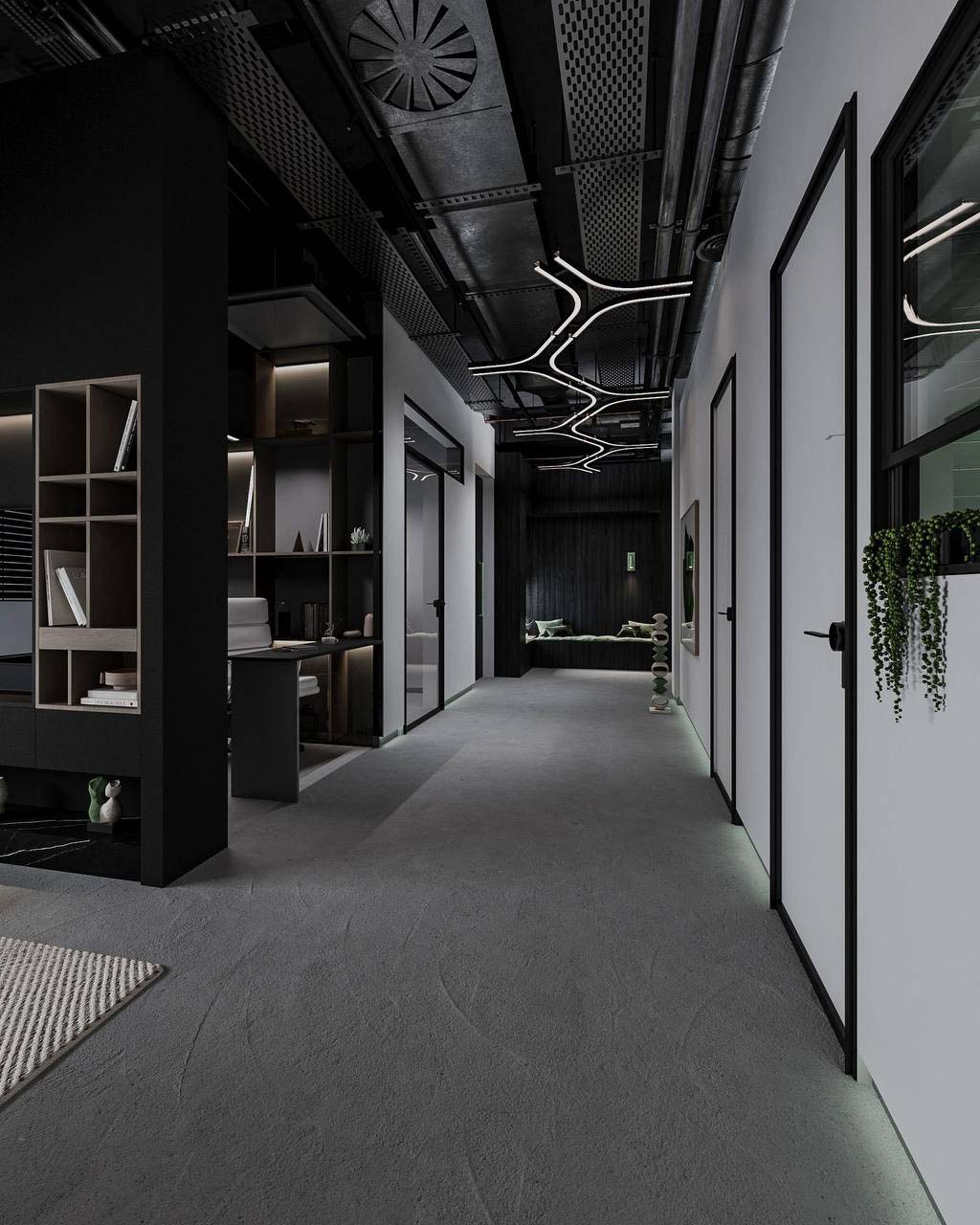
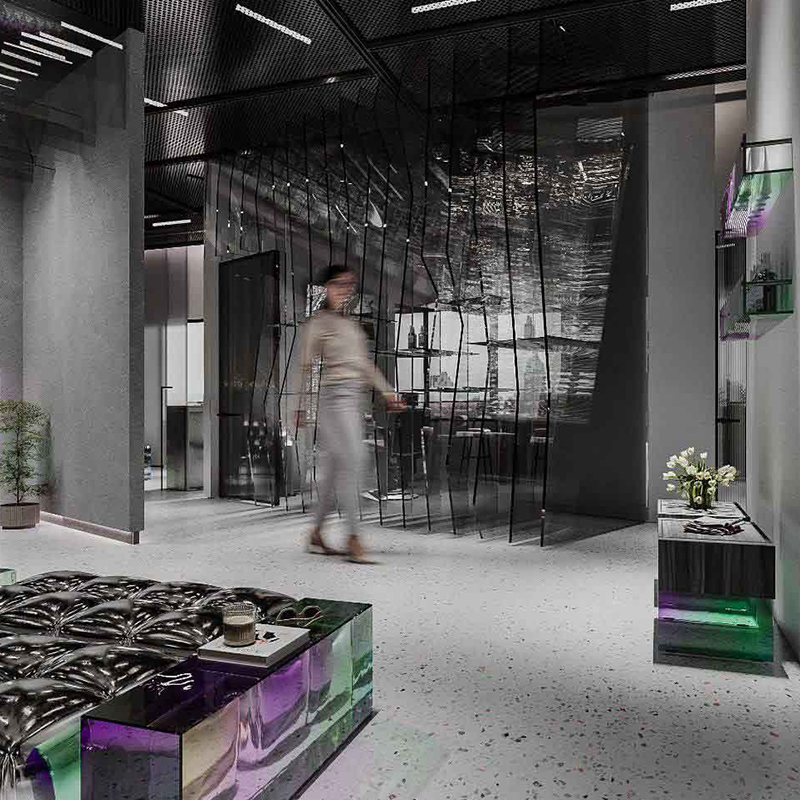
Inside the project, a conscious combination of styles has been applied to establish a fresh dialogue between space and user through form, color, and light.
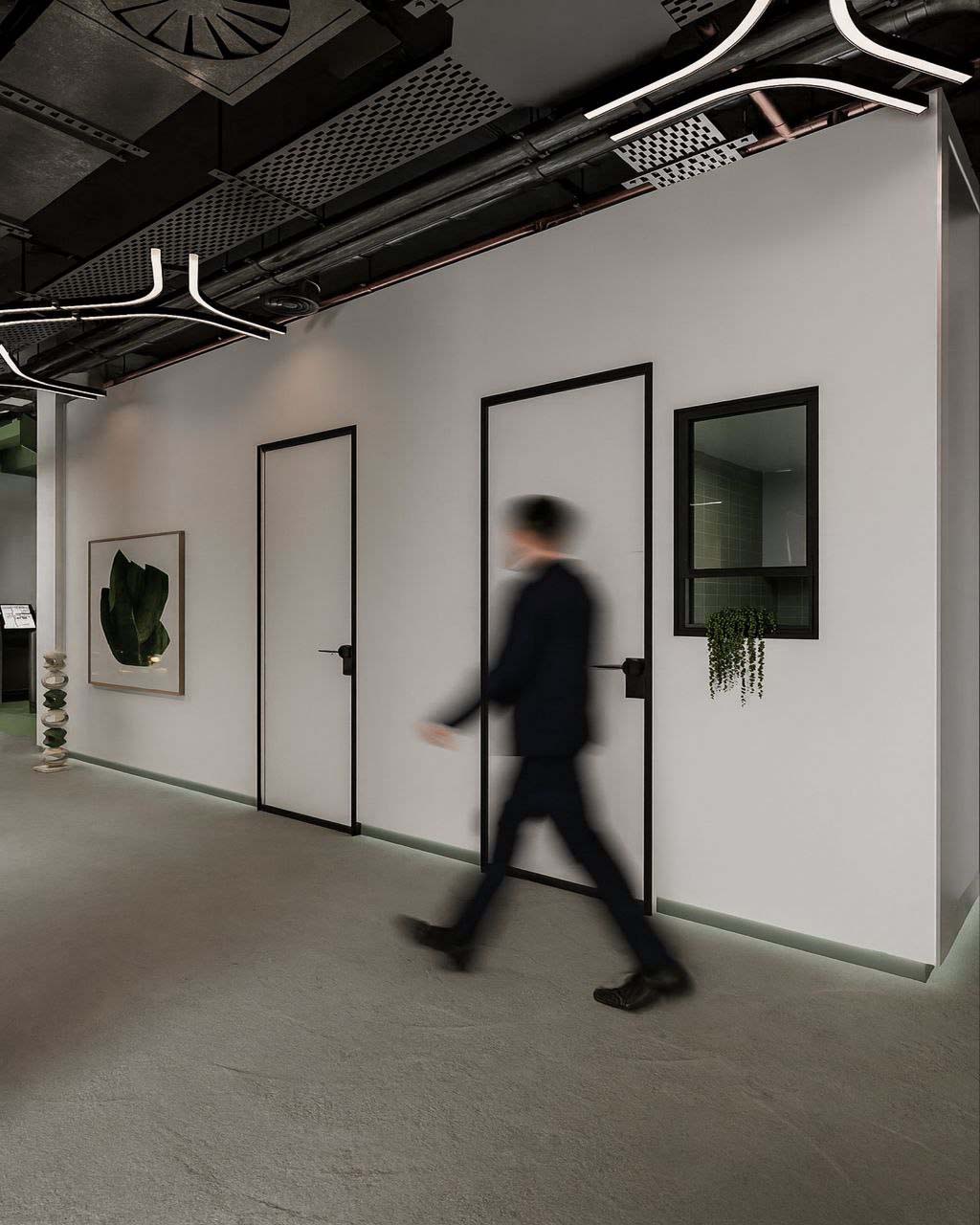
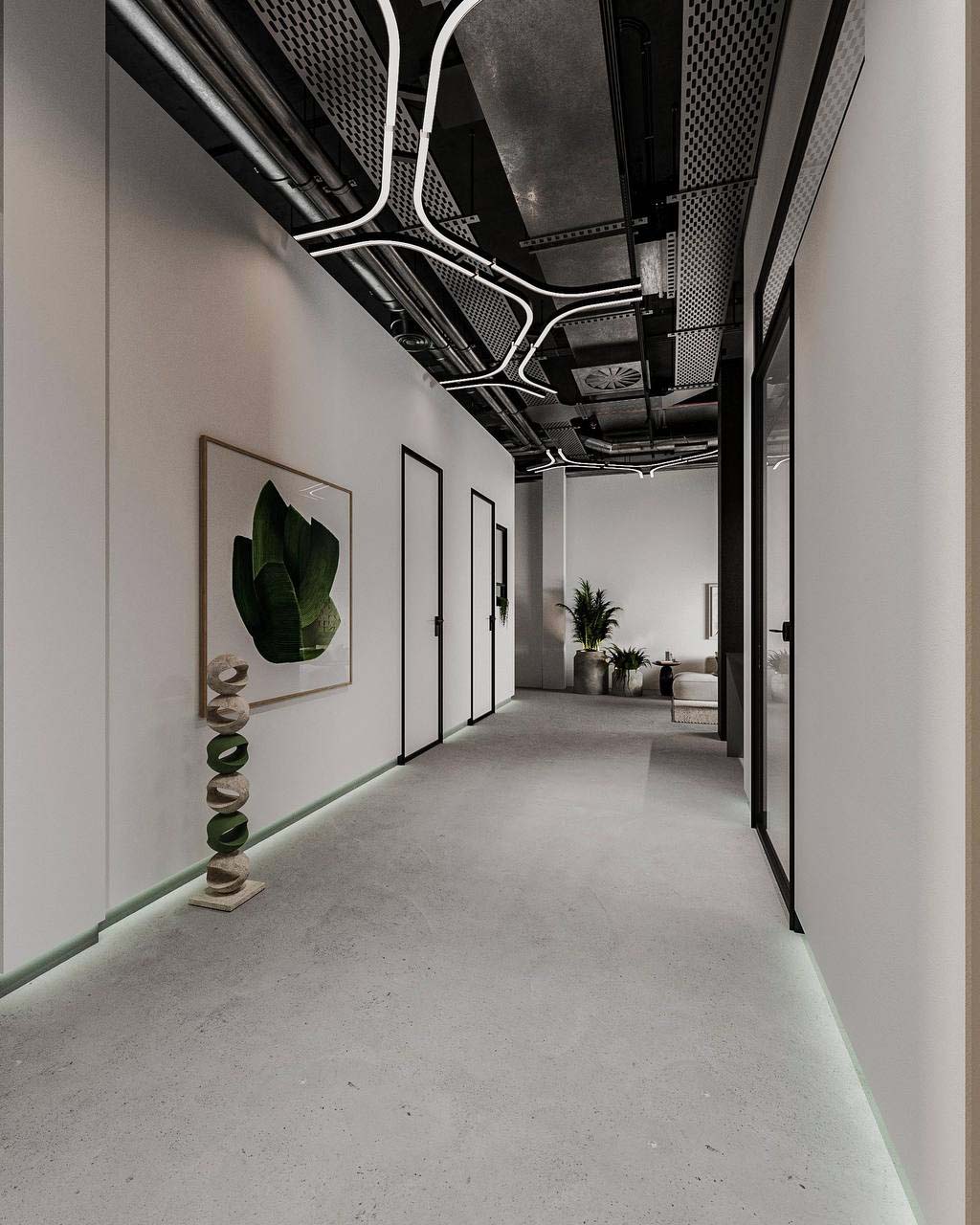
Japanese Triangles is an endeavor to craft a space that is not only aesthetically pleasing but also efficient and tailored to user needs. Human-centered design, attention to environmental considerations, careful selection of plant species, geometric skin, monochromatic palette in semi-dark spaces, thoughtful lighting, and rhythmic details all contribute to the project’s unique identity.
In this design, every detail reinterprets the project’s central concept and provides a platform for growth, motivation, and the realization of the best version of its occupants.Green Bridge: Connecting Two Buildings with Sustainable Design
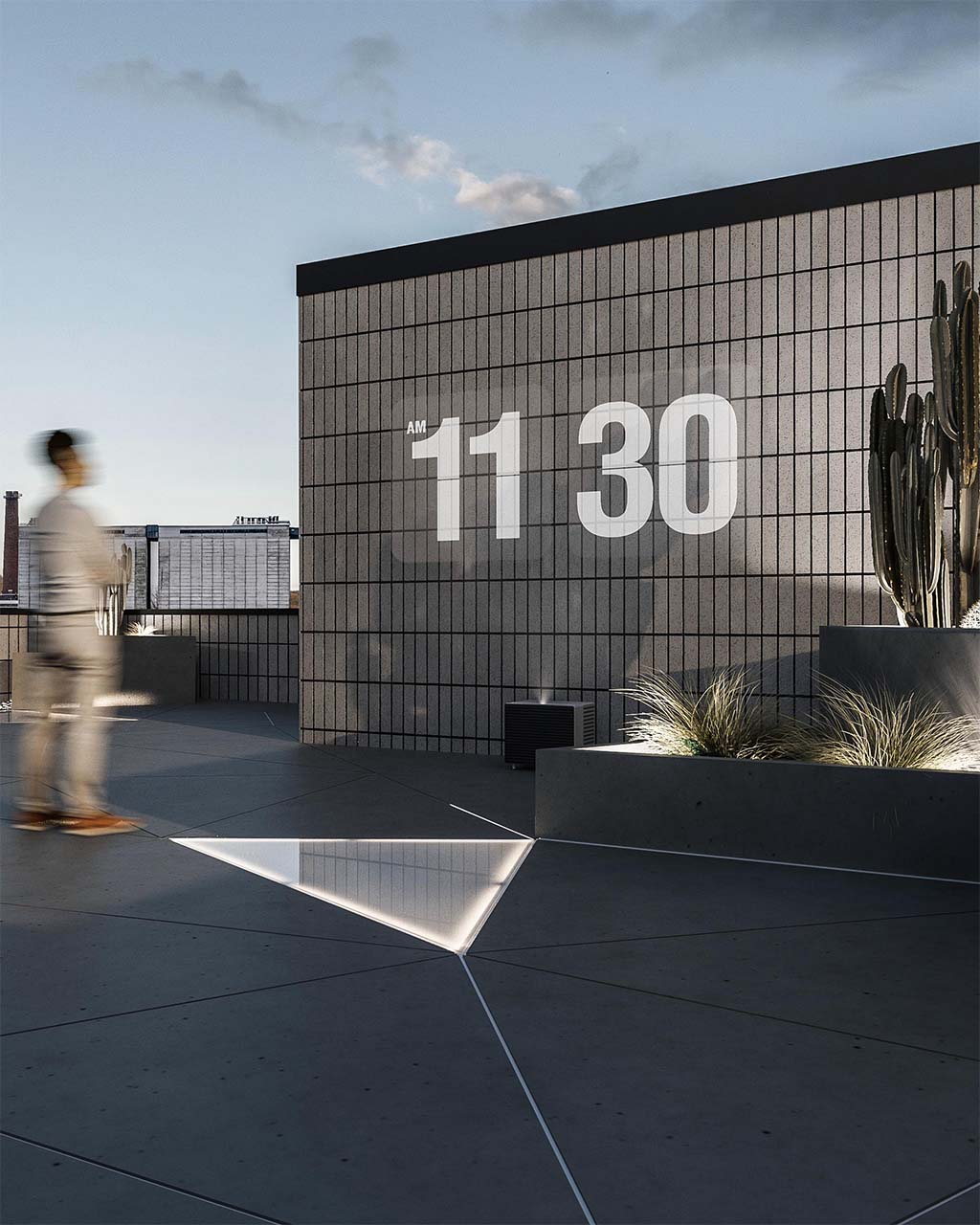
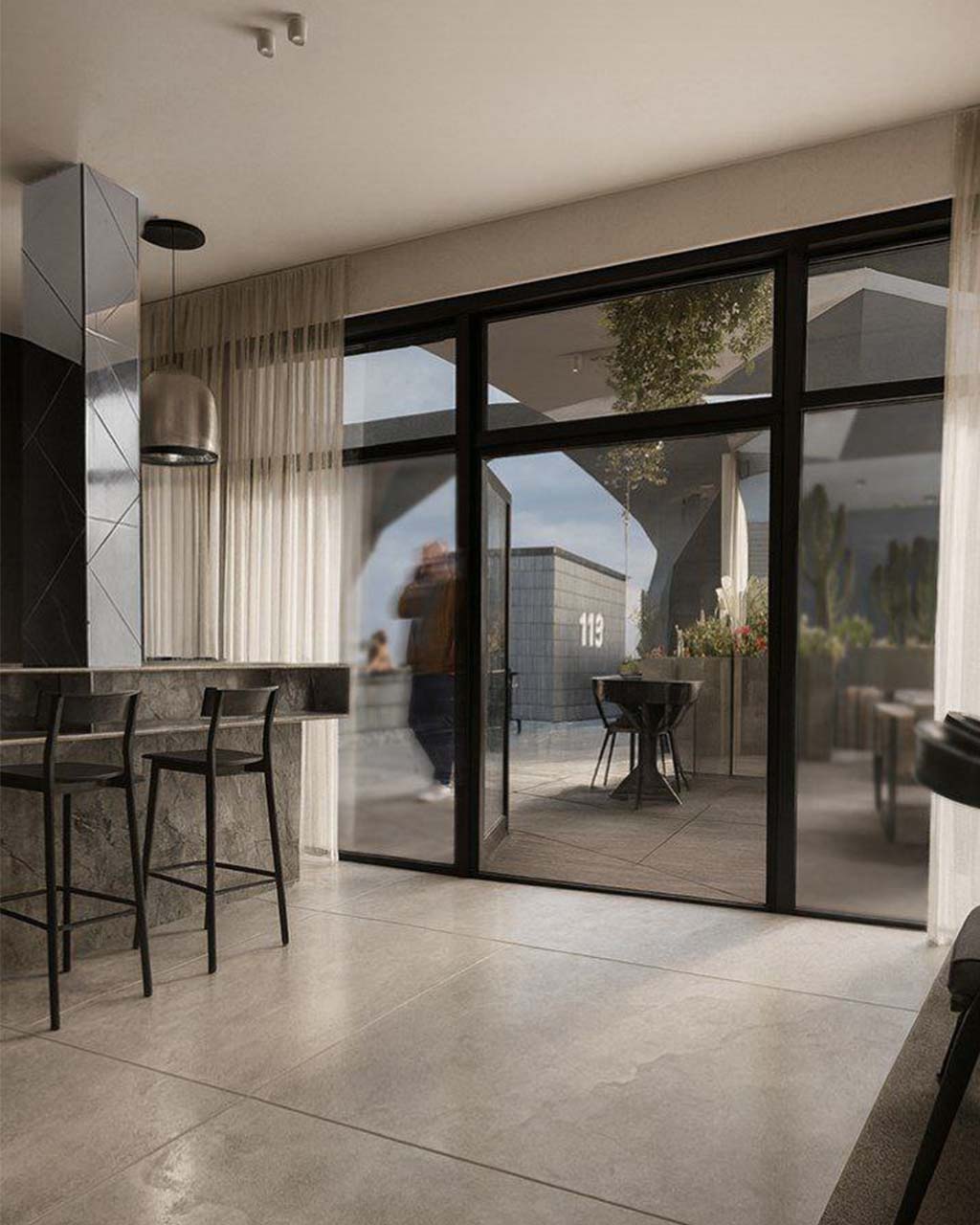
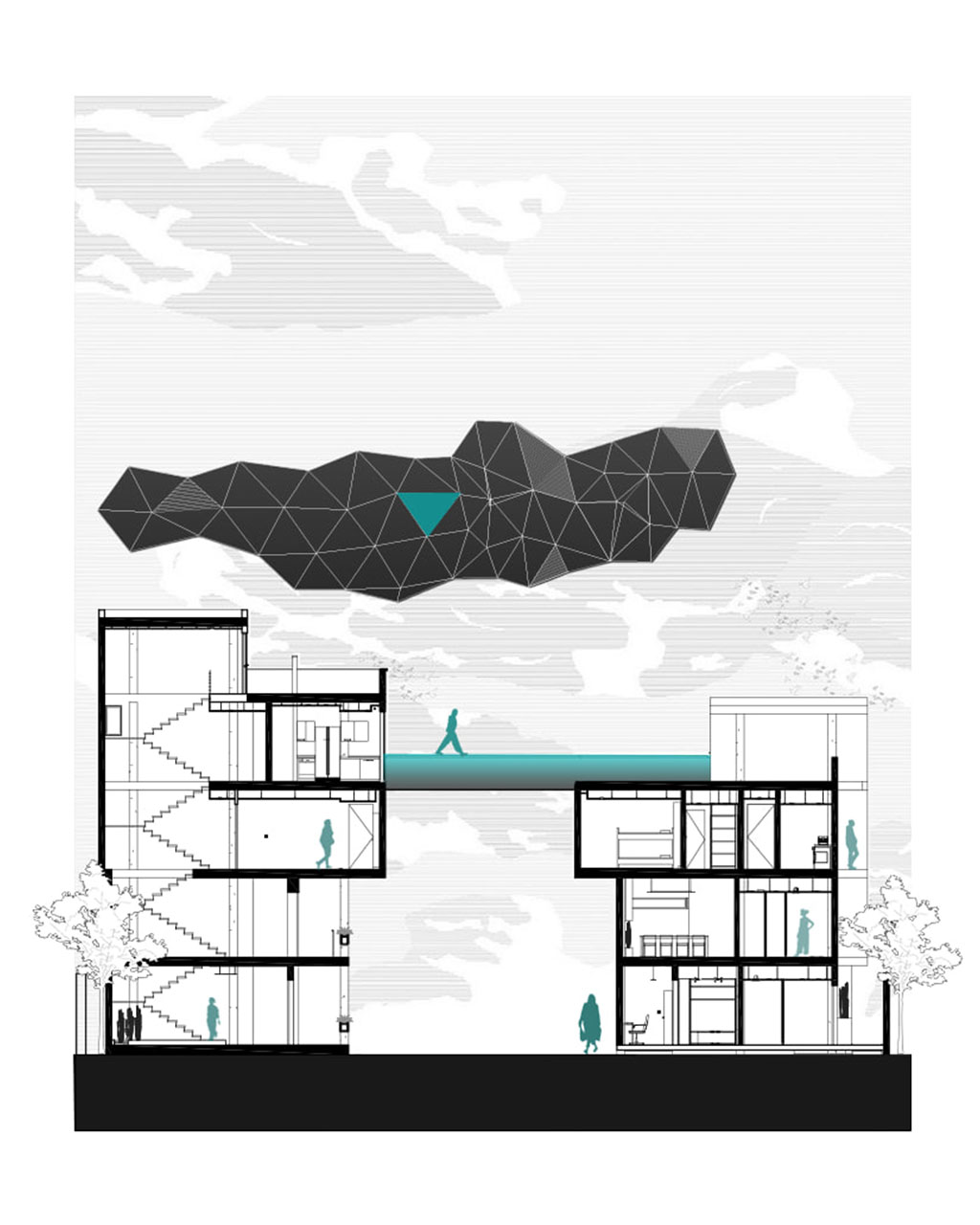
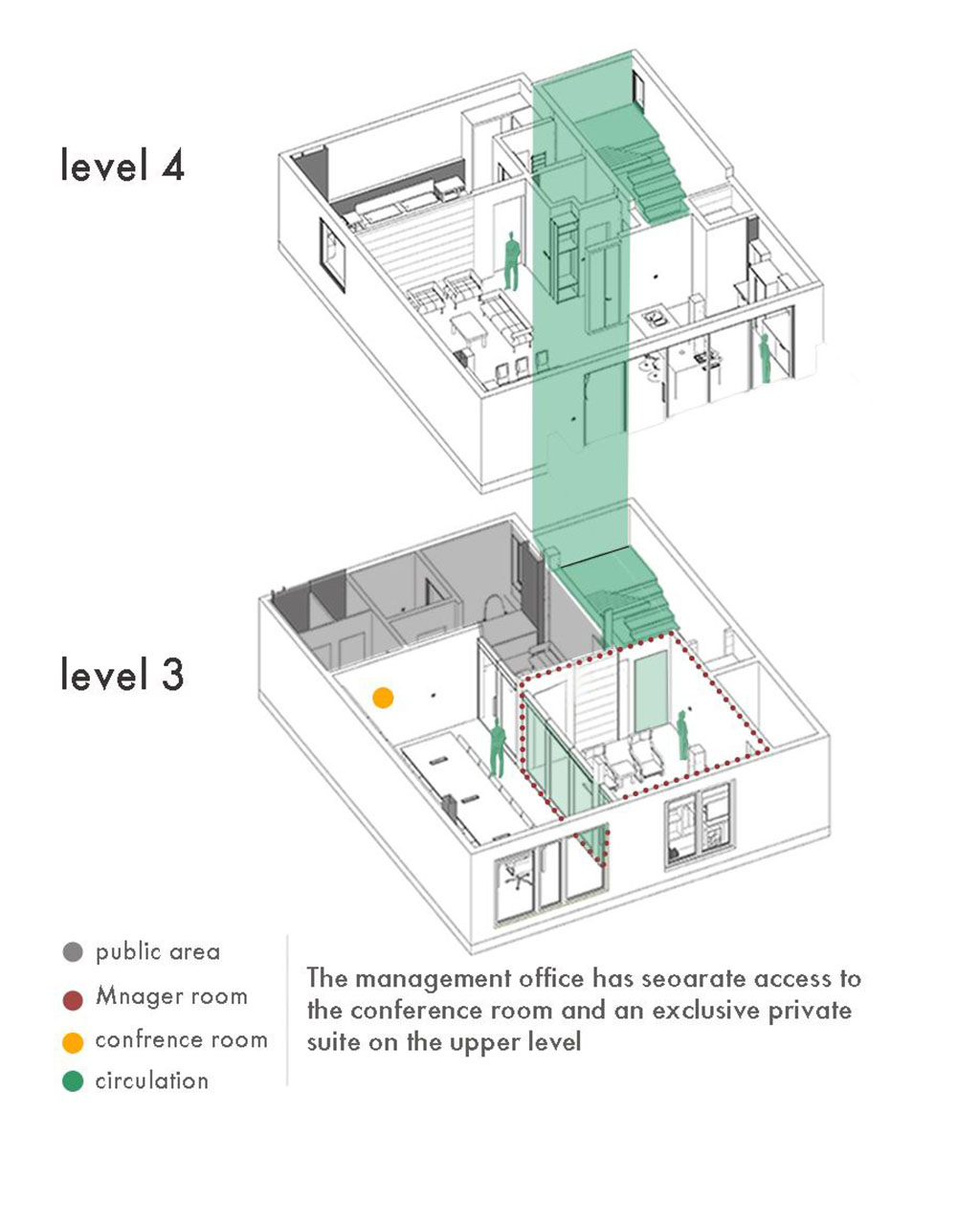
The green bridge connects the fourth floor of the office building to the third floor of the guardhouse, creating both a private rooftop passageway and a hanging garden that enhances the building’s environmental performance. This space provides a dynamic and lively experience where architecture, nature, and people come together in harmonious balance, serving as a symbol of sustainability and inspiration.
Additionally, the bridge offers an exclusive setting for meetings, gatherings, and special events, giving the project a distinctive and memorable architectural identity.
Dynamic and Human-Centered Interior Design Inspired by Multiple Styles
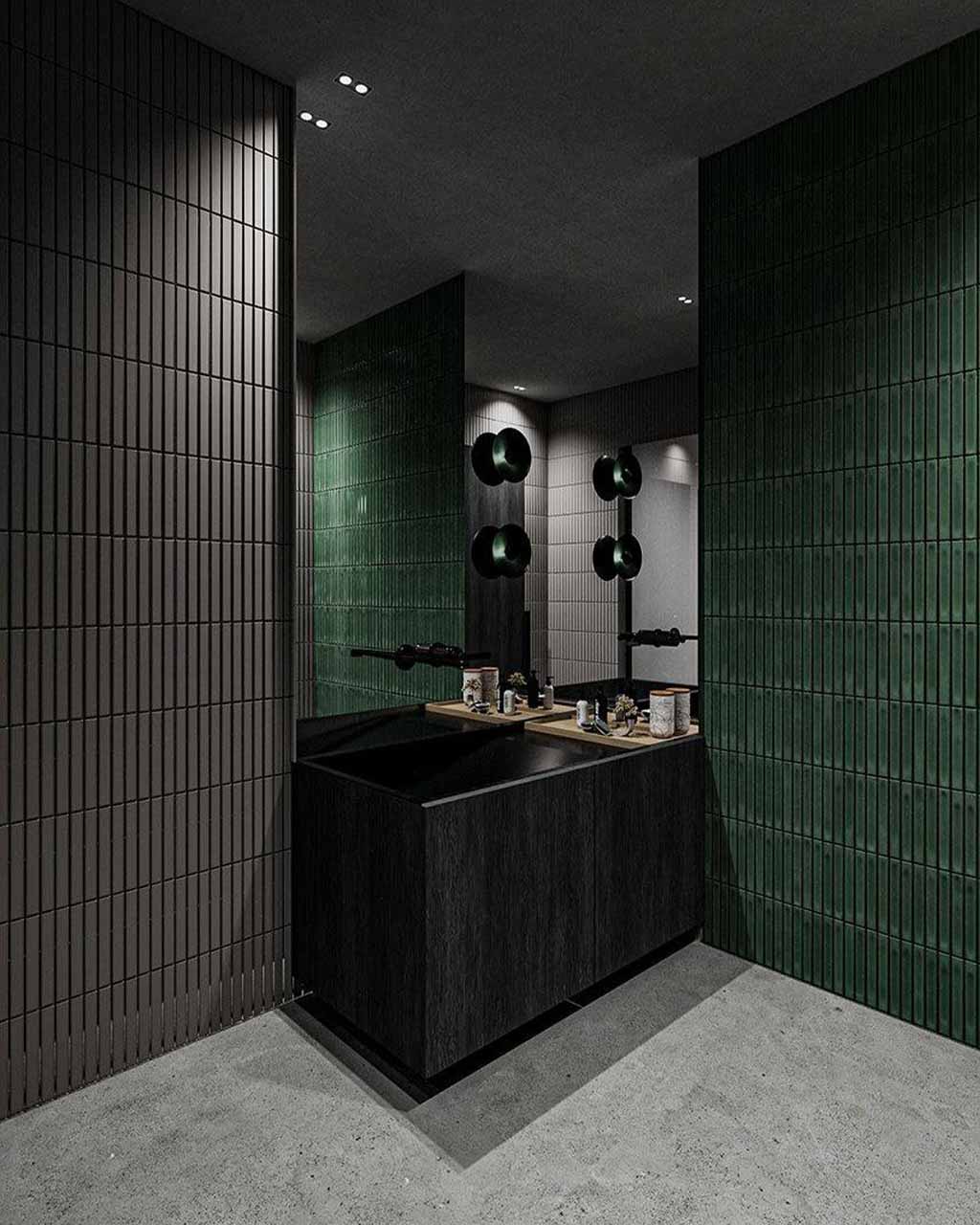
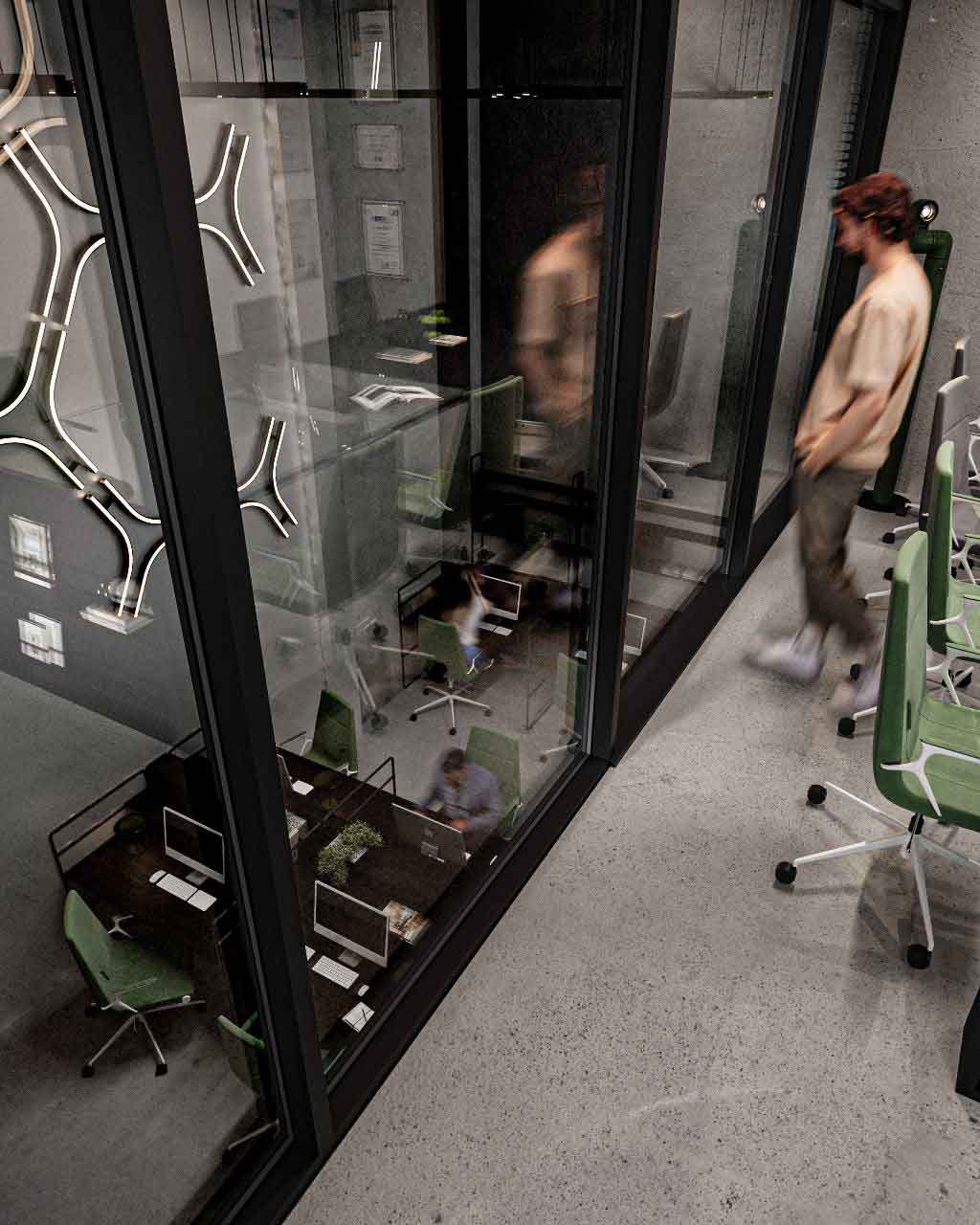
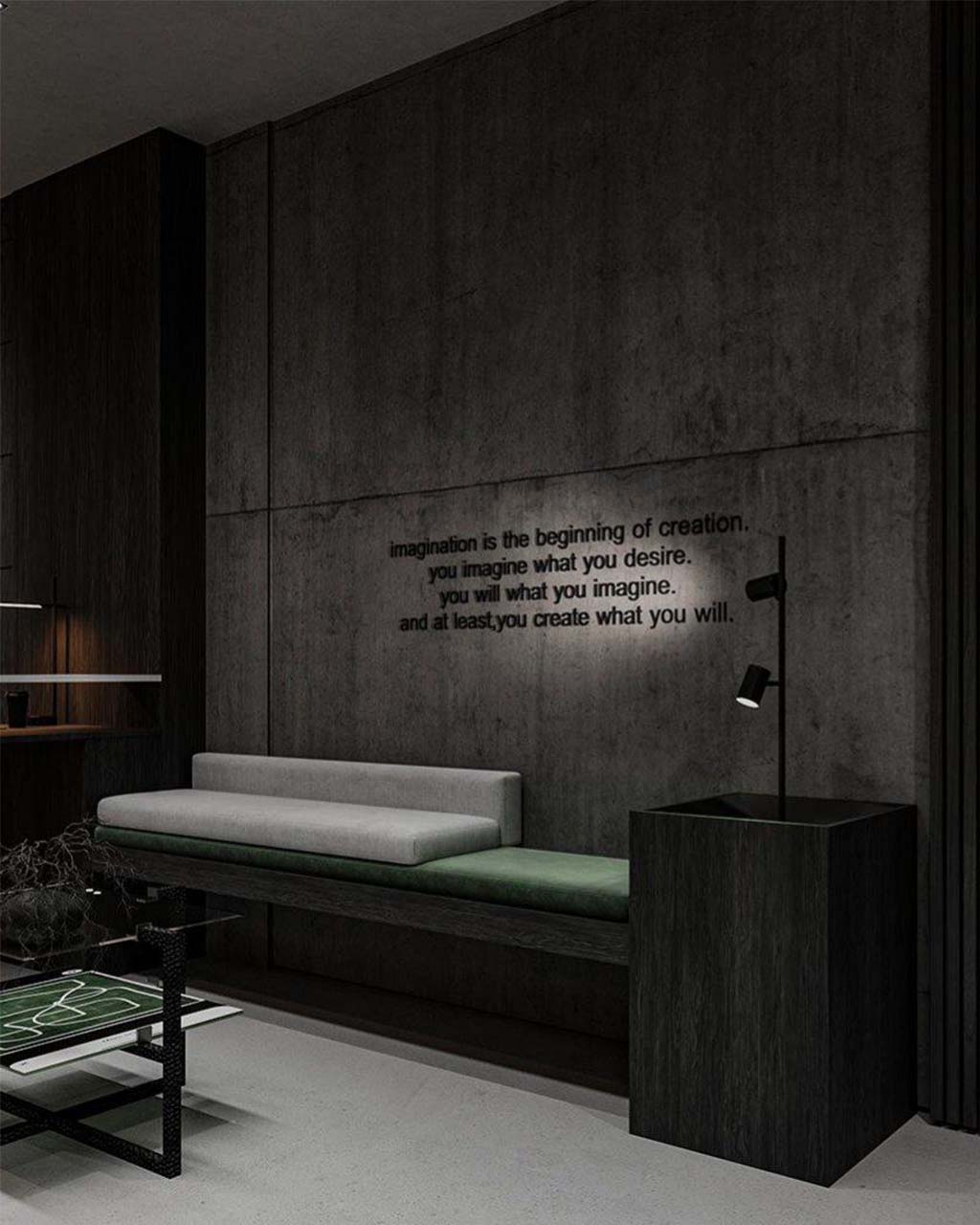
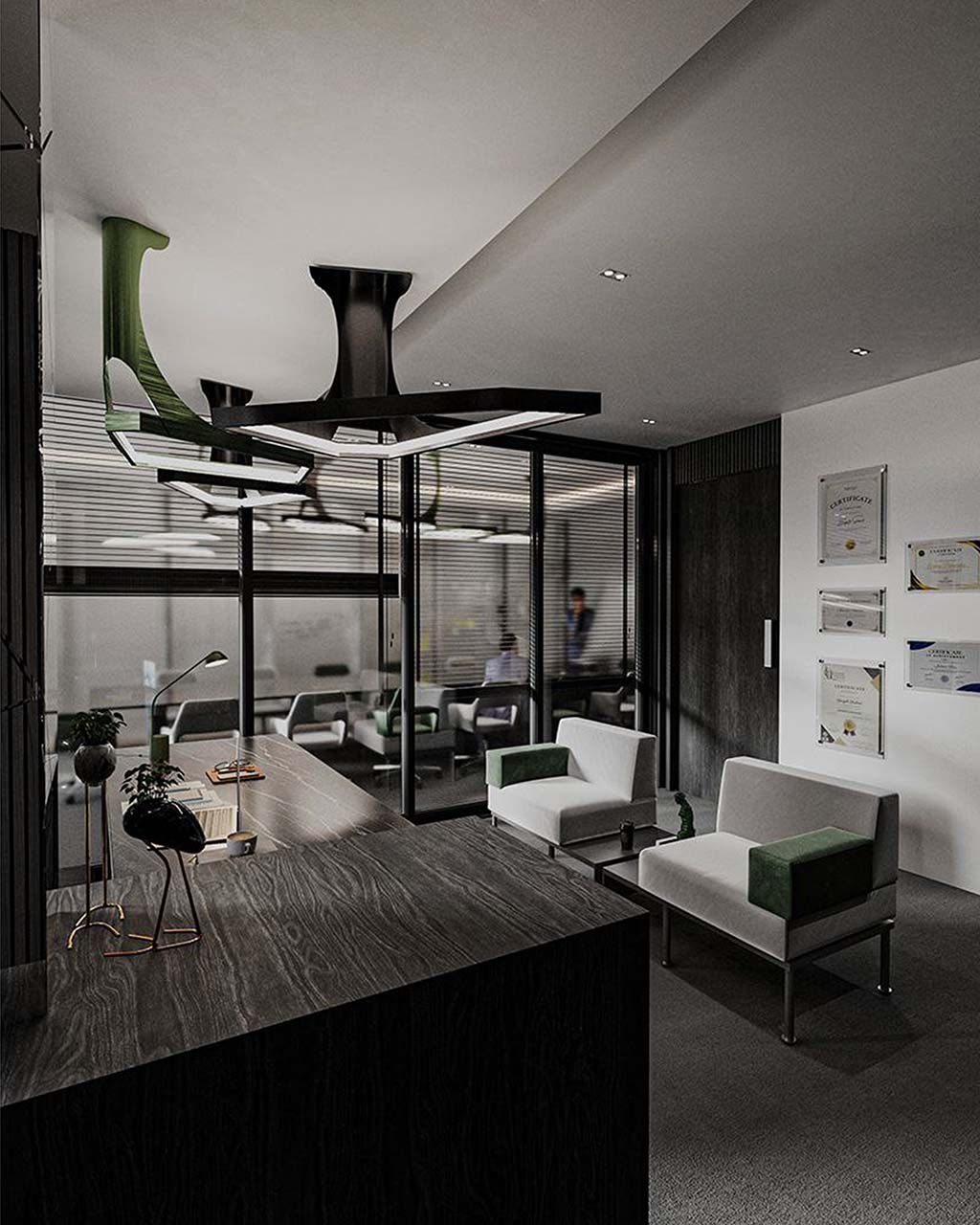
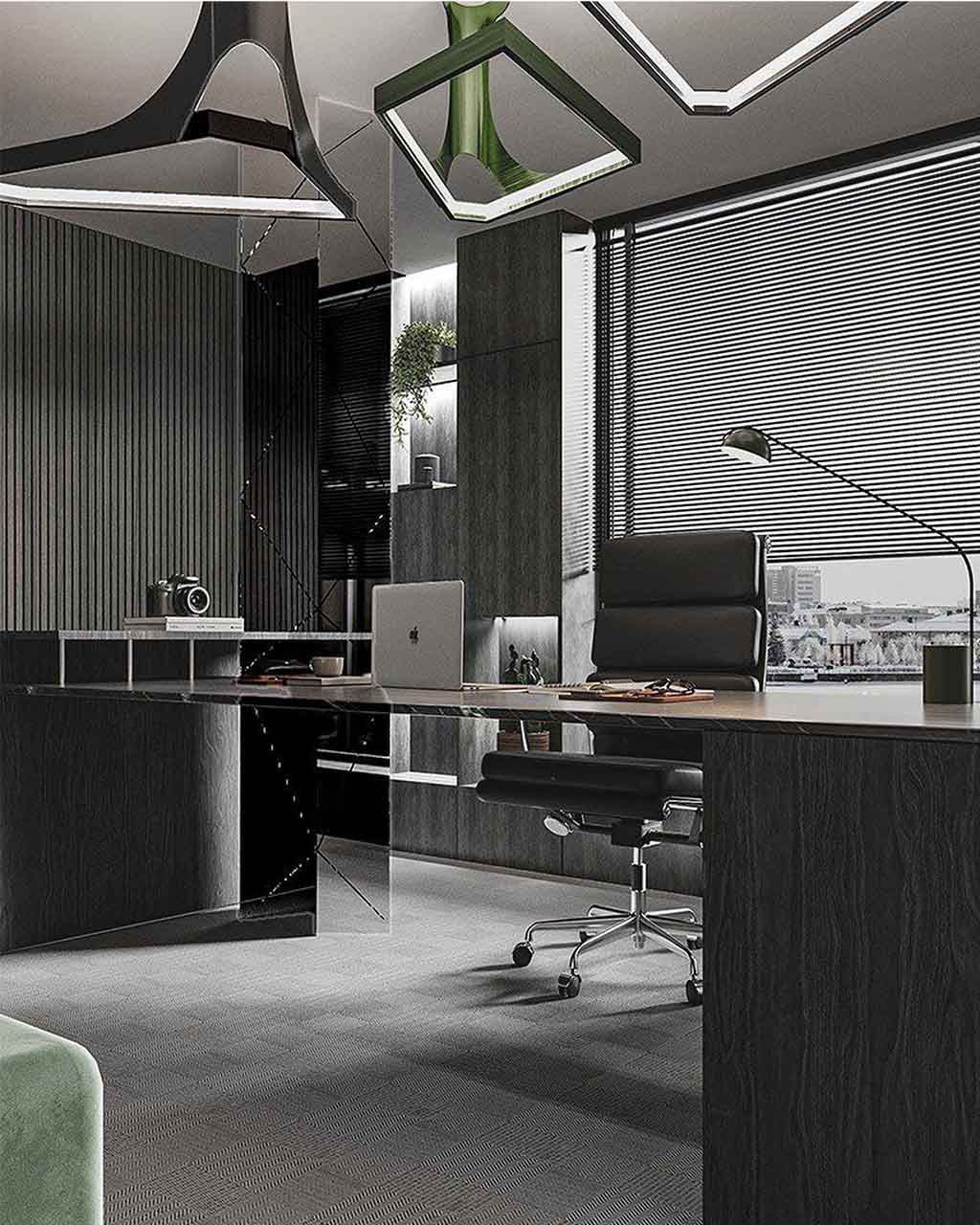
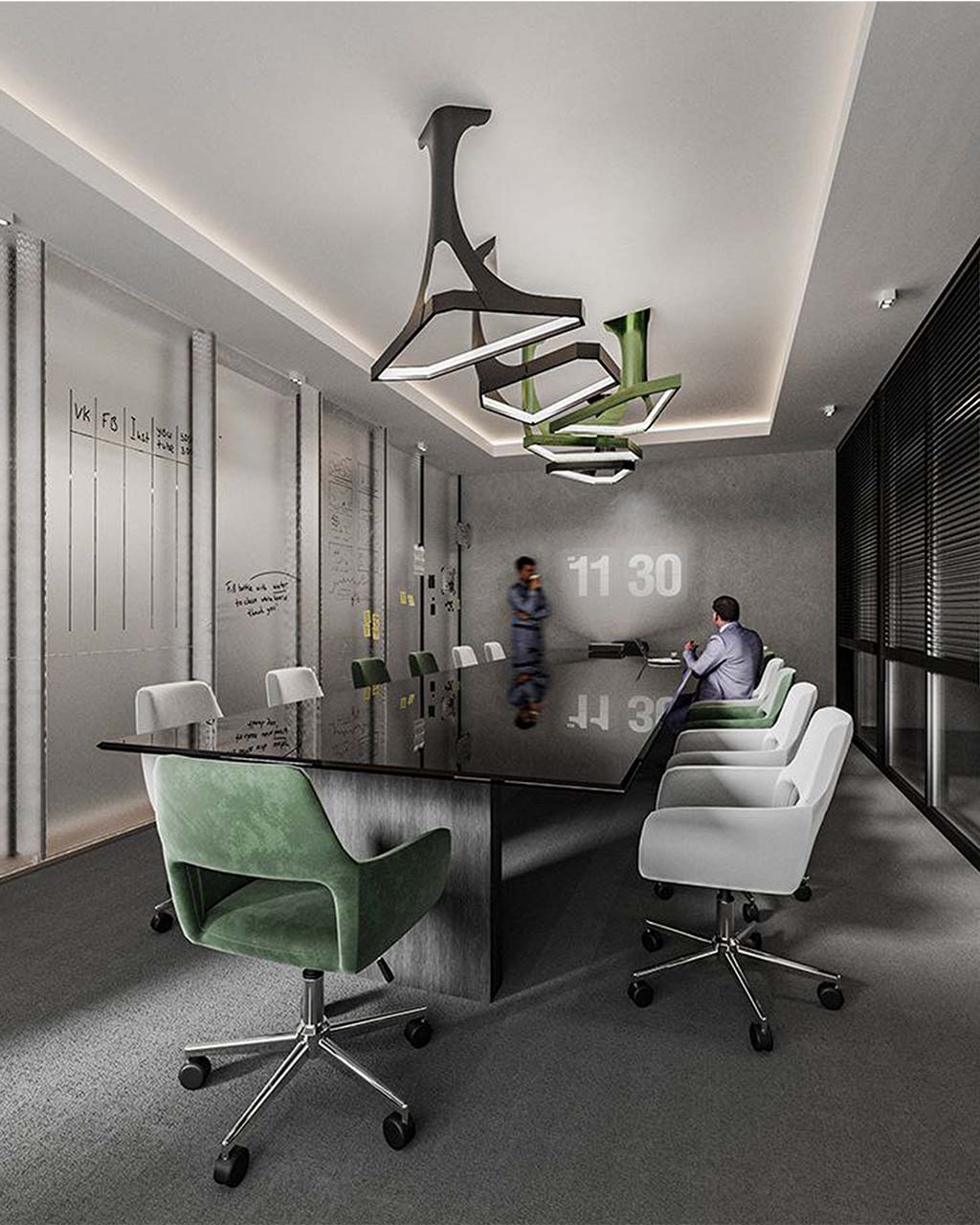
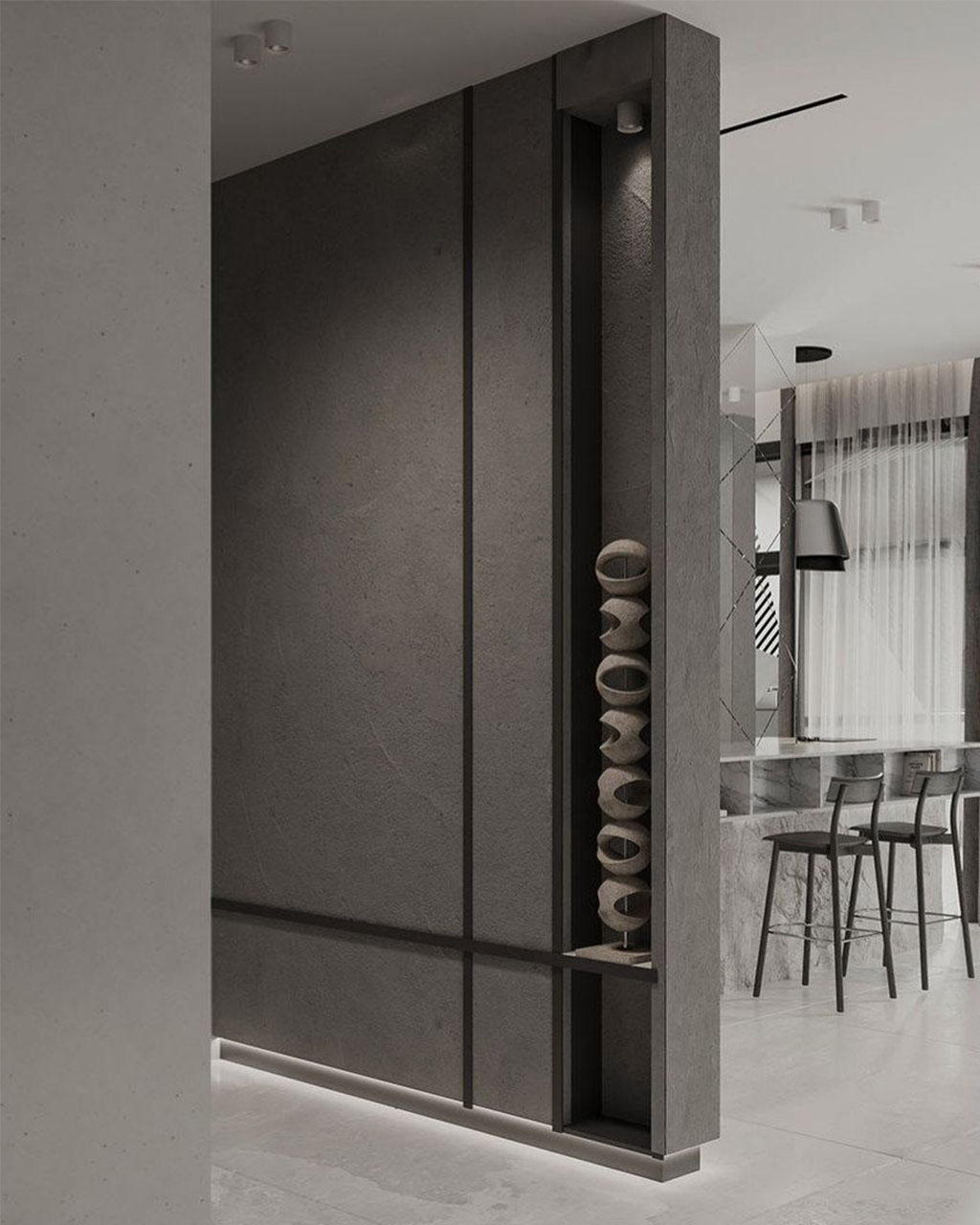
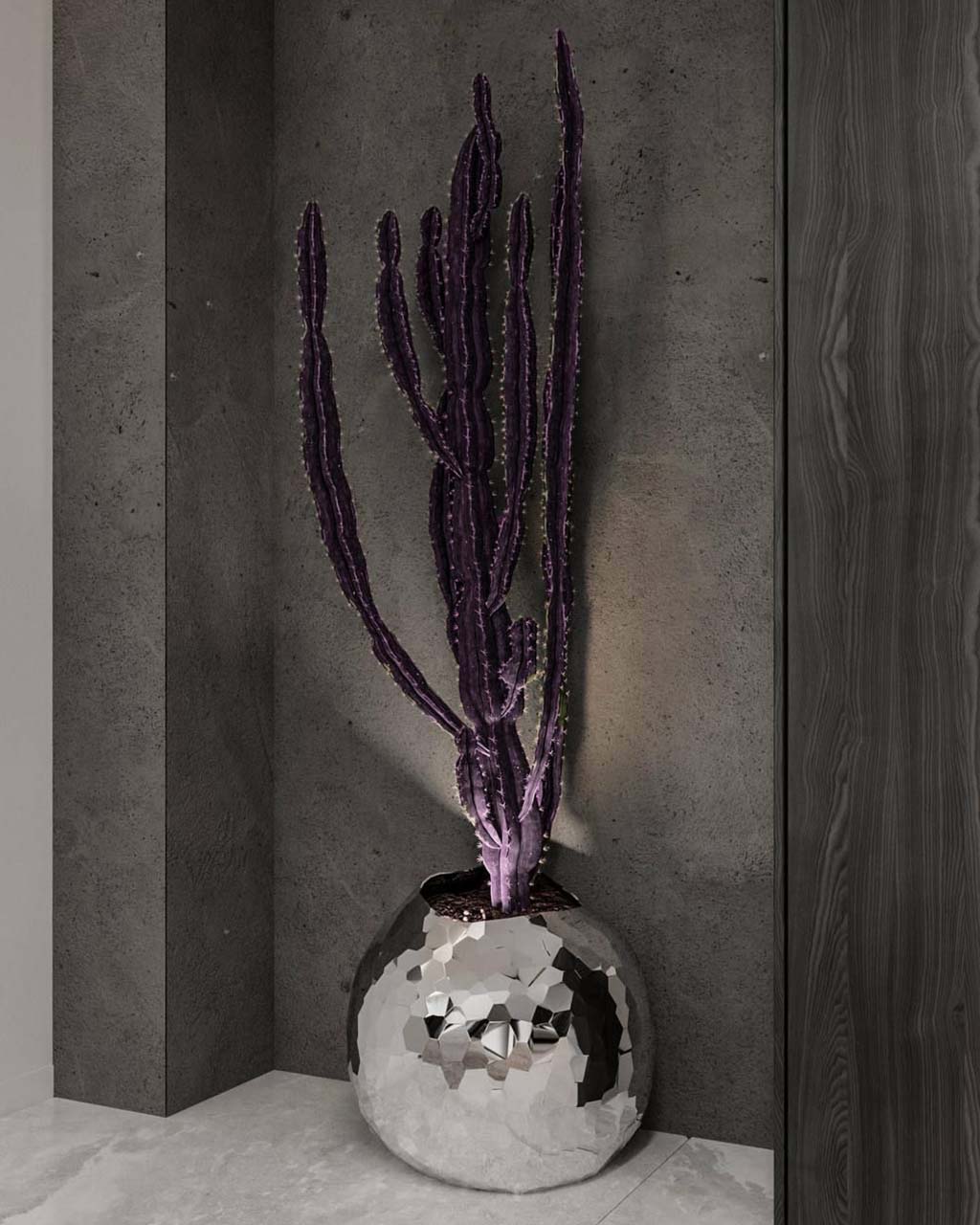
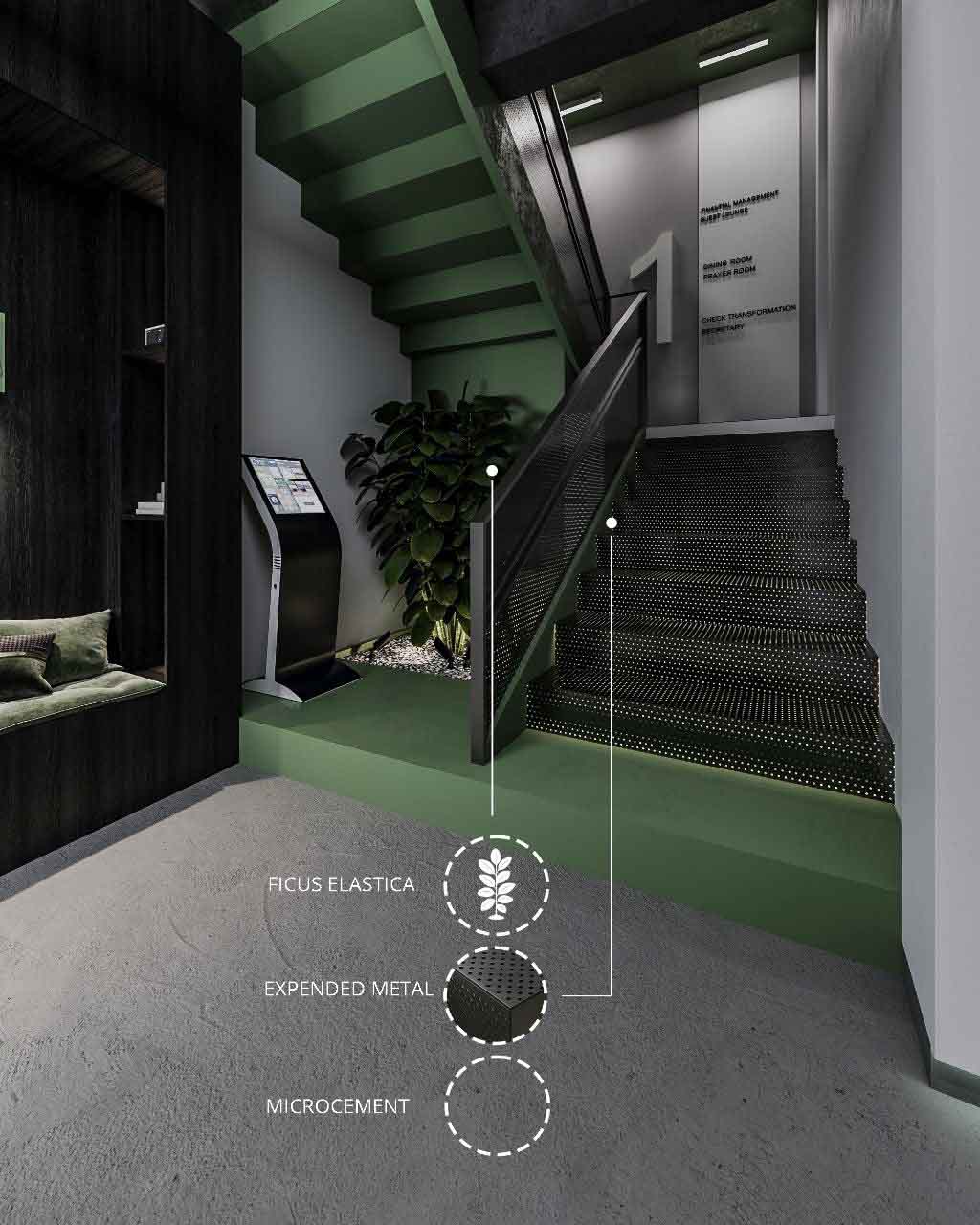
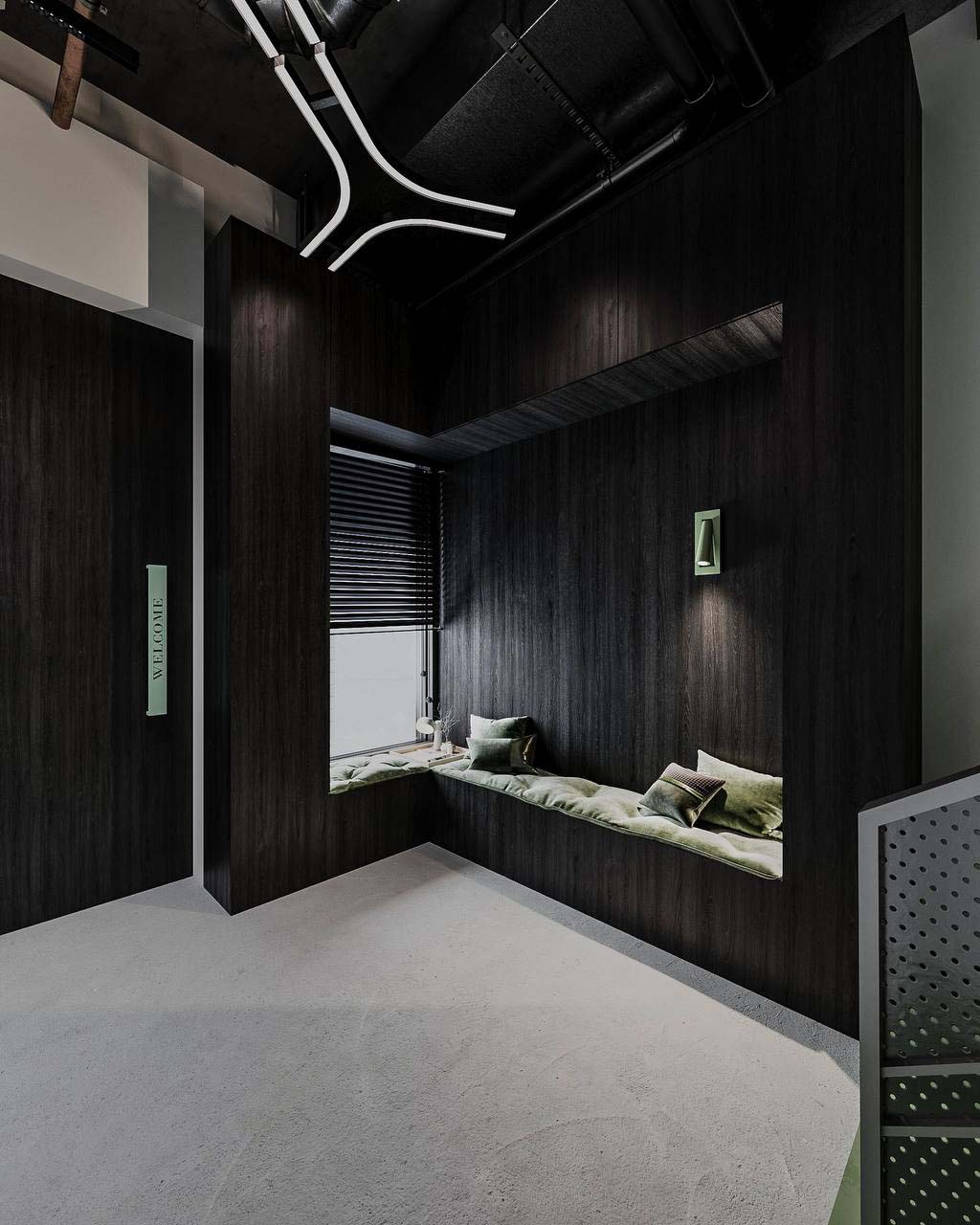
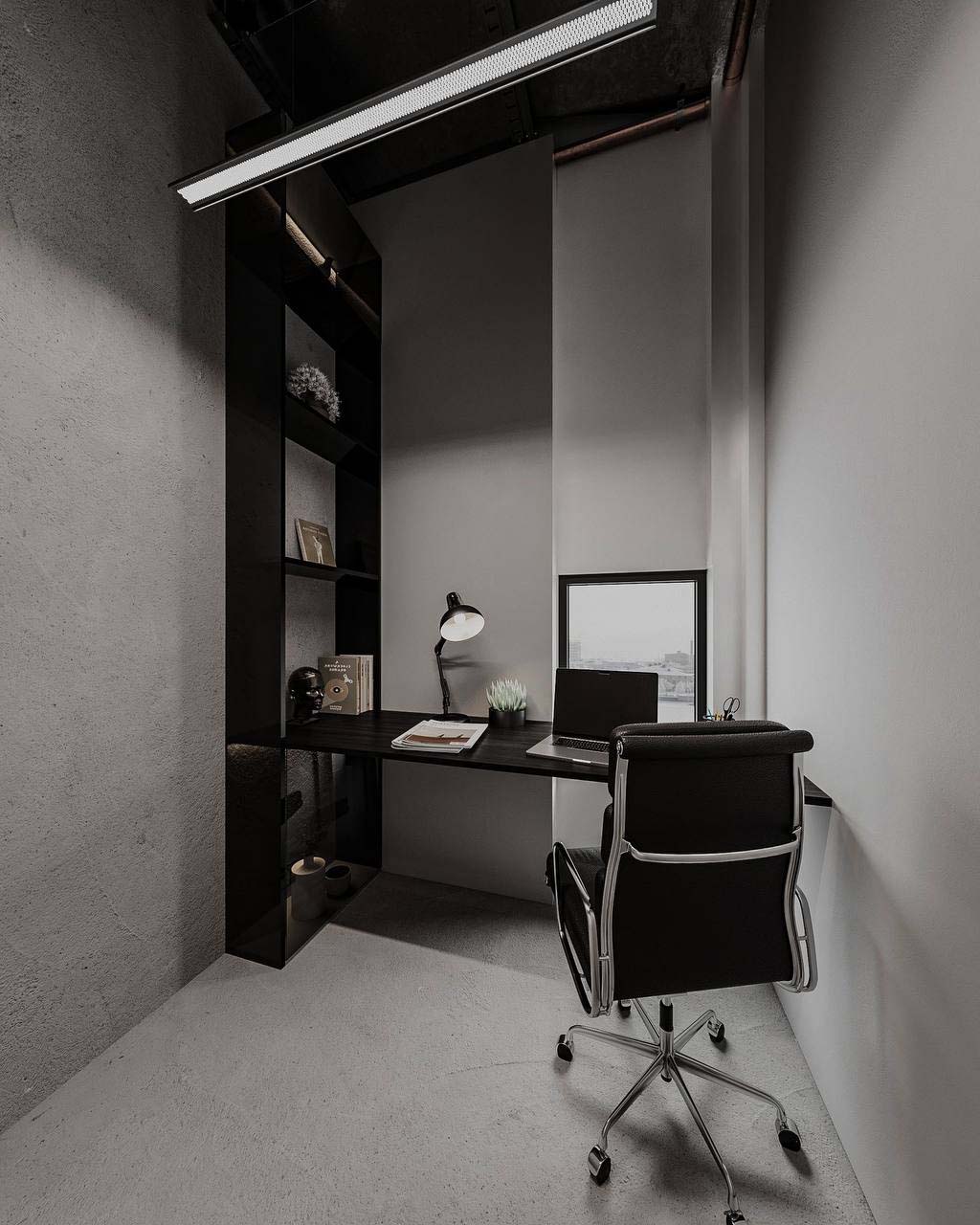
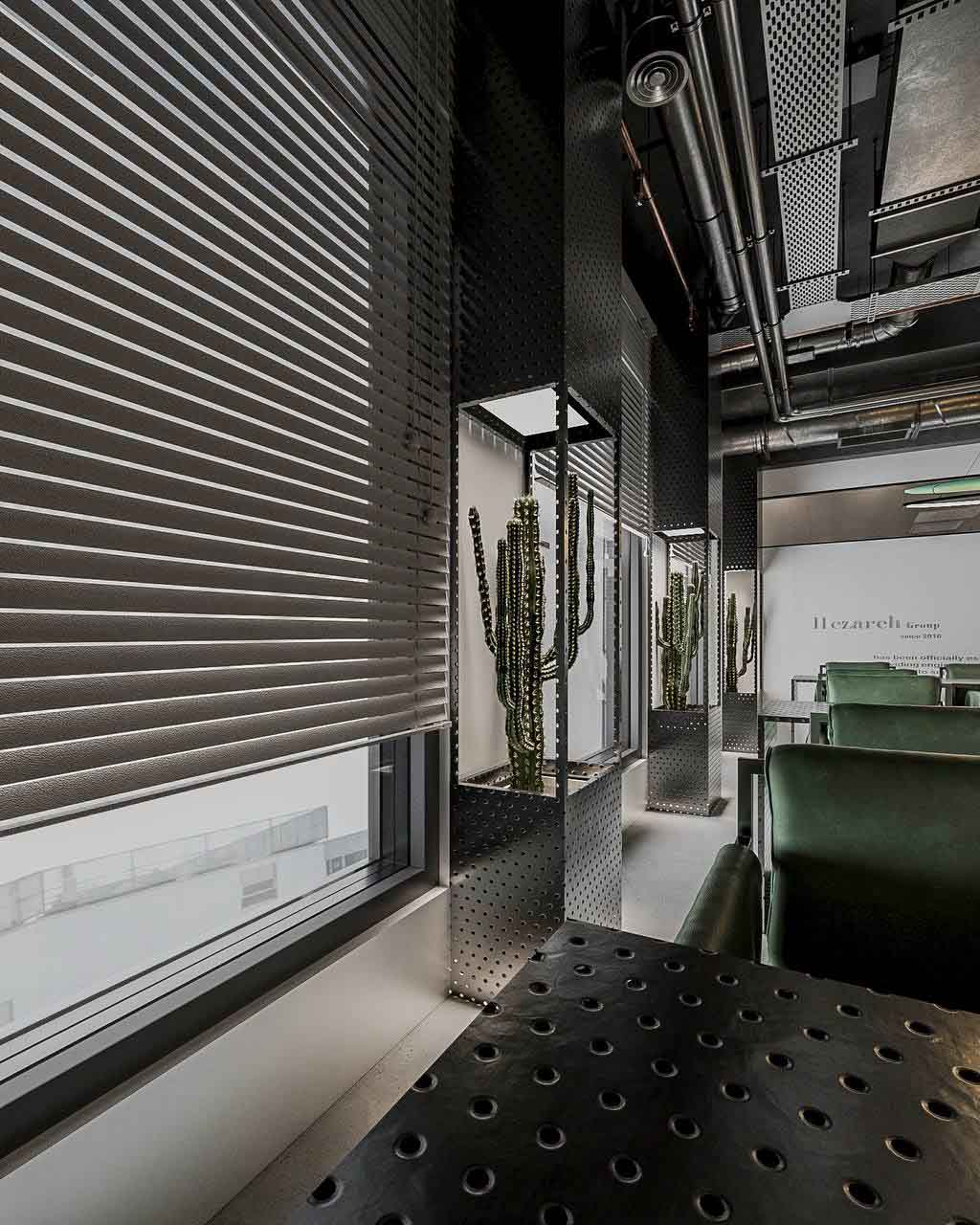
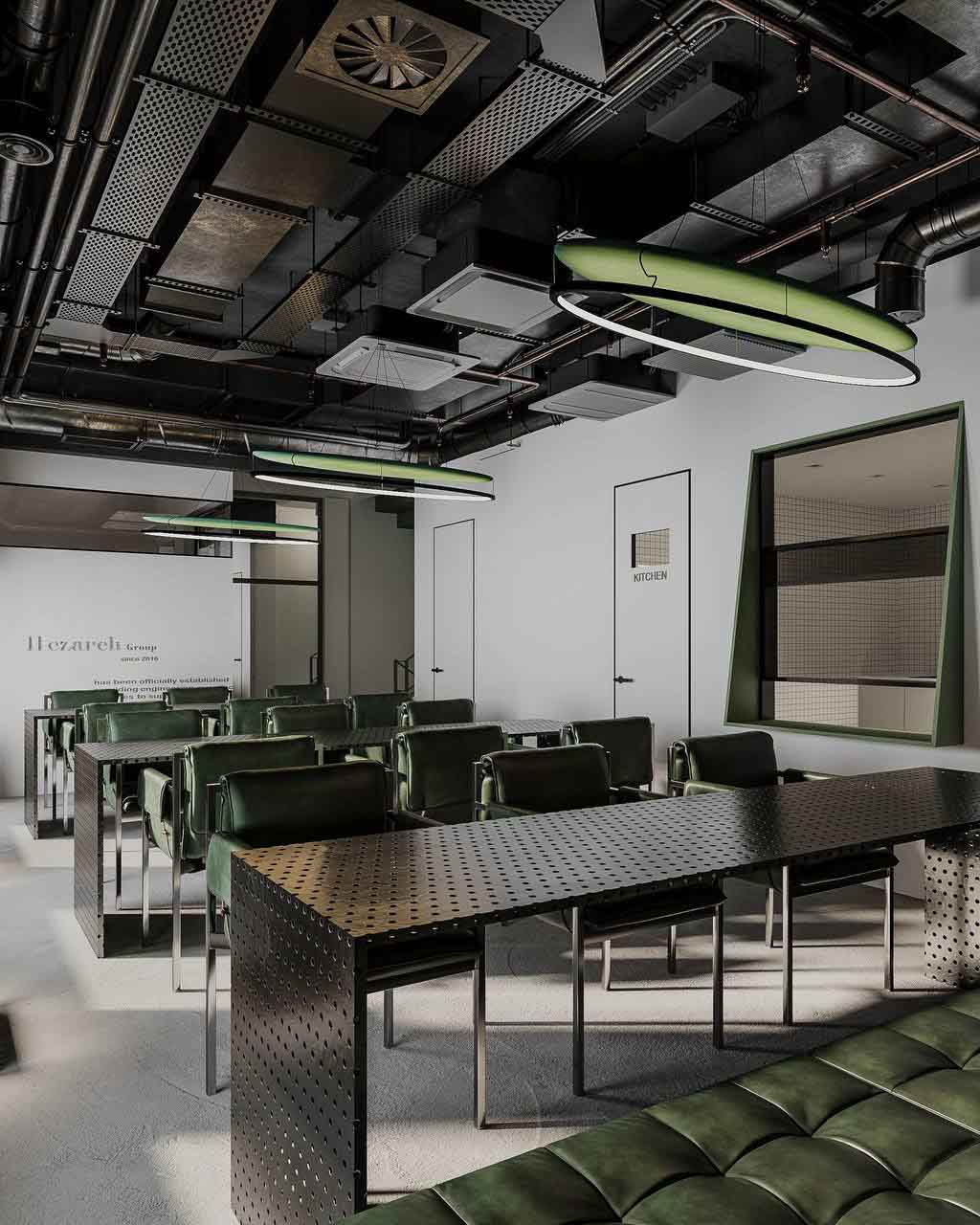
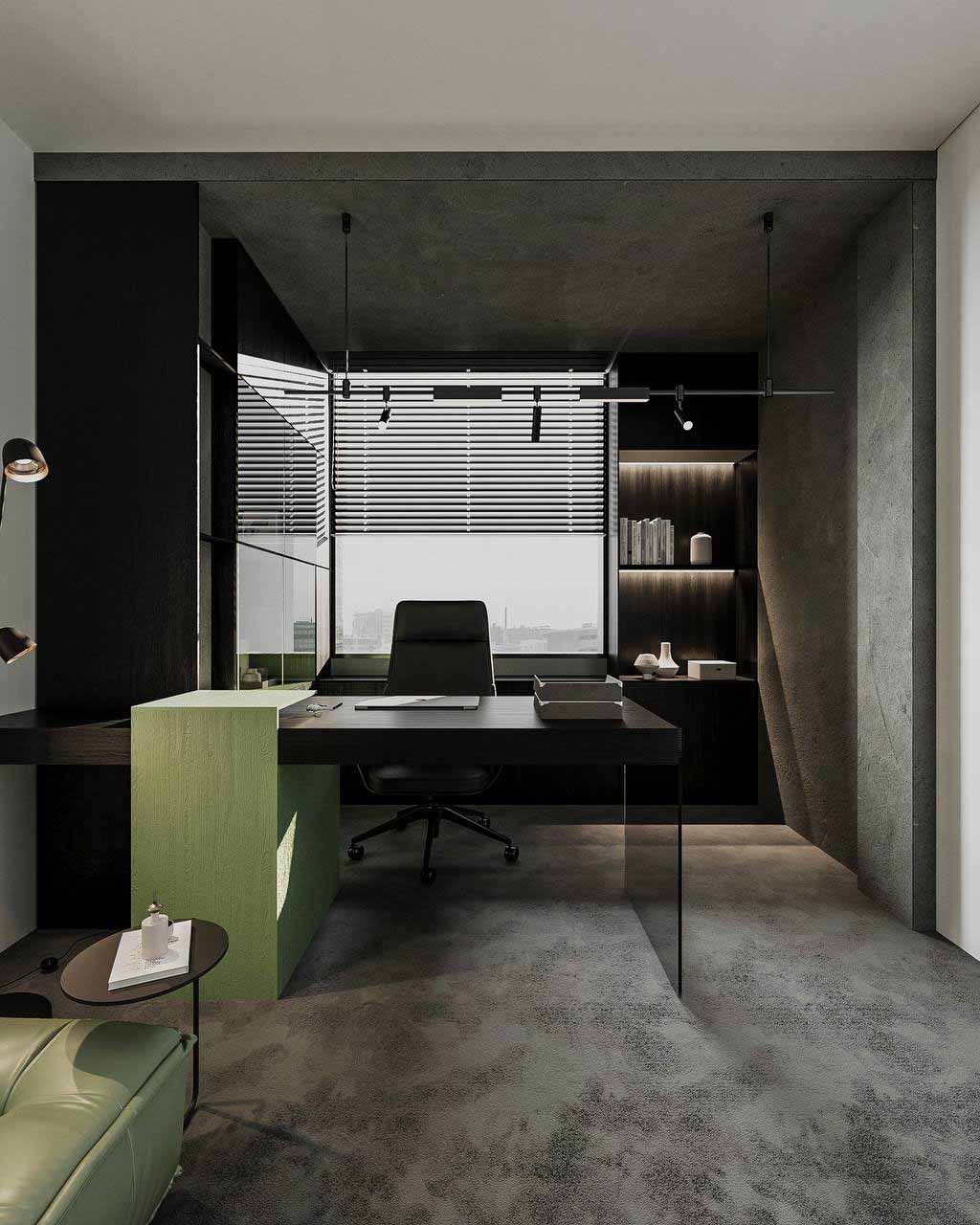
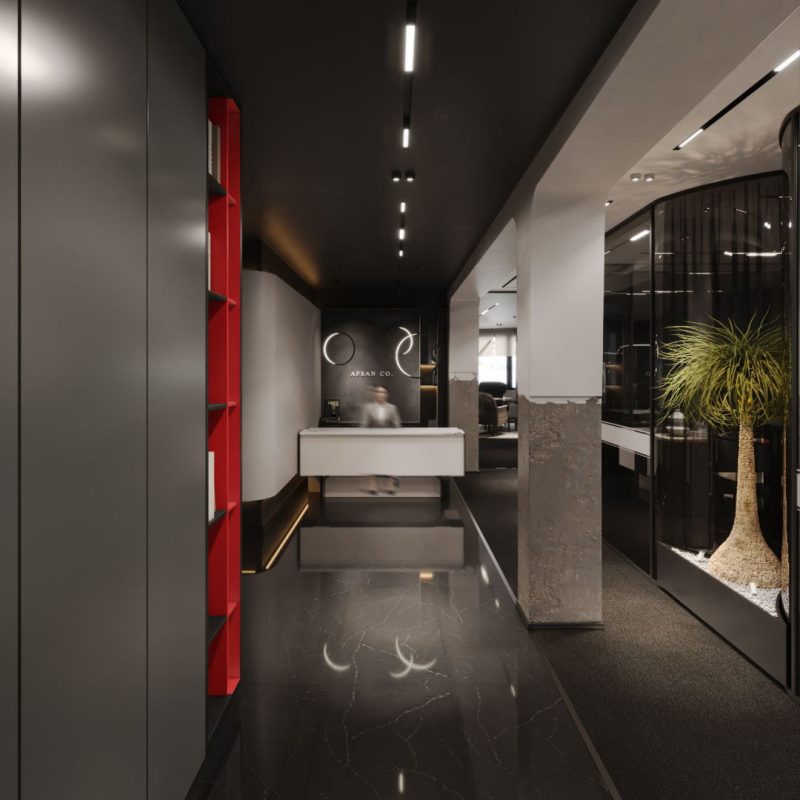
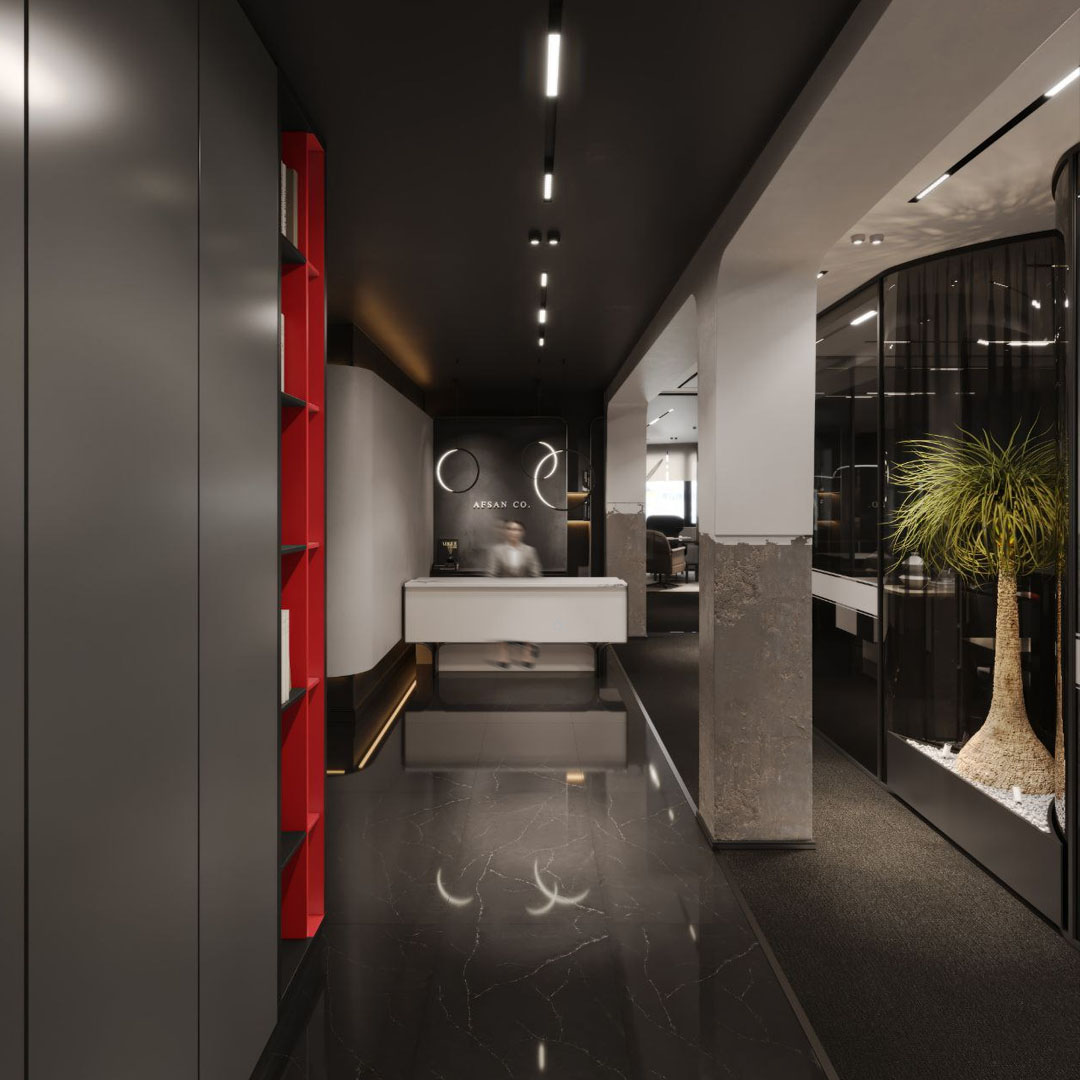
The office environment in this project exemplifies purposeful eclecticism, blending modern, minimalist, industrial, Japanese, and dark design styles. A monochromatic palette of greens and purples in a semi-dark ambiance, combined with cacti and succulent plants and rhythmic details such as typography, creates a contemporary, dynamic, and human-centered workspace.
The design emphasizes ergonomics and user comfort, resulting in a space that is both visually striking and highly functional. Thoughtful design signatures and natural elements provide a distinctive and memorable identity throughout the office.
Client’s Private Suite: A Shift in Rhythm
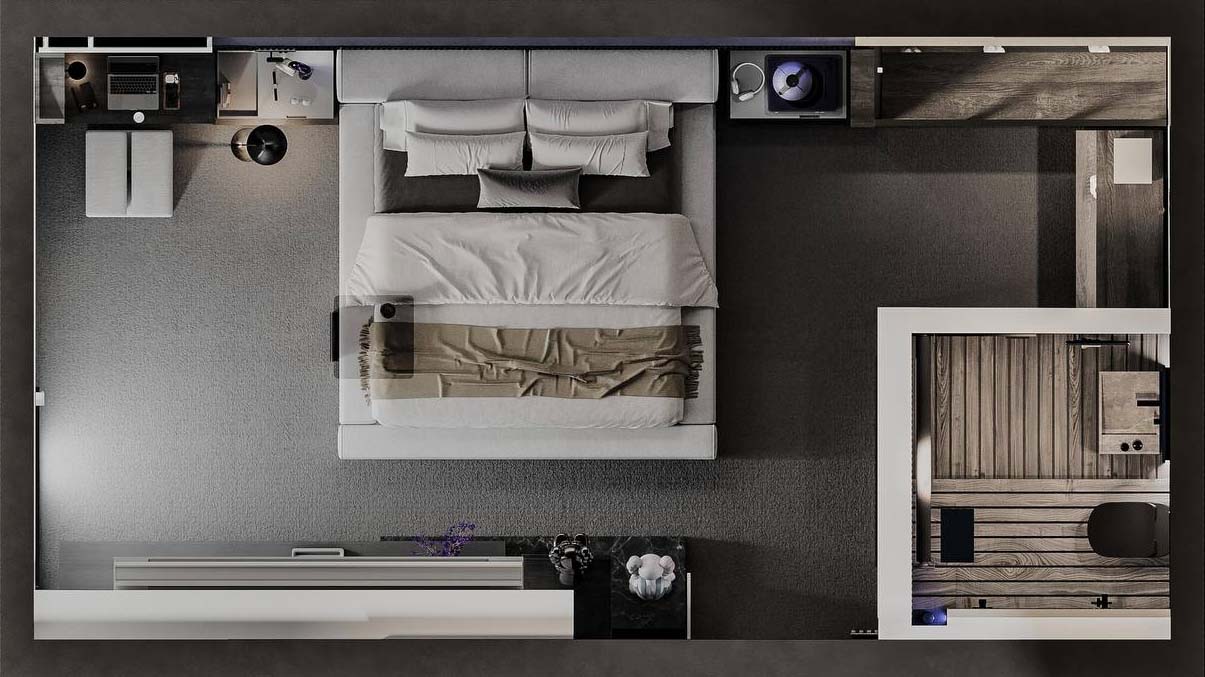
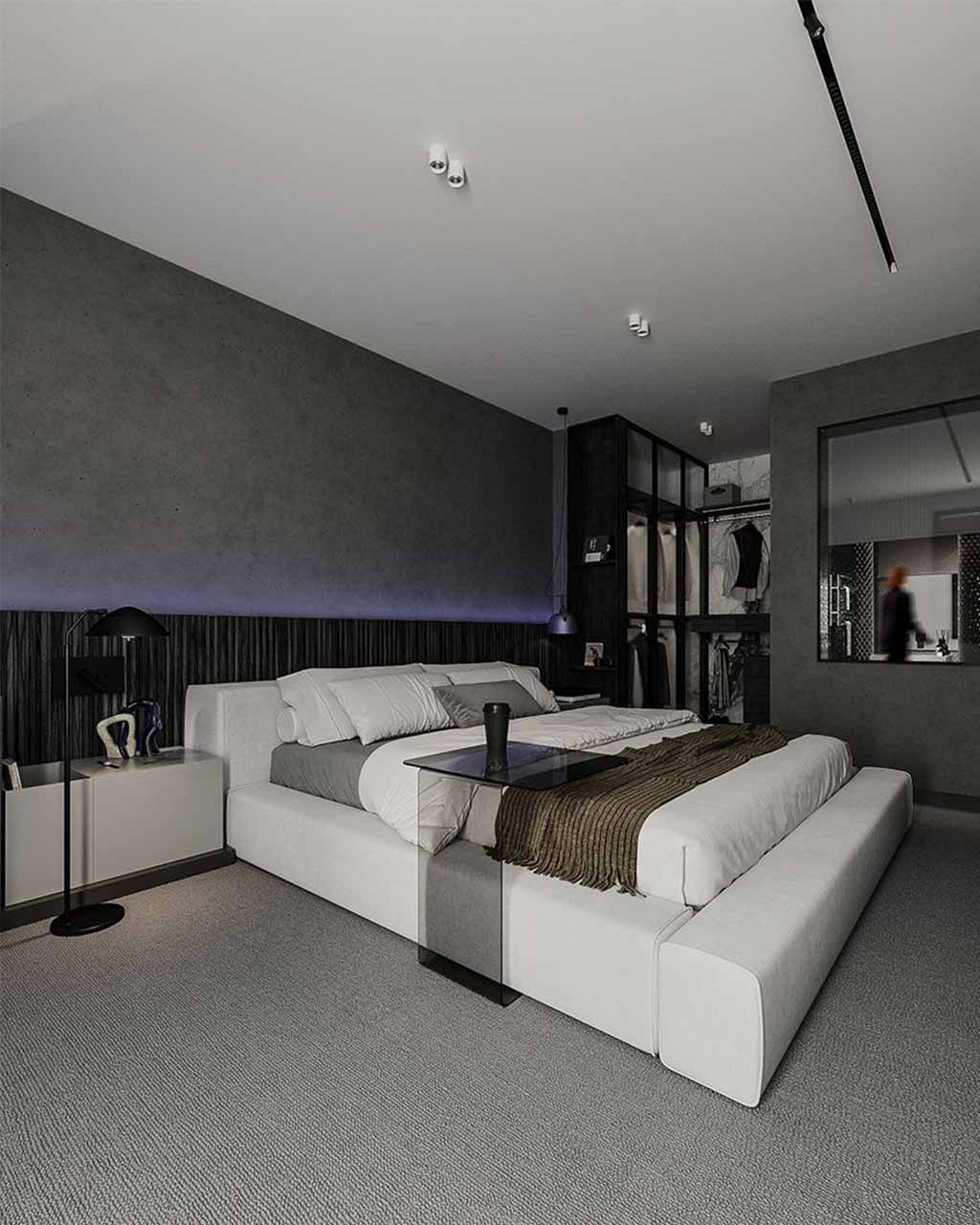
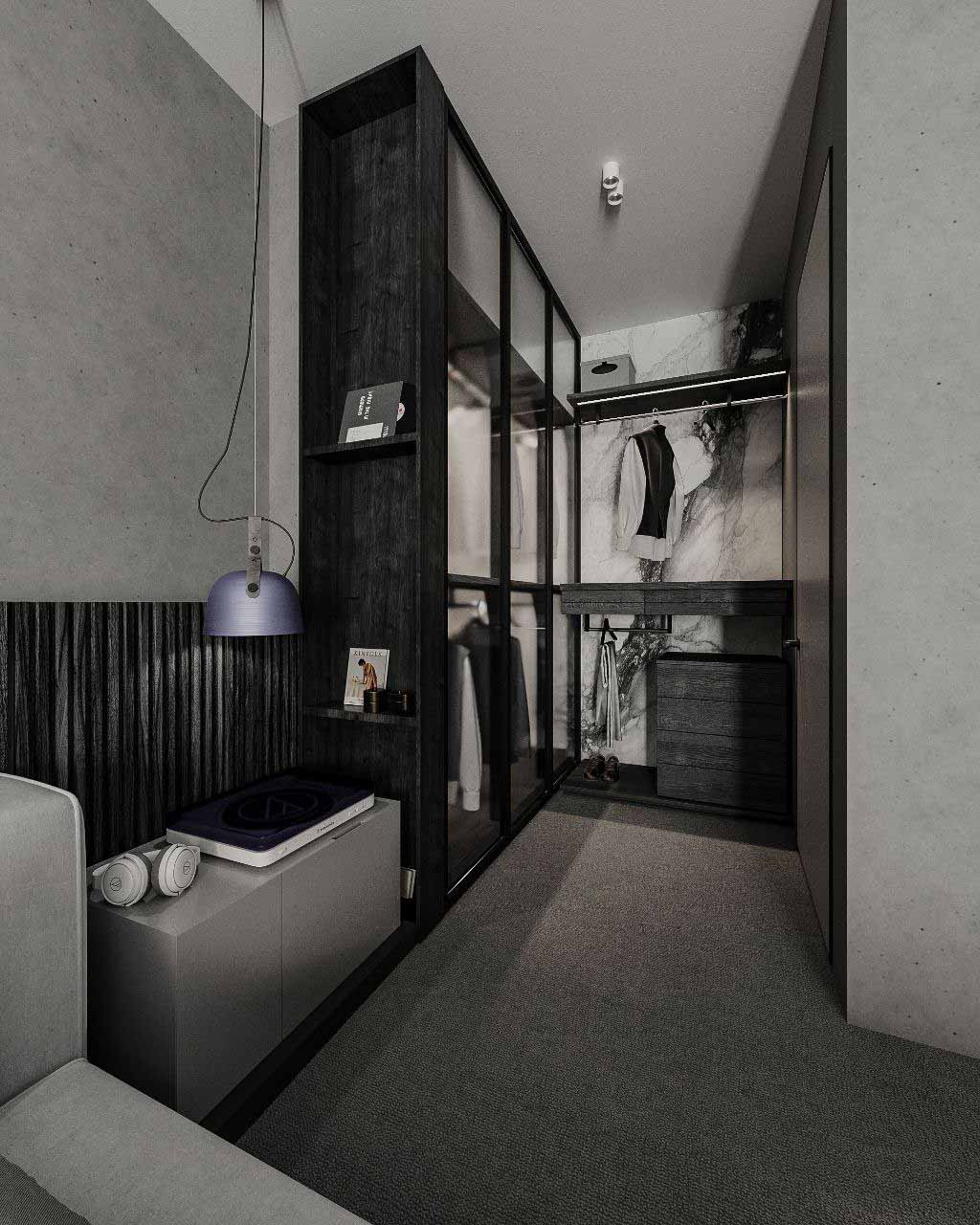
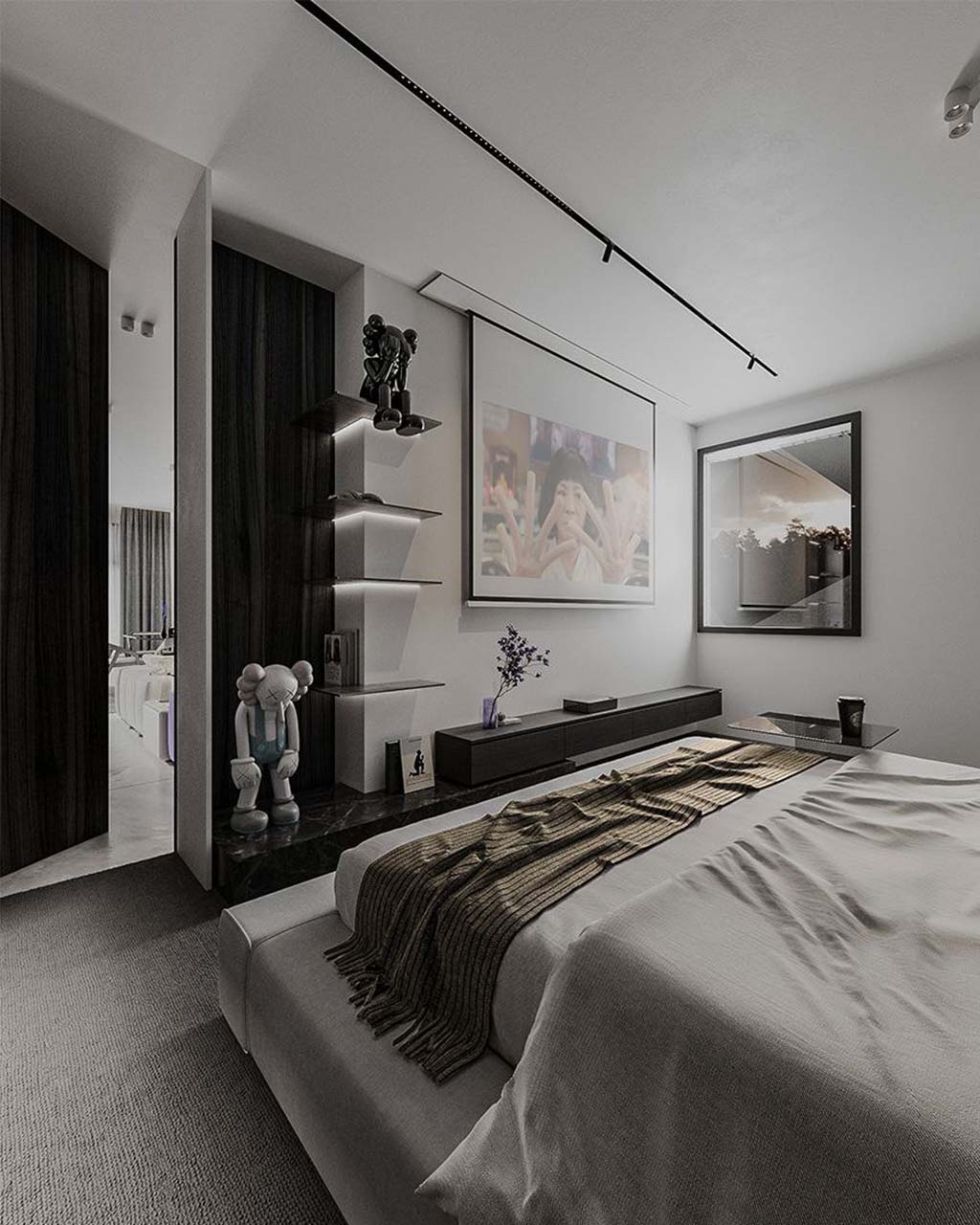
At the client’s request, a private suite was designed at the highest level of the administrative building, with direct access to the management office and rooftop garden.
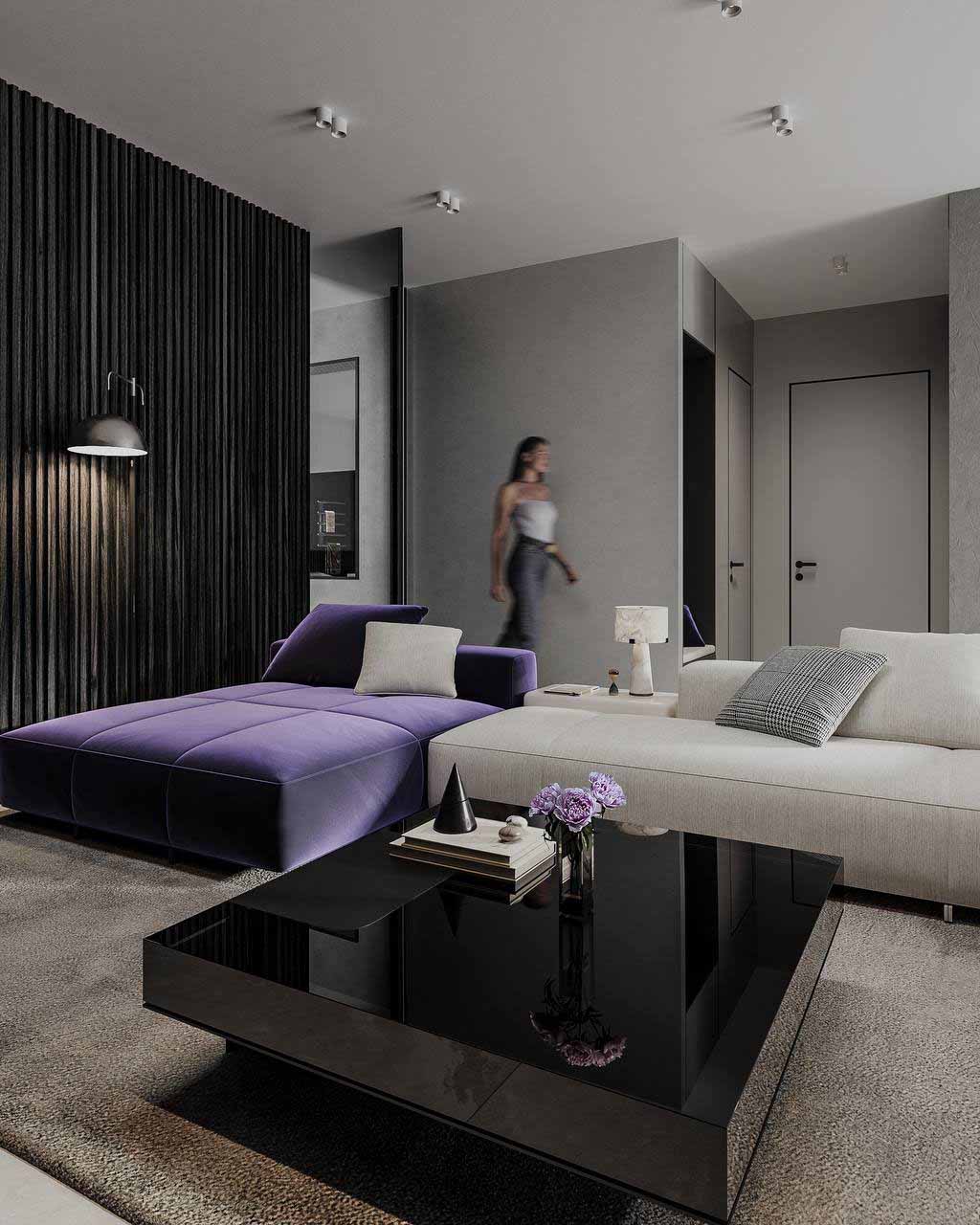
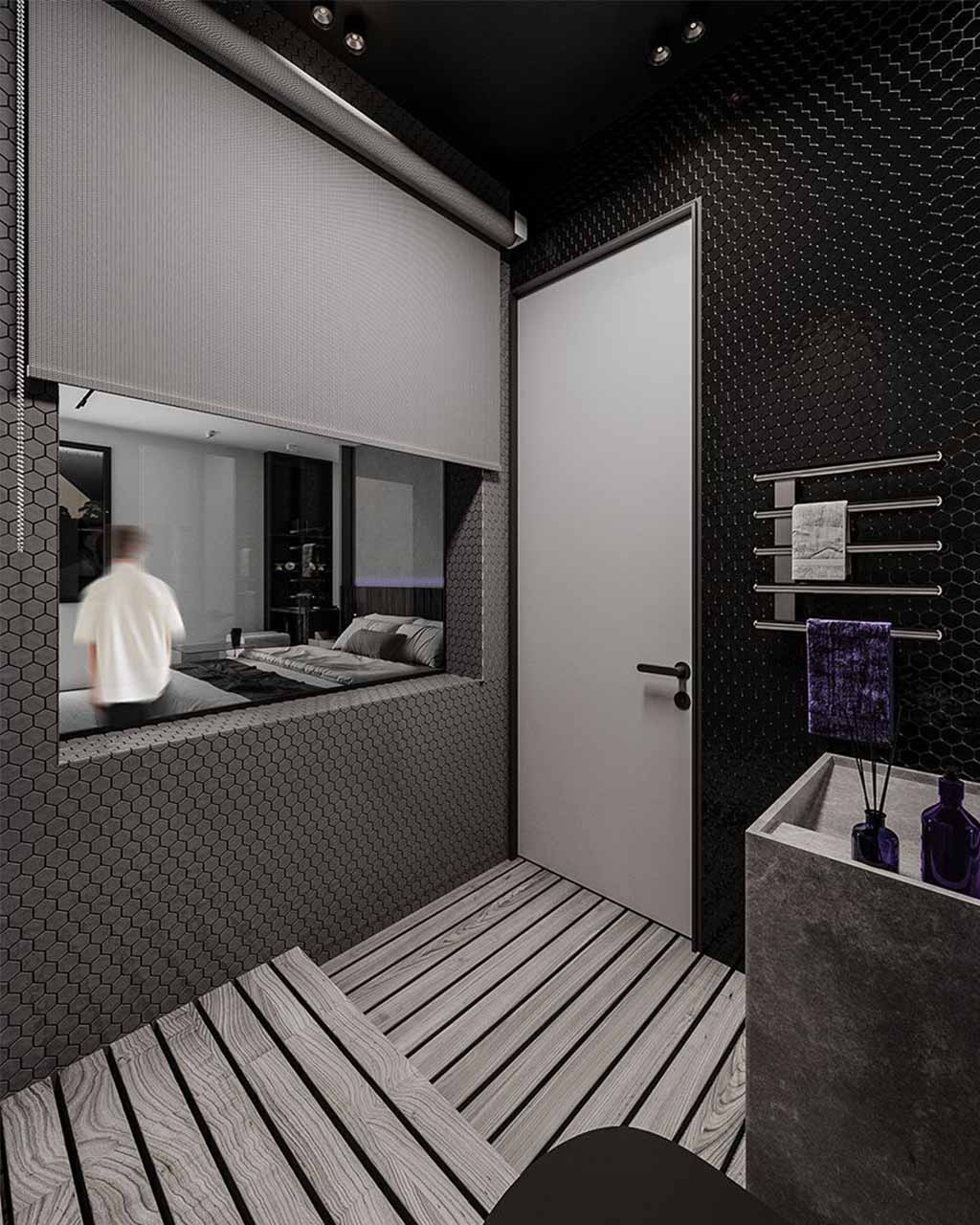
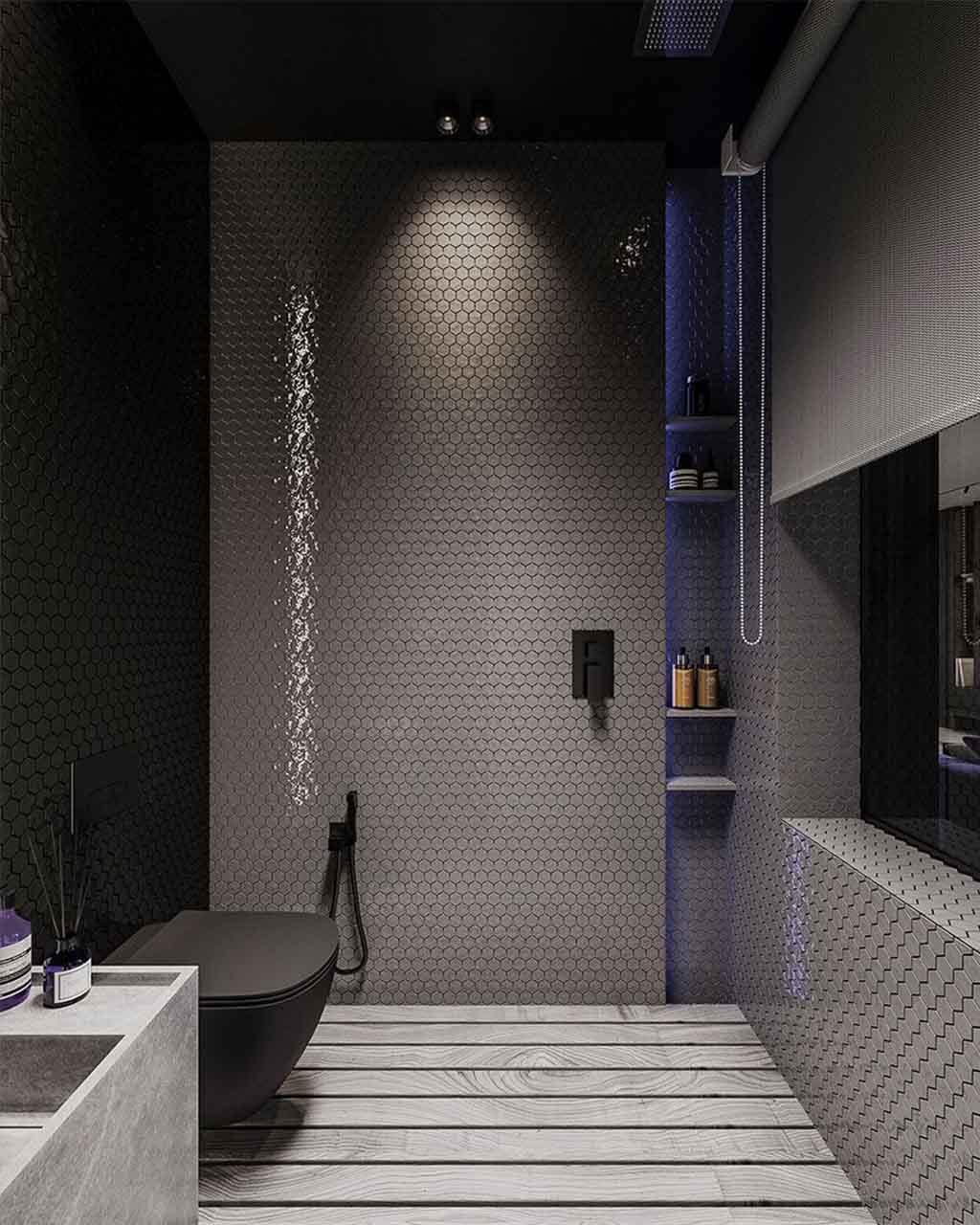
This space continues the interior design style and concepts of the administrative building, featuring a monochromatic purple palette while maintaining other monochromatic elements.
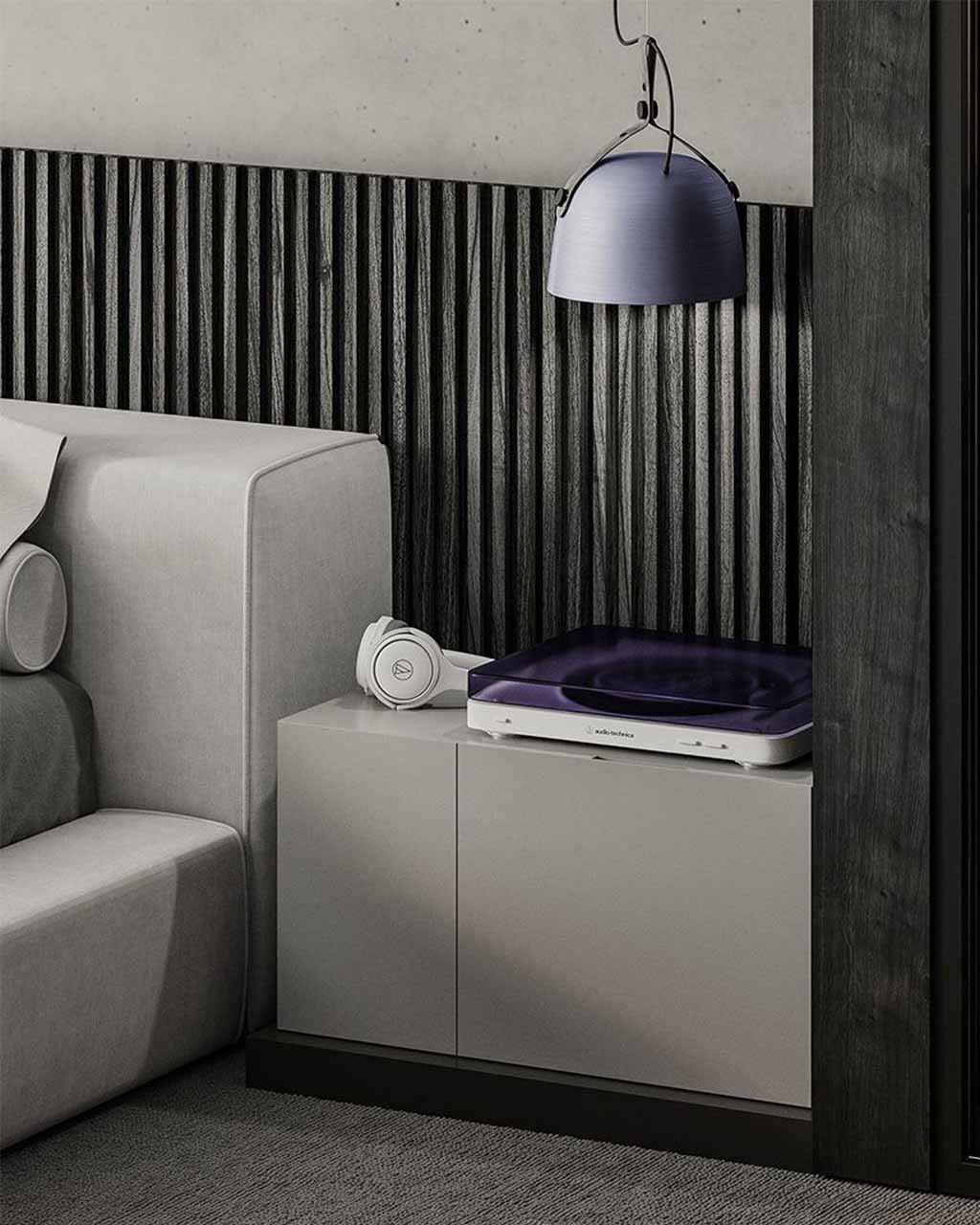
The private suite creates a calm and private environment, shifting the overall rhythm of the project and transforming the building’s language from office to residential, while preserving the fluid spatial narrative and contemporary identity of the project.
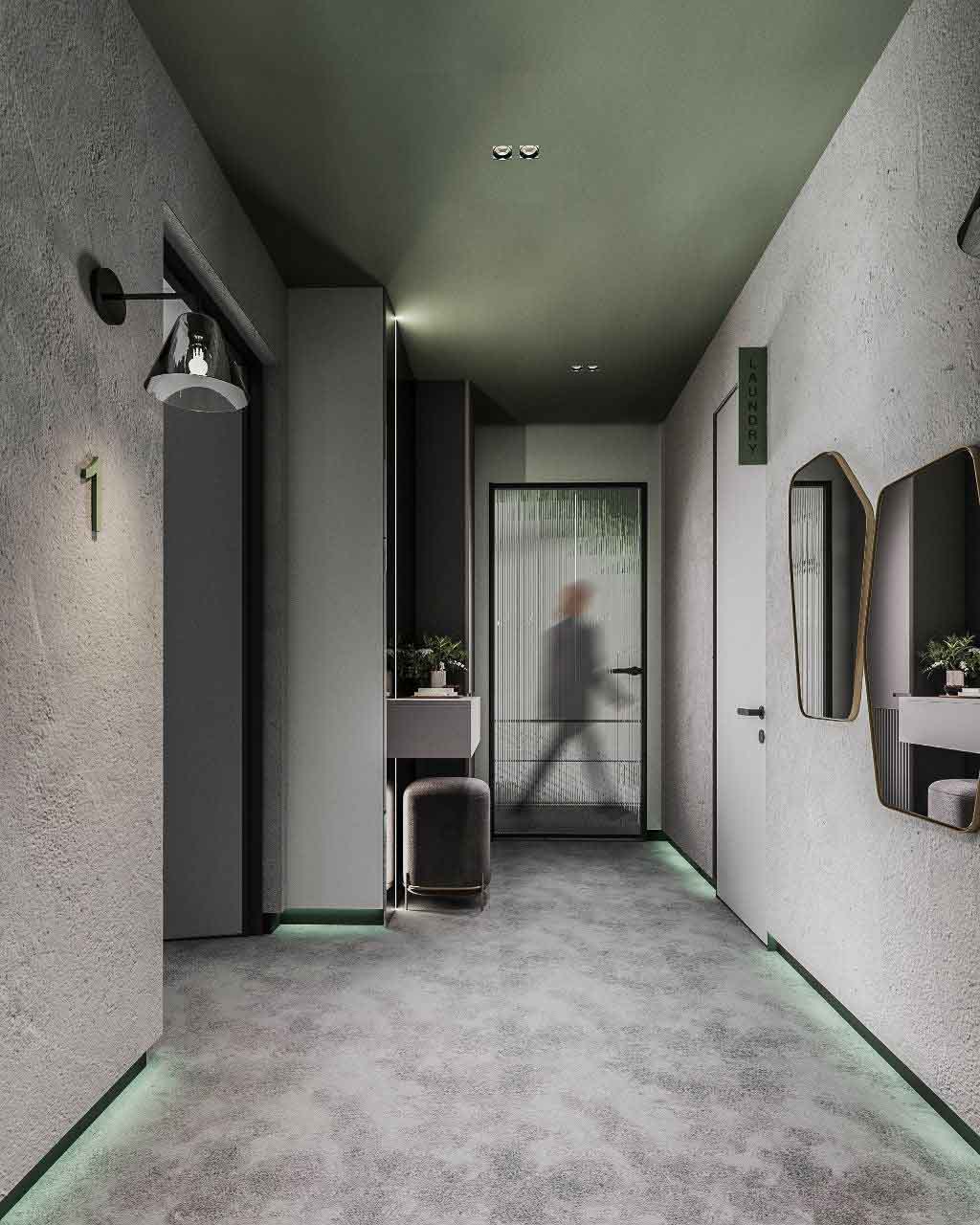
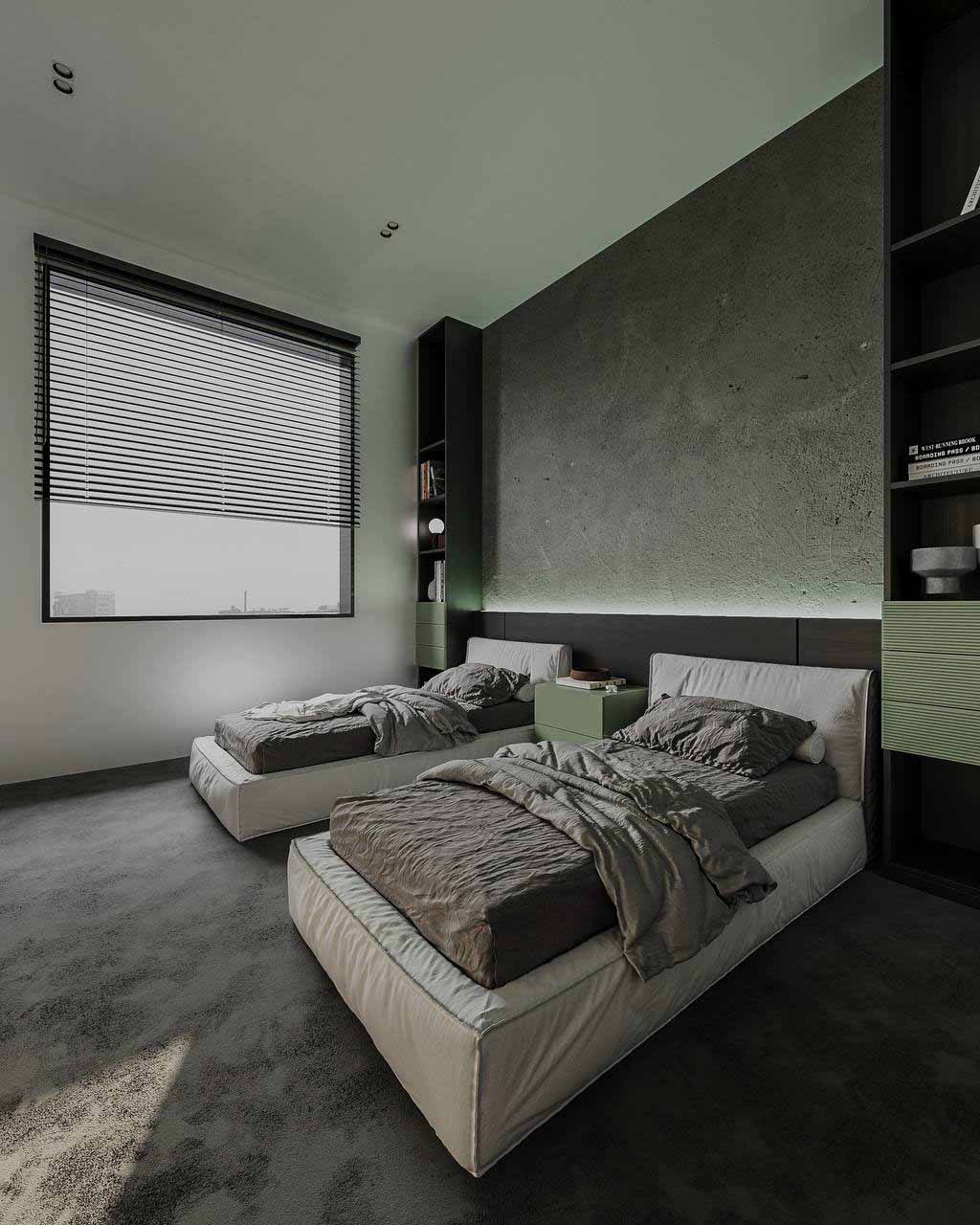
Human-Centered and Energizing Space in the Security and Residential Building
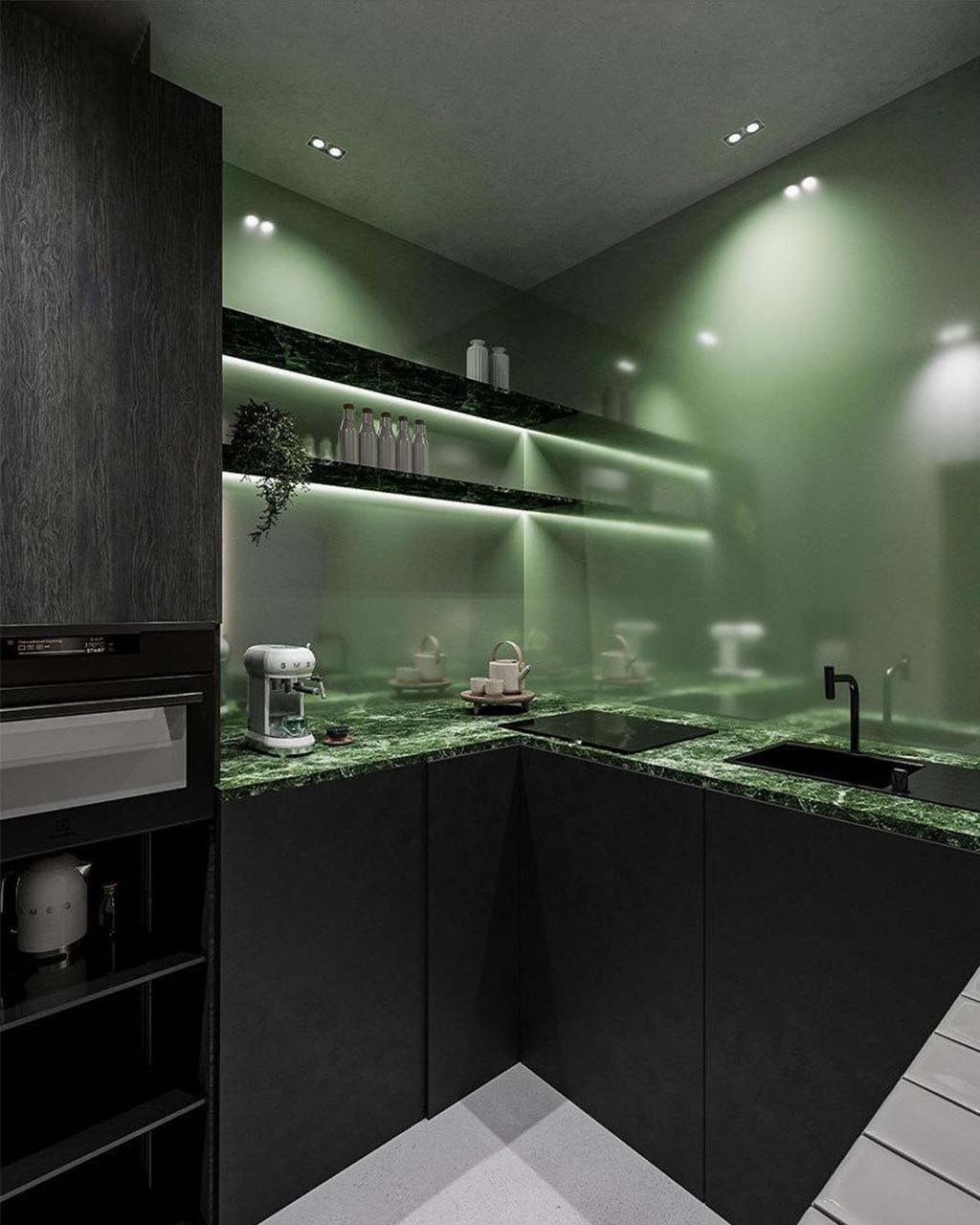
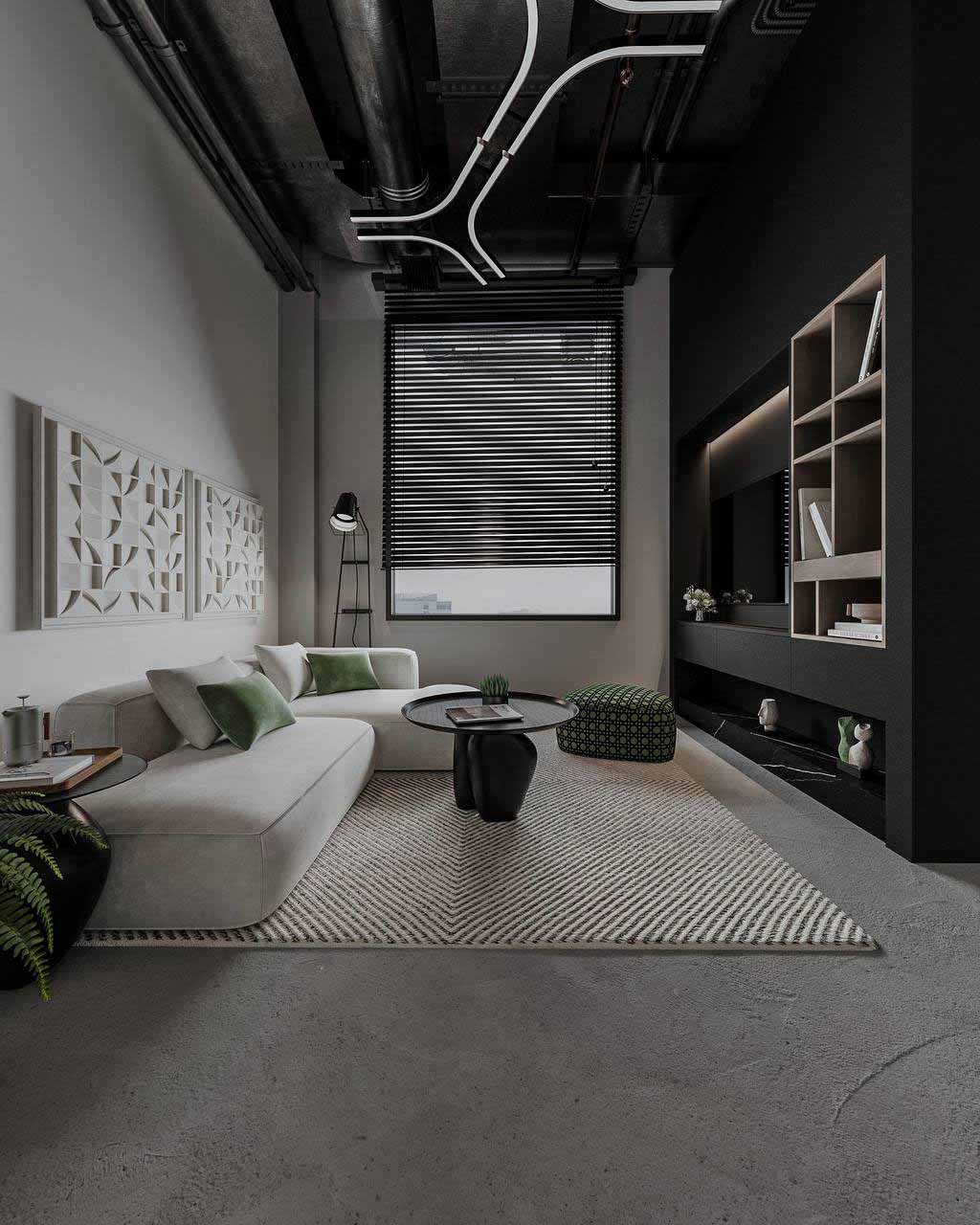
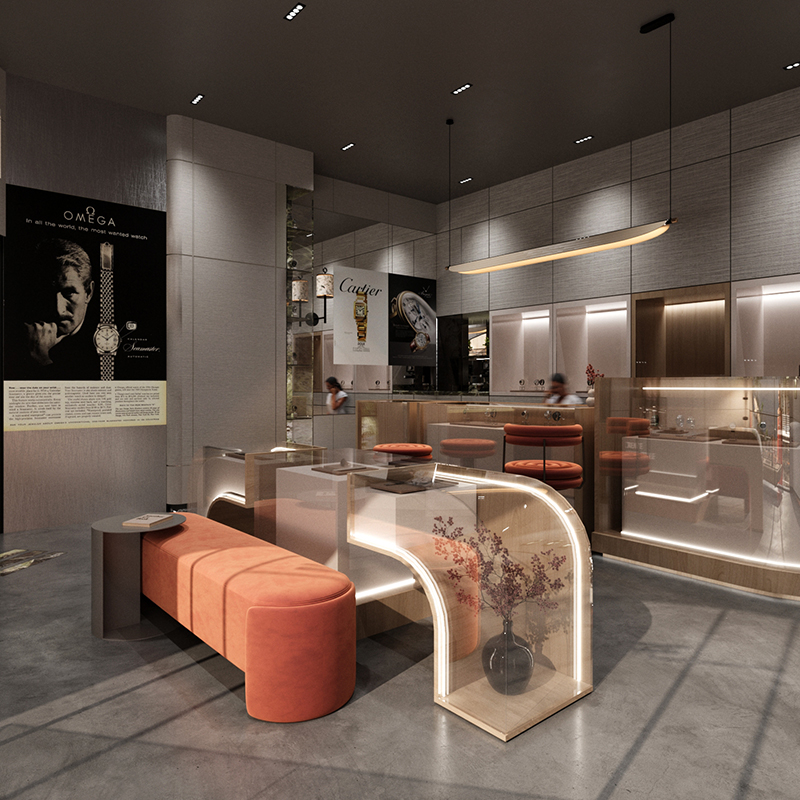
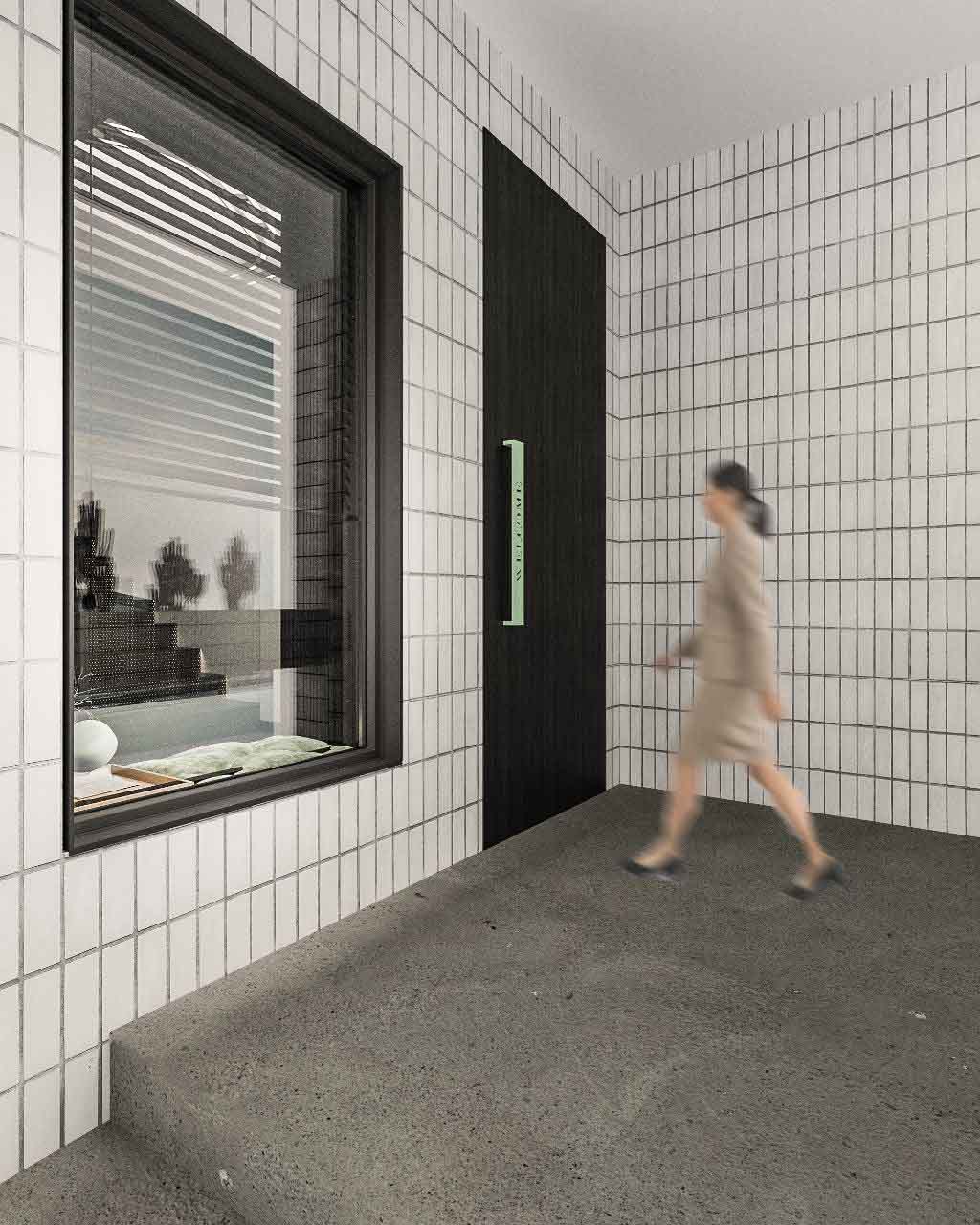
The residential and security areas of the project are designed with a human-centered and energizing approach, allowing employees and residents to rest and recharge in a calm, private, and restorative environment. The design incorporates a green monochromatic palette and natural elements such as resilient plants (cacti), enhancing the sense of peace, sustainability, and belonging.
Spaces for sitting, conversation, dining, and quiet moments create an experience of coexistence between function and relaxation, making the environment a stimulating and efficient place for recharging the energy of both employees and residents.